



• About Us
  • Careers
  • Contact
No Result
View All Result
Monday, January 12, 2026
DeFi Planet
  • News
    • People
    • Business
    • Crime
    • Regulation
    • Crypto
    • CBDC
  • Markets
    • Bitcoin
    • Ethereum
    • Stablecoins
    • Altcoins
    • Crypto ETFs
    • Memecoins
  • Policy
  • Articles
    • Press Releases
    • Opinion
    • Explainers
    • Guest Post
    • Sponsored
  • Directory
    • Companies
    • People
    • Products
    • Wallets
  • Multimedia
    • Videos
    • Podcasts
  • Learn
    • DeFi Basics
    • Tutorials
    • Reviews
    • Blockchain Fundamentals
  • Research
    • Case Studies
  • Explore
    • DeFi
    • Crypto Gaming
    • NFT
    • DAOs
    • Metaverse
    • Tokenization
    • Glossary
  • Jobs
  • Markets Pro
    • DeFi Planet Pro
    • Spend Crypto
    • Swap Crypto
    • Coin Prices
    • Crypto Exchanges
    • Crypto Analyzer
  • News
    • People
    • Business
    • Crime
    • Regulation
    • Crypto
    • CBDC
  • Markets
    • Bitcoin
    • Ethereum
    • Stablecoins
    • Altcoins
    • Crypto ETFs
    • Memecoins
  • Policy
  • Articles
    • Press Releases
    • Opinion
    • Explainers
    • Guest Post
    • Sponsored
  • Directory
    • Companies
    • People
    • Products
    • Wallets
  • Multimedia
    • Videos
    • Podcasts
  • Learn
    • DeFi Basics
    • Tutorials
    • Reviews
    • Blockchain Fundamentals
  • Research
    • Case Studies
  • Explore
    • DeFi
    • Crypto Gaming
    • NFT
    • DAOs
    • Metaverse
    • Tokenization
    • Glossary
  • Jobs
  • Markets Pro
    • DeFi Planet Pro
    • Spend Crypto
    • Swap Crypto
    • Coin Prices
    • Crypto Exchanges
    • Crypto Analyzer
No Result
View All Result
DeFi Planet
No Result
View All Result
Home Crypto

On-Chain Malware Is the New Cyberwar: How Smart Contracts Became a Global Battleground

Faari LabinjobyFaari Labinjo
29 November 2025
in Crypto, Markets
Reading Time: 6 mins read
105 6
On-Chain Malware Is the New Cyberwar: How Smart Contracts Became a Global Battleground

Last updated on December 18th, 2025 at 07:29 am

On-chain malware means harmful code is stored or referenced on a public blockchain instead of on a normal web server. Hackers can hide instructions or data inside smart contracts, and one technique that has been observed is called EtherHiding. Attackers place small pieces of malicious code, or payloads, on blockchains like Ethereum or the BNB Smart Chain, and then have normal-looking web pages or downloads fetch that code. This lets the harmful program reach a victim without the attacker hosting the malware on their own servers. 

State actors have used this trick in recent campaigns, and security researchers found that a group tracked as UNC5342, which is linked to North Korea, used EtherHiding to hide a JavaScript loader named JADESNOW inside a web page. That loader reads code from a smart contract, then runs a backdoor called INVISIBLEFERRET. Because smart contract data is public and cannot be removed, this makes the malware very hard to take down once it is placed on-chain. 

UNC5142's EtherHiding architecture on the BNB Smart Chain.
UNC5142’s EtherHiding architecture on the BNB Smart Chain.

The attackers do not always send a normal program file to the victim; instead, they use social tricks like fake job offers or coding tests that ask a developer to run a sample. When the sample runs, it silently contacts the blockchain and pulls the actual malicious code. The blockchain call often uses a read-only method, so it does not leave a normal transaction trail, increasing stealth and making traditional detection tools less effective. 

Implications for DeFi Security and Auditing

DeFi and other blockchain projects rely on smart contracts and on their immutability to build trust. That same immutability and openness can be used against defenders. If attackers store malware or control information on-chain, they gain a persistently available command channel that is hard to censor or remove. This raises new concerns about cyberwarfare, as nation-states can exploit blockchain vulnerabilities to mount long-lived operations that are resistant to takedown. 

Smart contract security teams and auditors have historically focused on bugs in the code that runs on-chain, but now they must also consider off-chain behaviour that is controlled from the chain. A contract might look safe in a static audit but still be used as a storage point for harmful payloads. Auditors will need to expand their checks to include patterns in data stored in contracts and the ways contracts are referenced by external scripts. This change affects how DeFi projects think about threat models and how they design their monitoring systems. 

The use of on-chain malware by groups tied to North Korea shows that blockchain-based attacks can be part of state-level strategies. These attacks aim not only to steal cryptocurrency but also to gather credentials, spy on systems, and create resilience against standard law enforcement and takedown methods. For defenders, this means that blockchain vulnerabilities must be treated as a national and industry security issue.

RELATED: Blockchain Security: The Importance of Smart Contracts Audits

Potential Defence frameworks for protocols

A stronger approach to smart contract security is needed, with one important step being runtime monitoring of contract storage and calls. Security teams can build tools to watch for unusual patterns in smart contract data, like encoded payloads or frequent updates to storage that do not match the contract intent. This class of monitoring helps reveal when a contract is being used as a hidden content store. Research projects that add dynamic analysis and runtime shields to smart contracts show that this is possible and useful. 

Another defence is to harden developer environments and reduce risky behaviours, and companies should treat unsolicited coding tests and downloads as high risk. Websites used for hiring should be checked, and developers should run unknown samples only in isolated sandbox machines. Using dedicated full nodes for blockchain queries instead of public RPC endpoints can also improve visibility and allow teams to filter or log suspicious read-only calls. 
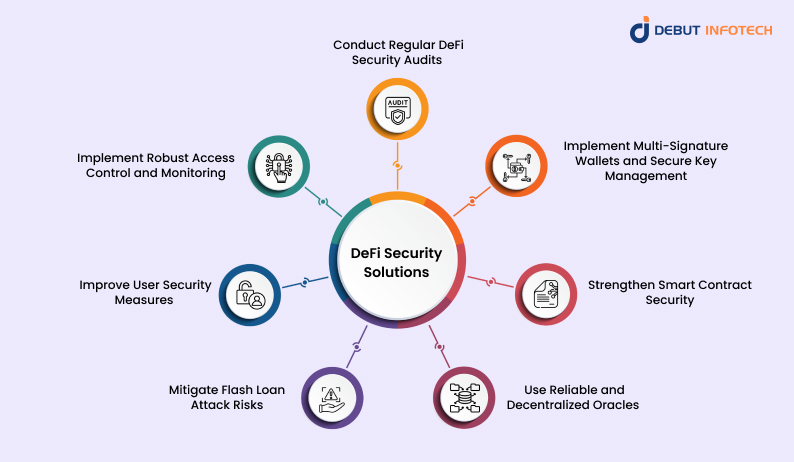
Ways to protect your platform from hacks

Improvements in smart contract security tooling are also needed. New detection systems that look for malicious intent in bytecode or in on-chain storage could alert teams sooner. Machine learning and opcode-level analysis can find strange control flows and odd data patterns that human reviewers might miss. Sharing threat intelligence on suspicious contract addresses and known EtherHiding infrastructure among firms will accelerate detection and response across the industry. 

In Conclusion,

On-chain malware is a new and serious problem with state actors, including groups linked to North Korea, adopting techniques like EtherHiding to embed malware into smart contracts and to use the blockchain as a resilient delivery channel. This shift shows how threat groups are learning to take advantage of the very traits that make blockchain useful, such as permanence, decentralisation and open access. It also shows how cyberwarfare is moving into environments that were once thought to be too transparent for covert operations. By hiding malicious code within contract storage or by making off-chain scripts pull instructions directly from on-chain data, attackers can create command channels that are almost impossible to shut down and extremely hard to trace.

This raises the stakes for smart contract security and makes cyberwarfare more complex, as defenders must now consider risks beyond traditional vulnerabilities, such as reentrancy or access-control bugs. Instead, they face a new class of threats that use the blockchain as infrastructure rather than as a target. To keep up, defenders must update how they audit contracts and how they secure developer workflows. Security teams need to inspect not only contract logic but also unusual data patterns, obscure storage fields and unexplained calls to public RPC endpoints. Developer onboarding and hiring processes need more protection since many of these attacks start with social engineering that tricks engineers into running poisoned code samples.

If the blockchain world adapts quickly, it can turn its own openness and transparency into a strength by making malicious storage easier to detect and harder for attackers to camouflage. But if it does not evolve, on-chain malware could become a long-term problem that undermines trust in Web3 systems and gives state actors a new and powerful tool for covert operation.


Disclaimer: This article is intended solely for informational purposes and should not be considered trading or investment advice. Nothing herein should be construed as financial, legal, or tax advice. Trading or investing in cryptocurrencies carries a considerable risk of financial loss. Always conduct due diligence. 


If you want to read more market analyses like this one, visit DeFi Planet and follow us on Twitter, LinkedIn, Facebook, Instagram, and CoinMarketCap Community.

Take control of your crypto  portfolio with MARKETS PRO, DeFi Planet’s suite of analytics tools.”

Tags: CyberwarfareSmart Contract Security
Share64Tweet40Share11
Faari Labinjo

Faari Labinjo

Related Posts

XRP Slides 13% from $2.41: ‘Oversold’ Signal or Should You Be Worried?
Altcoins

XRP Slides 13% from $2.41: ‘Oversold’ Signal or Should You Be Worried?

12 January 2026
source: cybersecurityventures.com
Crypto

Crypto Investment Products See $454M Weekly Outflows as Rate-Cut Hopes Fade — CoinShares

12 January 2026
source: insidephilanthropy.com
Crypto

UK Lawmakers Push for Ban on Crypto Political Donations Over Foreign Interference Fears

12 January 2026
source: von.gov.ng
Crypto

Standard Chartered Weighs Crypto Prime Brokerage as Banks Deepen Digital Asset Push

12 January 2026

Editors Picks

What Is Social Recovery, and Can It Solve the ‘Lost Seed Phrase’ Problem?

What Is Social Recovery, and Can It Solve the ‘Lost Seed Phrase’ Problem?

byOlayinka Sodiq
5 October 2025
0

Best Beginner-Friendly Crypto Wallets for Minors in 2025

Best Beginner-Friendly Crypto Wallets for Minors in 2025

byOlajumoke Oyaleke
27 September 2025
0

source: buddyxtheme.com

Best AI-Powered Tools for Managing Crypto Portfolios

byOlayinka Sodiq
26 January 2025
0

What is a Blockchain Oracle?

byRose Nnamdi
21 April 2022
0

Know what you are doing learning Cryptocurrencies vs Stock Understanding the impact of cryptocurrency on the stock market.

Cryptocurrencies vs Stocks: Understanding the Impact of Cryptocurrency on the Stock Market

byLucy Adegbe
20 September 2021
0

Read More

Chain of Thoughts

The Nation-State FOMO: Are Strategic Bitcoin Reserves Genuine Policy or Political Theatre?

The Nation-State FOMO: Are Strategic Bitcoin Reserves Genuine Policy or Political Theatre?

byOlu Omoyele
28 December 2025
0

...

The Centralization Paradox: How Structural Forces Pull Crypto Back to Gatekeepers

The Centralization Paradox: How Structural Forces Pull Crypto Back to Gatekeepers

byOlu Omoyele
29 November 2025
0

...

SocialFi and the Tokenization of Influence

SocialFi and the Tokenization of Influence

byOlu Omoyele
31 October 2025
0

...

The Aesthetics of Web3: Why Vibe Matters in Decentralized Communities

The Aesthetics of Web3: Why Vibe Matters in Decentralized Communities

byOlu Omoyele
27 September 2025
0

...

Markets Update

XRP Slides 13% from $2.41: ‘Oversold’ Signal or Should You Be Worried?

5 hours ago

Your Weekend Crypto Roundup | January 2026 (Week 2)

3 days ago

Your Weekend Crypto Roundup | January 2025 (Week 1)

1 week ago

How Crypto Derivatives Became an $86T Market in 2025

2 weeks ago

Tokenized Commodities Hit $4B as On-Chain Assets Expand

2 weeks ago

Why Spot Bitcoin ETFs Bled $782M During Christmas Week

2 weeks ago
Read More

Events

  • No events
  • Spotlight

    Ethereum Solana Bitcoin RWA Tokenization

    Press Releases

    Bitmine Immersion Technologies (BMNR) Announces ETH Holdings Reach 4.168 Million Tokens, and Total Crypto and Total Cash Holdings of $14.0 Billion

    bychainwire
    12 January 2026
    0

    Rain Raises $250M Series C to Scale Stablecoin-Powered Payments Infrastructure for Global Enterprises

    bychainwire
    9 January 2026
    0

    Barclays Invests in Ubyx to Advance Digital Money Connectivity

    bychainwire
    7 January 2026
    0

    Cango Inc. Announces December 2025 Bitcoin Production and Mining Operations Update

    bychainwire
    7 January 2026
    0

    Coinhub Exchange Brings a Bank-Like Crypto Experience to Las Vegas and Phoenix

    bychainwire
    6 January 2026
    0

    Read More

    ADVERTISING

    ABOUT

    TEAM

    CAREERS

    CONTACT

    TERMS & CONDITIONS

    PRIVACY POLICY

    © Copyright 2025 DeFi Planet

    Welcome Back!

    Login to your account below

    Forgotten Password?

    Retrieve your password

    Please enter your username or email address to reset your password.

    Log In

    Add New Playlist

    No Result
    View All Result
    • News
      • People
      • Business
      • Crime
      • Regulation
      • Crypto
      • CBDC
    • Markets
      • Bitcoin
      • Ethereum
      • Stablecoins
      • Altcoins
      • Crypto ETFs
      • Memecoins
    • Policy
    • Articles
      • Press Releases
      • Opinion
      • Explainers
      • Guest Post
      • Sponsored
    • Directory
      • Companies
      • People
      • Products
      • Wallets
    • Multimedia
      • Videos
      • Podcasts
    • Learn
      • DeFi Basics
      • Tutorials
      • Reviews
      • Blockchain Fundamentals
    • Research
      • Case Studies
    • Explore
      • DeFi
      • Crypto Gaming
      • NFT
      • DAOs
      • Metaverse
      • Tokenization
      • Glossary
    • Jobs
    • Markets Pro
      • DeFi Planet Pro
      • Spend Crypto
      • Swap Crypto
      • Coin Prices
      • Crypto Exchanges
      • Crypto Analyzer

    © Copyright 2024 DeFi Planet   |   Terms & Conditions   |   Privacy Policy

    -
    00:00
    00:00

    Queue

    Update Required Flash plugin
    -
    00:00
    00:00