


























































Quick Breakdown

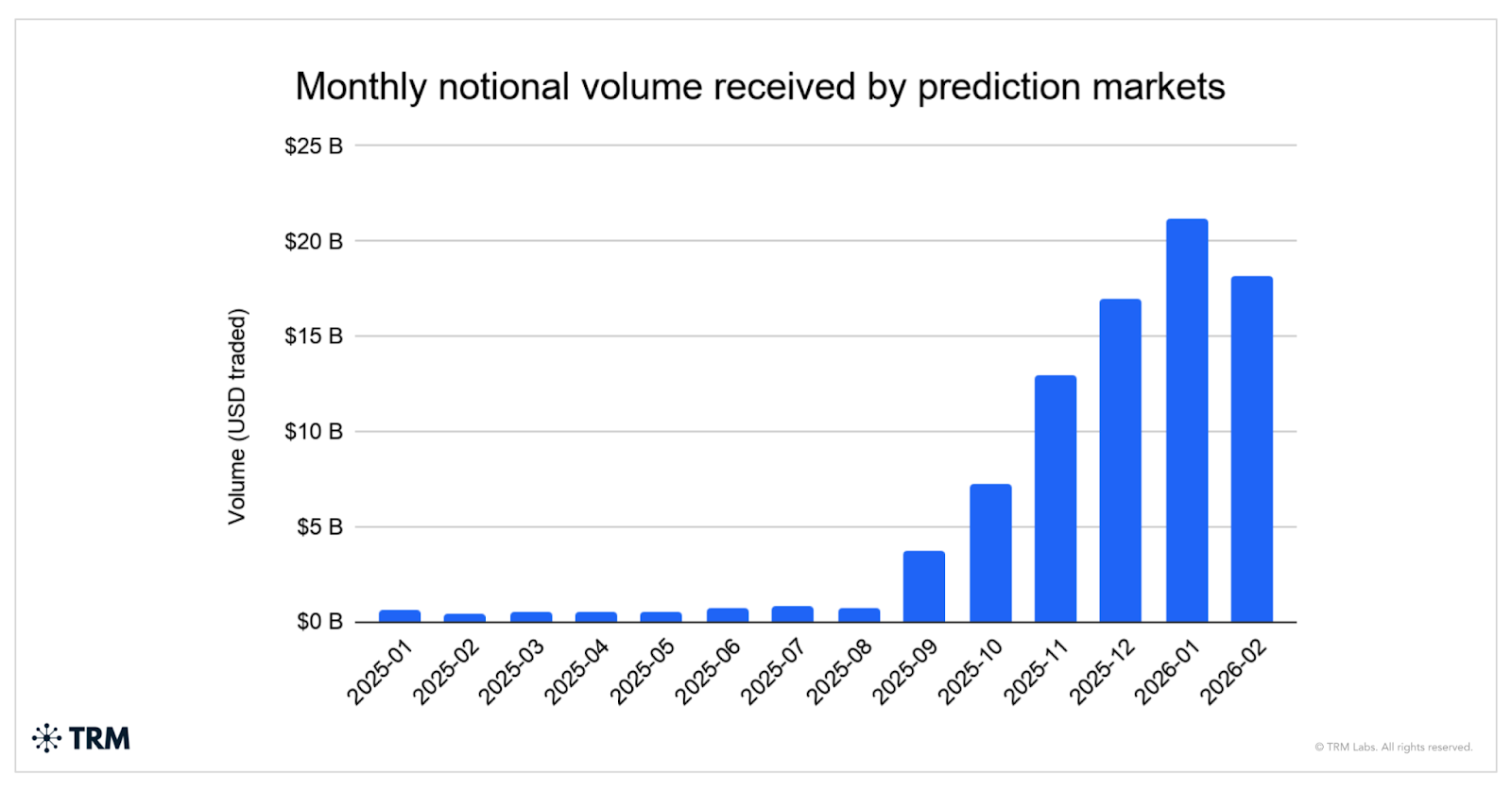
- Prediction market ETFs are part of a fast-growing sector, with blockchain-based trading volumes rising from $1.2B in early 2025 to over $20B in 2026, attracting major issuers like Roundhill, GraniteShares, and Bitwise.
- The SEC delayed over 20 ETF filings after concerns about risk, transparency, and sensitive event betting, especially linked to real-world conflicts and unclear fund structures.
- The pause creates uncertainty for crypto derivatives, slowing mainstream adoption, reducing investor confidence, and potentially reshaping how event-based financial products develop in the U.S.
The race to launch prediction market ETFs was seen as a major step in connecting traditional finance with crypto-linked markets. This interest is happening at a time when blockchain-based prediction markets are experiencing tremendous growth and attention, with monthly trading volumes exceeding $20 billion in 2026, up from about $1.2 billion in early 2025.
A wave of ETF filings followed this growth, with issuers including Roundhill Investments, GraniteShares, and Bitwise Asset Management submitting more than 20 proposals. These products aim to package event-based market exposure into standard ETF structures that can trade on U.S. exchanges.
Under SEC rules, ETFs can automatically become effective after a 75-day review period unless the regulator steps in. That deadline passed in early May, but instead of approval, the SEC delayed the launches, creating uncertainty around when or if they will go live.
So why did the SEC hit the brakes just as momentum was building, and what could this mean for the future growth of crypto derivatives markets?
Why the SEC Delayed Approval
One reason for the delay is public concern about prediction markets tied to sensitive real-world events. For example, during the ongoing U.S.-Iran conflict, a prediction bet linked to a military rescue mission sparked backlash.
U.S. Congressman Seth Moulton criticized a prediction bet tied to a military rescue mission as “disgusting” on X. The operation, carried out overnight between April 4 and 5, involved 155 aircraft and hundreds of special operations troops. Less than three hours later, Polymarket removed the market, saying it violated the platform’s integrity rules.
There is an ongoing search and rescue operation for a missing American service member whose plane was shot down over Iran. Their safety is unknown.
They could be your neighbor, a friend, a family member. And people are betting on whether or not they’ll be saved.
This is… pic.twitter.com/sMuS1x6YbL
— Seth Moulton (@sethmoulton) April 3, 2026
After the removal, Congressman Mike Levin criticized the idea of people gambling on war and soldiers’ lives. In a Facebook post, he called betting on military deaths, war, and assassinations “morally indefensible.”
Beyond public pressure, the SEC is also asking for more clarity and demands better explanations of how the funds are structured, how risks are managed, and how exposure to prediction markets is controlled.
Need for more information on ETF structure
The SEC reportedly asked companies like Roundhill Investments, GraniteShares, and Bitwise to provide more details about how the event contract funds would actually work.
This suggests regulators still have questions about:
- How the ETFs would operate
- How exposure to prediction markets would be managed
- And how risks would be handled inside the funds
Concerns about disclosures to investors
The SEC also wanted more information about disclosures. This usually means regulators want clearer explanations about:
- the risks involved,
- how pricing works,
- how event contracts behave,
- and what investors are actually buying.
Because prediction markets are still relatively new in traditional finance, the SEC may want stronger transparency before allowing retail investors into these products.
Uncertainty around event-based financial products
The proposed ETFs are linked to binary event contracts tied to elections, economic data, and market outcomes. These types of products sit in a grey area between investing, speculation, and gambling, which may be another reason for the delay.
The SEC may be trying to determine whether current rules are enough to properly regulate these kinds of products before allowing them into mainstream financial markets.
Why the Delay Matters for Crypto Derivatives
The delay slows the growth of a new financial sector where people trade on real-world outcomes using regulated products.
These ETFs were expected to bring prediction markets into mainstream finance and increase trading activity. Instead, the pause shows regulators are still cautious, especially around products linked to sensitive events.
It also increases uncertainty for crypto-linked markets. Platforms like Polymarket and Kalshi now face a slower path to wider adoption, and crypto derivatives tied to event speculation may struggle to attract steady participation.
Impact of Blocking More Than 20 Prediction Markets ETF Launches
Delaying more than 20 ETF launches in May has already affected how the industry is developing.
For companies, it blocks a major path to turning prediction markets into regulated financial products traded on stock exchanges.
For investors, it limits simple access. Instead of easy ETF products, they may need to use more complex platforms that are less familiar or harder to use.
For the wider market, it reduces trading activity, lowers public interest, and slows growth in prediction-market-linked crypto and derivatives ecosystems.
Is the SEC overreaching?
Critics may argue the SEC is going too far by restricting products tied to “event speculation,” especially when some see them as just another form of financial forecasting. They might worry this could limit innovation and push activity offshore.
But the SEC’s position is that these products may raise risks around market manipulation, lack of transparency, and even ethical concerns when bets involve sensitive events like war, disasters, or political outcomes.
What rules is the SEC relying on?
The SEC is mainly acting under rules that require ETFs to be fair, transparent, and not misleading to investors. They also focus on preventing manipulation and ensuring markets don’t encourage harmful or unethical trading behavior. If they believe a product doesn’t meet these standards, they can delay or block it.
Broader impact on the industry
This action doesn’t just affect ETFs. It could also:
- Make prediction market companies more cautious about launching new products
- Slow partnerships between crypto platforms and traditional finance firms
- Reduce investor confidence in prediction-based financial tools
- Push some innovation toward jurisdictions outside the U.S. where rules are clearer or more flexible
Could Regulatory Approval Come Later?
The delay may not mean rejection. Once firms like Roundhill Investments, GraniteShares, and Bitwise give clearer details about how the products work and how risks are explained, the approval process could restart.
ETF analysts also expected progress to happen quickly before the delay. Eric Balchunas said the ETFs were originally expected to launch in early May, but the delay is likely temporary, so stay tuned.
The first products would likely be linked to political outcomes, such as which party controls the U.S. House or Senate. So for now, the situation looks less like a final rejection and more like a pause while regulators ask for more details before deciding.
What Comes Next for Prediction Market ETFs
Even with the delay, this is unlikely to be the end of prediction market ETFs. The SEC is still in an information-gathering phase rather than a full rejection. The bigger picture is that prediction markets are still in an early stage of fitting into traditional finance.
If regulators eventually approve these ETFs, the first wave will likely focus on political and economic outcomes, which could set the tone for how all event-based financial products are treated in the future. For now, the industry is simply in a waiting phase, with both regulators and companies trying to define the rules before the market can fully scale.
Disclaimer: This article is intended solely for informational purposes and should not be considered trading or investment advice. Nothing herein should be construed as financial, legal, or tax advice. Trading or investing in cryptocurrencies carries a considerable risk of financial loss. Always conduct due diligence.
Enjoyed this? Bookmark DeFi Planet, explore related topics, and follow us on Twitter, LinkedIn, Facebook, Instagram, Threads, and CoinMarketCap Community for seamless access to high-quality industry insights.
Take control of your crypto portfolio with DEFI PLANET PRO, DeFi Planet’s suite of analytics tools.”