

























































Hey crypto fam,

Here’s your week in Web3 at a glance:
- The U.S. SEC has removed its long-standing “no-deny” rule in enforcement settlements, making negotiations more flexible but raising questions about transparency and how cases are interpreted publicly
- Bitcoin sentiment is mixed, with strong institutional buying continuing while large holders begin taking profits, even as Strategy adds another $2 billion in Bitcoin
- Macro conditions remain uncertain, with geopolitical tensions, oil price volatility, and Fed policy concerns keeping markets unstable, even as new financial systems continue developing outside traditional networks
- Ethereum’s price is being determined more by ETF flows than network activity, while lower staking yields compared to U.S. bonds are reducing demand support
- Stablecoins and payment systems continue expanding as banks, fintech firms, and card networks integrate crypto into global settlement infrastructure
- DeFi and institutional crypto growth remain active, but progress is balanced by security risks, acquisitions, and ongoing infrastructure challenges
Regulators in the U.S are changing how they handle enforcement cases as the SEC removes its “no-deny” rule. This makes settlements easier and more flexible, but it also reshapes how companies publicly interpret enforcement actions. That could change how people view SEC actions and make regulatory outcomes more open to public debate.
At the same time, Bitcoin continues to trade in a tension between institutional accumulation and on-chain distribution signals, with large holders showing early signs of profit-taking even as corporate entities deepen exposure. Market conditions are still uncertain, with politics, global tensions, and changing oil and commodity prices making investors cautious. So crypto prices are being driven more by money flow and liquidity than by long-term trends.
Across the wider crypto space, Ethereum is now more influenced by ETF flows coming in and out than by activity on its network. Lower staking rewards compared to government bonds are also making it less attractive for some investors. Meanwhile, stablecoins and digital payment systems keep growing as more banks and financial firms start building them into everyday financial infrastructure.
Now, let’s break down the major stories of the week. If you haven’t subscribed yet, hit that button and join the list so you keep getting this update delivered to your inbox every week.
Lead Story of the Week:
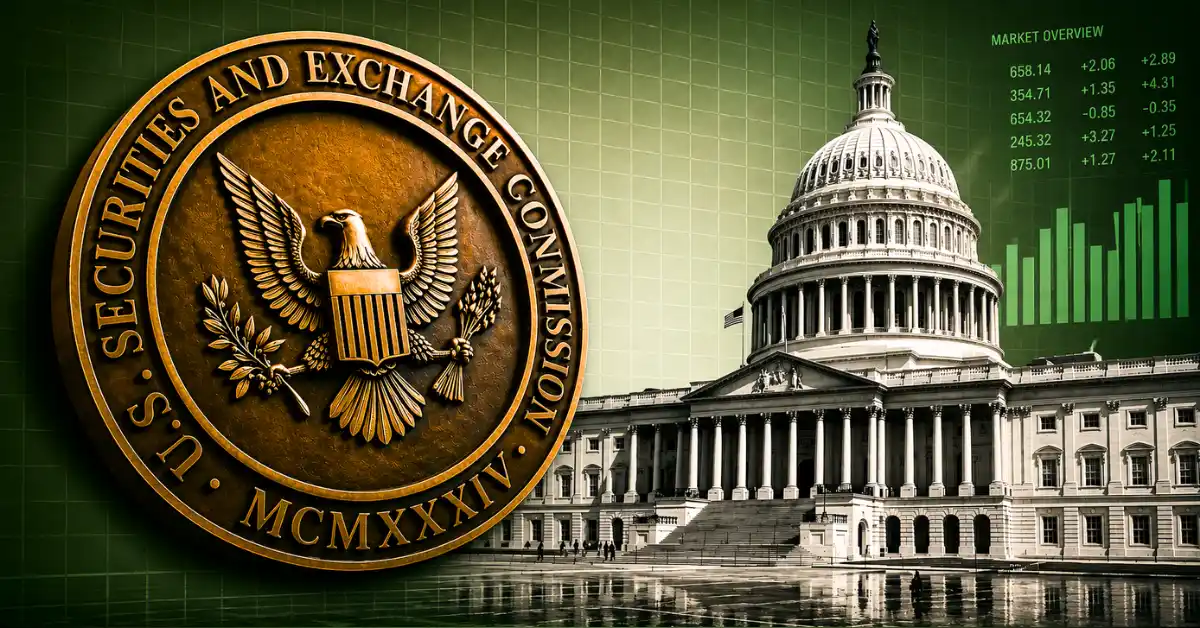
SEC Removes “No-Deny” Rule in Enforcement Settlements to Increase Flexibility (more)
What happened:
- The “no-deny” rule previously required defendants in enforcement settlements to avoid publicly denying the agency’s allegations after agreeing to a settlement
- The rule, known as Rule 202.5(e), applied to cases where financial penalties were imposed and was designed to prevent defendants from contradicting SEC claims after resolution
- Under the new policy, companies and individuals can now settle SEC cases without being forced to remain silent about the allegations made against them
- SEC Chair Paul S. Atkins said the change is intended to make enforcement settlements more flexible and align the SEC with practices used by most other federal regulators
- The SEC also argued that removing the restriction could reduce friction in settlement negotiations and help speed up the resolution of enforcement cases
- Officials stressed that the agency still retains the authority to demand admissions of wrongdoing in cases where it considers them necessary.
Current situation:
- The policy change is raising broader questions about transparency, accountability, and how SEC enforcement actions will be interpreted publicly going forward
- With defendants now able to publicly dispute or deny allegations after settling, the public narrative around SEC cases could become more contested and politically sensitive
- Supporters of the change argue that greater flexibility may encourage faster settlements, reduce costly legal disputes, and improve efficiency for both regulators and defendants
- Critics, however, warn that removing the “no-deny” requirement could weaken the reputational impact of SEC enforcement and reduce deterrence against financial misconduct
- The move also comes at a time when the SEC is facing growing pressure to modernize its regulatory approach toward crypto markets, tokenized assets, and emerging financial products. Read full story
Market Update
Bitcoin
- TD Cowen Raises Strategy Price Target to $400 as Bitcoin Buying Accelerates (more)
- Strategy Adds $2 Billion in Bitcoin, Expands Lead as Largest Corporate Holder (more)
- Bitcoin Whales Move From Accumulation to Selling as Exchange Reserves Rise (more)
Macro Signals
- Iran Moves to Launch “Hormuz Safe” Maritime Insurance Platform Amid Sanctions Pressure (more)
- Oil, Fed Uncertainty, and NVIDIA Earnings Put Crypto Under Market Pressure (more)
Signal: Bitcoin sentiment is mixed, with institutional accumulation continuing while on-chain activity points to rising sell-side pressure. TD Cowen’s decision to raise its price target on Strategy to $400 reflects growing confidence in the company’s Bitcoin acquisition strategy, as Strategy added another $2 billion worth of BTC to further cement its position as the largest corporate holder. However, large crypto holders are shifting from accumulation to distribution, with rising exchange reserves suggesting increased Bitcoin supply and potential short-term selling pressure.
Macro conditions are also adding fresh uncertainty to the crypto space. Iran’s push to launch the “Hormuz Safe” maritime insurance platform highlights how sanctions and geopolitical tensions are accelerating alternative, non-Western financial infrastructure. At the same time, concerns around oil price volatility, Federal Reserve policy uncertainty, and upcoming NVIDIA earnings are keeping risk assets under pressure, with crypto markets remaining highly sensitive to liquidity expectations and broader investor sentiment.
Trading & Market Structure
- Ethereum Market Trends Now Closely Track ETF Flows, Data Suggests (More)
- Ethereum’s price data over the past year shows inflows and outflows have closely tracked price action from early 2025 lows through the September 2025 peak above $4,700 and into the current sideways range. With ETF outflows returning in May 2026, short-term momentum is weakening, as slowing or negative flows continue to weigh on price direction.
- Ethereum’s staking narrative is losing relative strength. Yields around 2.5% after fees are now less competitive compared to U.S. 10-year Treasury yields above 4.6%. This shift suggests Ethereum is facing reduced yield-based demand support, with capital allocation increasingly favouring lower-risk traditional assets.
Stablecoin & Payments Update
- South Korea’s NHN KCP Tests Stablecoin Payments in Retail Setting (More)
- Japan’s JPYC Stablecoin Launches on Unifi as Digital Yen Payments Expand (More)
- Sorted Raises $4.4M to Expand Stablecoin Access on Feature Phones (More)
DeFi & On-Chain Finance
- Zama Acquires TokenOps to Bring Encrypted Token Operations On-chain (More)
- Kaiko Buys Cometh to Strengthen MiCA-Regulated On-chain Data Platform (More)
- Echo Protocol Hack on Monad Triggers New DeFi Security Concerns (More)
Industry Development
- Alchemy Pay Links Up With D’CENT Wallet to Make Crypto Buying Easier (More)
- Qivalis Expands to 37 Banks as Europe Pushes Euro Stablecoin Plan (More)
- Minnesota Allows Banks to Offer Custody Under New Law (More)
Regulation & Policy Watch
- Trump Pushes Fed to Review Payment Access for Crypto and Fintech Firms (More)
- SEC Prepares Framework to Allow Trading of Tokenized Stocks on Crypto Platforms (More)
- SEC Delays Prediction Market ETFs as Regulators Weigh New Financial Risks (More)
Market Movers
Top Gainers 📈
- OpenEden (EDEN) +231.4%
- Bonfida (FIDA) +142.6%
- Block Street (BSB) +126.3%
- Purr (PURR) +95.6%
- Xphere (XP) +73.9%
Top Losers 📉
- Unibase (UB) −60.7%
- Billions Network (BILL) −56.6%
- INI (INI) −50.6%
- Irys (IRYS) −42.5%
- BUILDon (B) −32.4%
Source: CoinGecko
Project Spotlight
IG Europe Partners with Bitpanda to Expand Crypto Services Across the EU
IG Europe has partnered with Bitpanda to expand its cryptocurrency offerings across the European Union, marking another step in the trading firm’s broader push into digital assets.
The partnership will allow IG Europe clients to access a wider range of crypto products through Bitpanda’s infrastructure as demand for digital asset exposure continues to grow among regulated investors in Europe.
IG Europe Managing Director Esteve Jane said the collaboration aims to give investors access to more asset classes through a regulated, trusted platform.
Why it matters:
- Signals accelerating institutional adoption of crypto infrastructure in Europe, as IG Europe partners with Bitpanda to expand regulated access to digital asset products under the EU’s MiCA framework
- Shows how traditional brokerages are integrating crypto offerings through established exchanges, bridging regulated finance with broader digital asset exposure for clients
- Highlights the growing role of infrastructure providers like Bitpanda, which are positioning themselves as backend rails for institutional crypto distribution across multiple markets
- Points to intensifying competition among regulated trading platforms and exchanges, as firms like IG Group expand acquisitions, partnerships, and licensing strategies to strengthen their crypto market presence
What to Watch Next Week
- Will the SEC’s removal of the “no-deny” rule reshape how enforcement settlements are perceived publicly, or will it weaken transparency by allowing defendants to contest allegations after resolution?
- Can faster and more flexible settlement dynamics actually improve regulatory efficiency, or will reduced reputational pressure undermine the impact of SEC enforcement actions?
- Will growing pressure for crypto market modernization push the SEC toward even broader reforms in tokenized assets and digital markets, or will political and institutional resistance slow the shift?
Disclaimer: This roundup is intended solely for informational purposes and should not be considered trading or investment advice. Nothing herein should be construed as financial, legal, or tax advice. Trading or investing in cryptocurrencies carries a considerable risk of financial loss. Always conduct due diligence.
Enjoyed this? Bookmark DeFi Planet, explore related topics, and follow us on Twitter, LinkedIn, Facebook, Instagram, Threads, and CoinMarketCap Community for seamless access to high-quality industry insights.
“Take control of your crypto portfolio with DEFI PLANET PRO, DeFi Planet’s suite of analytics tools.”