











































Quick Breakdown

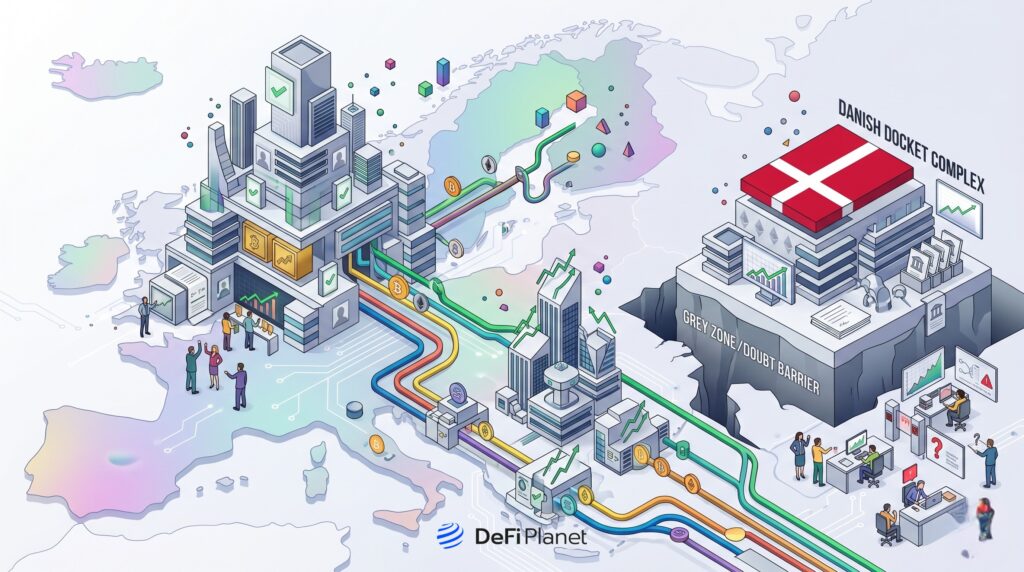
- Crypto adoption across Europe is uneven, with Northern and Western Europe generally ahead but Denmark is a clear outlier, with only about 4% of residents owning crypto assets according to a recent staff paper from Danmarks Nationalbank.
- The central bank notes that adoption levels in Denmark have remained largely flat since 2023, with most holders keeping relatively small allocations, suggesting limited conviction or speculative exposure rather than broad financial integration.
- This contrasts with higher adoption trends seen in parts of Europe such as the UK and Nordic peers, where engagement is more widespread despite similar levels of digital infrastructure.
- Major barriers appear structural rather than technological: strict tax treatment of crypto gains, cautious banking relationships with exchanges, low perceived everyday utility, and limited integration into mainstream financial services continue to slow adoption momentum.
Crypto adoption in Europe is not moving in a straight line. While the broader region continues to see gradual growth in ownership and usage, the pace varies sharply depending on local regulation, banking access, and how people actually perceive digital assets in everyday life.
Denmark stands out in this uneven landscape. Despite being one of the most digitally advanced economies in the world, cryptocurrency adoption remains relatively low. A staff paper from Danmarks Nationalbank released on April 15 estimates that only around 4% of Danes hold crypto assets, a figure that has shown little meaningful change in 3 years (since 2023).
What makes this more interesting is not just the low number itself, but the contrast it creates. Denmark sits within a highly developed EU financial ecosystem that is gradually moving toward clearer crypto regulation under frameworks like MiCA, yet local participation still lags behind peers such as Norway, Finland, and the United Kingdom.
The gap suggests that infrastructure alone is not enough to drive adoption. Instead, the Danish case points to something more nuanced, which can be explained as a combination of strict tax treatment, conservative banking exposure to crypto platforms, and a generally cautious investor culture that keeps digital assets on the margins of everyday finance.
In other words, the question is no longer whether Europe is adopting crypto, but why some of its most advanced economies, like Denmark, are still moving at very different speeds.
Key Data: Denmark’s 4% Ownership Rate
Denmark’s crypto ownership rate sits at just 4%, and it hasn’t changed since 2023 despite broader growth across Europe. That alone signals that this isn’t just a timing issue or early-stage hesitation; it reflects a more stable, structural level of low participation.
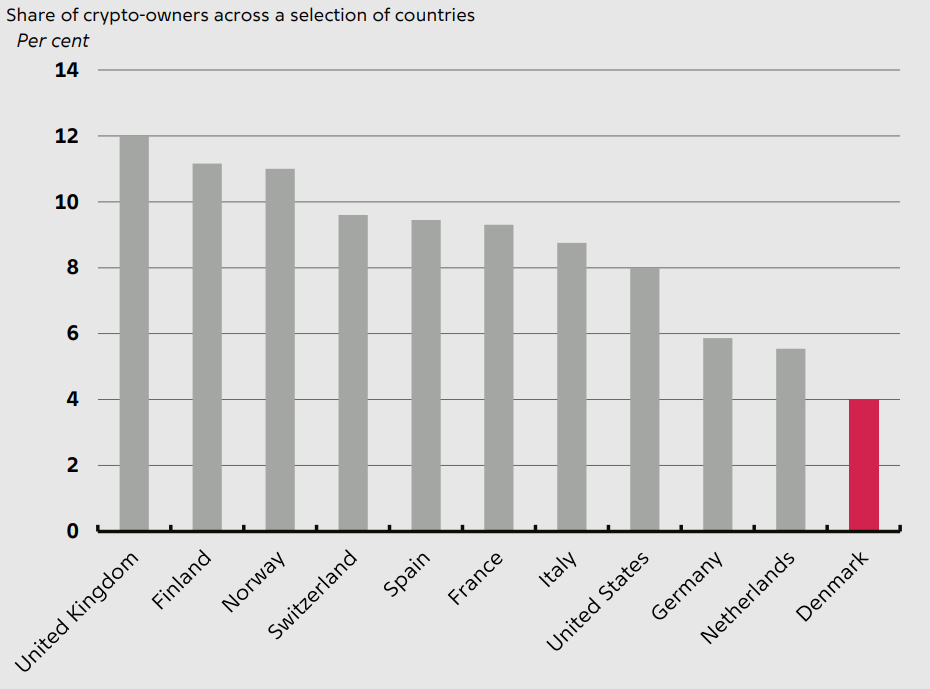
The data comes from a Danmarks Nationalbank staff paper based on a survey of over 3,000 citizens, which also shows that most Danish crypto holders keep relatively small positions, typically under 10,000 Danish kroner (around $1,570).
In other words, even among participants, exposure to crypto tends to be limited rather than deep, with total national holdings estimated to be modest compared to larger markets.
What stands out is how Denmark compares to similar economies. Countries like Norway, Finland, and the UK report ownership rates above 10%, placing Denmark clearly at the lower end of European adoption.
Barriers to Crypto Adoption in Denmark
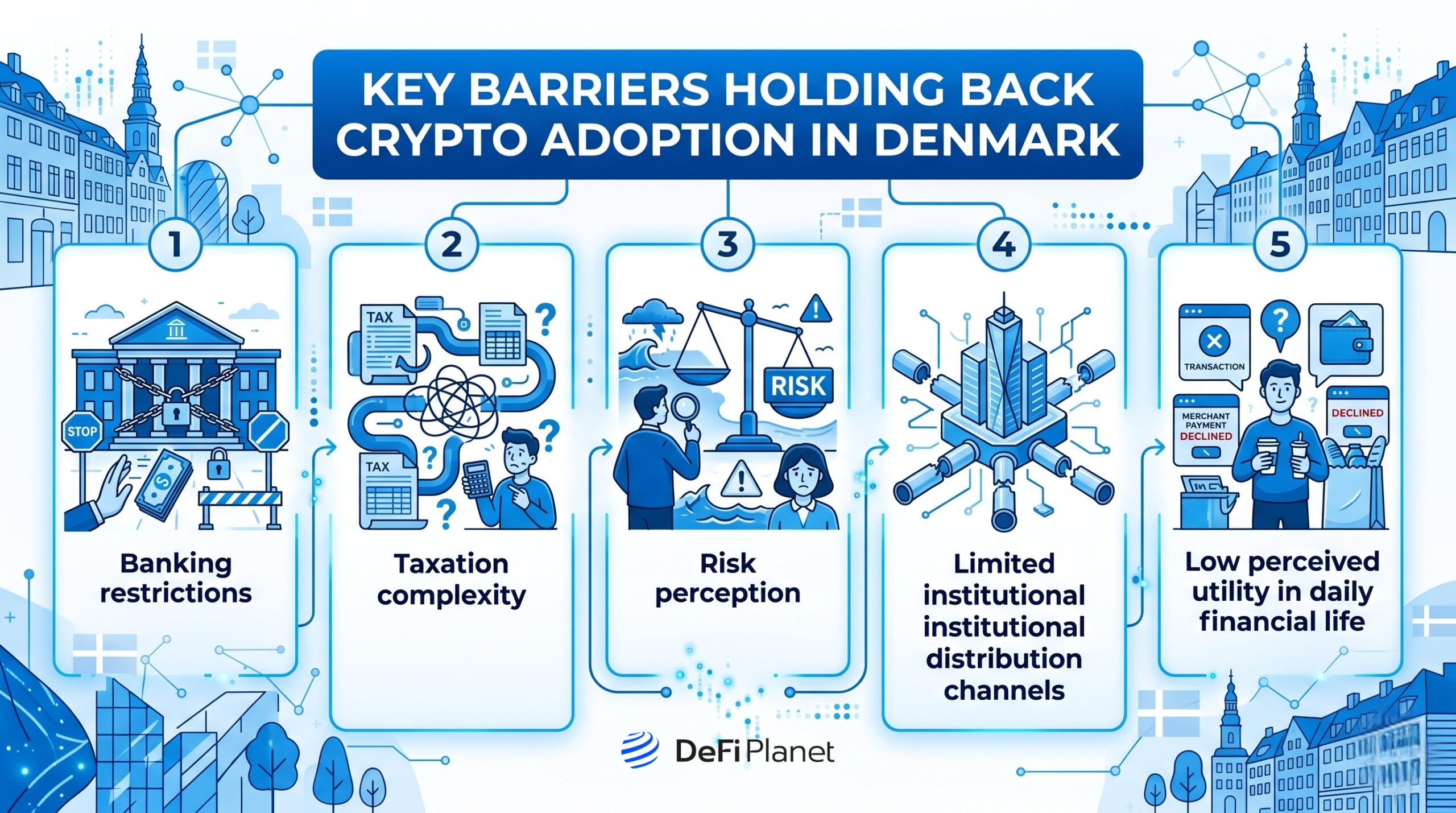
Several factors make crypto adoption more difficult in Denmark, even for people who are otherwise financially active and digitally advanced.
Banking restrictions
One of the principal obstacles is the conservative approach of traditional banking institutions towards crypto assets. Most Danish banks do not support cryptocurrency transactions, making it harder for users to transfer funds from their bank accounts to cryptocurrency exchange platforms.
For a regular user, this adds friction at the very first step, getting funds into the crypto ecosystem, because the banking layer doesn’t fully support or integrate with it.
Taxation complexity
Crypto taxes in Denmark are seen as complex and quite strict. Profits from crypto are treated like regular income and can be taxed at rates of up to about 53%, depending on how much a person earns. However, it must be noted that losses are not fully offset and that tax deductions are only partially granted, usually at 26% of the loss amount.
Losses have a more negative effect than tax breaks. Additionally, it is mandatory to record all transactions and report any gains or losses. Despite its transparency, it is seen as a lengthy process that may deter investors from engaging with cryptocurrencies and prompt them to explore other investment options instead.
Risk perception
Apart from the regulation, another cultural factor plays a role in the adoption of cryptocurrency in Denmark. The financial culture of the country is characterized by a preference for stability and fiscal responsibility. The asset class is primarily perceived based on risks before opportunities.
Limited institutional distribution channels
While other nations have embraced crypto across their financial products, in Denmark it is not as widely integrated into banking institutions. It means that a majority of crypto investors need to actively seek such services and products rather than access them through known financial institutions.
Low perceived utility in daily financial life
Denmark has a good banking system and efficient payment methods compared to other countries. Therefore, crypto may not be required by consumers to solve a particular financial issue. They can also invest in other assets, such as stocks and bonds.
The result is a system in which crypto exists in the background but rarely becomes a mainstream part of everyday financial behaviour.
Can Denmark Close its Crypto Adoption Gap?
The lack of cryptocurrency adoption in Denmark is not necessarily permanent, though closing the gap will likely require easing tensions within the banking system, as well as in tax and regulatory frameworks. If banks become more accommodating when it comes to incorporating cryptocurrency-related services, it will become much easier for individuals to transition from conventional financial services to cryptocurrencies.
Taxes will also play a crucial role here. It is possible that if tax-related policies become less burdensome for individuals, or at least on par with how taxes work for other assets, people will feel better about the risks associated with cryptocurrencies.
Nevertheless, the spread of uniform regulation across the EU could gradually establish standards and eliminate the influence of regional peculiarities on people’s decisions. Still, despite all the improvements in the regulatory sphere, implementation may remain slow if there is no change in the cultural perspective on risk and financial stability. All in all, the future of Denmark will be determined by whether or not cryptocurrencies are going to become an integral part of its financial industry.
The reason behind Denmark’s slow adoption of cryptocurrencies could be attributed to how the financial environment is designed to make participating in the crypto ecosystem seem either unnecessary, too difficult, or simply risky. When conventional finance is already functioning efficiently and effectively, there is little need for cryptocurrencies by default.
That said, future adoption of cryptocurrency in Denmark may have little to do with raising awareness and market cycles, but everything to do with incorporating cryptocurrencies into the very systems used by Danish citizens. Unless this happens, widespread adoption in Denmark is unlikely, regardless of its technological readiness.
Disclaimer: This article is intended solely for informational purposes and should not be considered trading or investment advice. Nothing herein should be construed as financial, legal, or tax advice. Trading or investing in cryptocurrencies carries a considerable risk of financial loss. Always conduct due diligence.
Enjoyed this piece? Bookmark DeFi Planet, explore related topics, and follow us on Twitter, LinkedIn, Facebook, Instagram, Threads, and CoinMarketCap Community for seamless access to high-quality industry insights.
Take control of your crypto portfolio with DEFI PLANET PRO, DeFi Planet’s suite of analytics tools.”