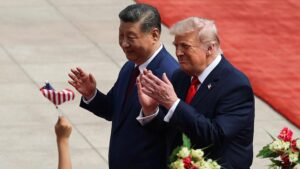
































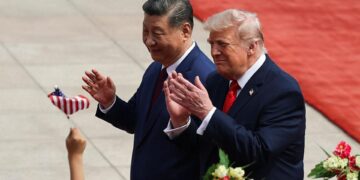


















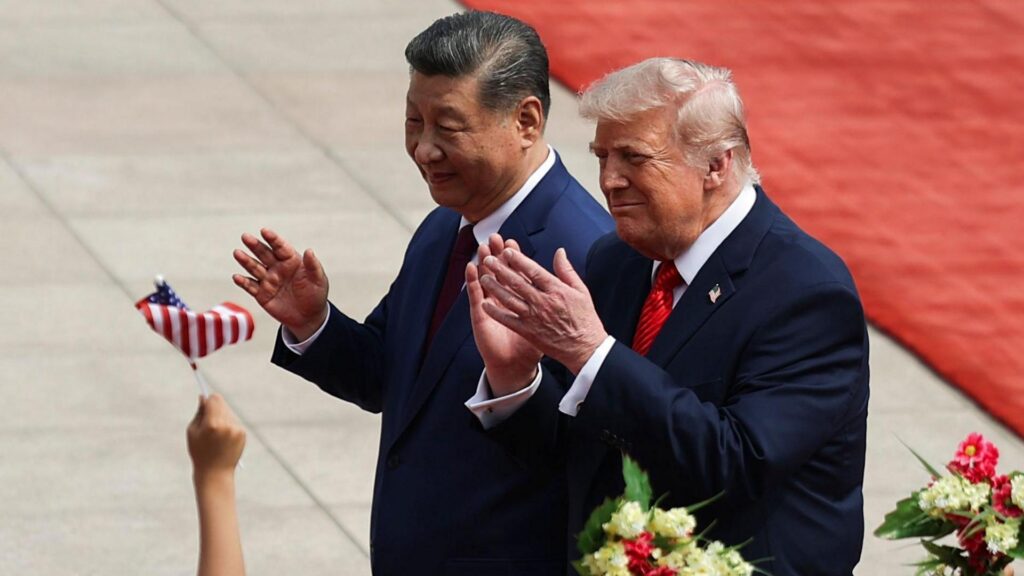
Presidents Donald Trump and Xi Jinping concluded high-level talks in Beijing covering trade, energy security, Iran tensions, and regional stability around the Strait of Hormuz. Crypto assets were not part of the agenda, yet markets reacted immediately.

From the Bilateral Meeting in Beijing:
President Trump had a good meeting with President Xi of China. pic.twitter.com/WaH8hR1ZV3
— The White House (@WhiteHouse) May 14, 2026
Bitcoin climbed over 1.7% during the session as traders positioned for improved global risk sentiment following the meeting. The move reflected a familiar pattern in which easing geopolitical tensions between the U.S. and China support short-term demand for risk assets. However, the rally quickly faded after U.S. inflation data printed hotter at 3.8%, while Trump also noted that the U.S.–Iran ceasefire remains unstable.
The discussions focused on trade flows, agricultural imports, energy cooperation, and nuclear restrictions on Iran. While none of these points directly referenced digital assets, they collectively shaped expectations around liquidity, global trade stability, and investor risk appetite.
Both countries agreed that Iran can never have a nuclear weapon. pic.twitter.com/7hYMIBoTZY
— The White House (@WhiteHouse) May 14, 2026
The room was full of crypto money
Although crypto was not formally discussed, the broader financial context was difficult to ignore. Key figures tied to digital assets and tokenization have increasingly become central to global capital markets. BlackRock manages the largest Bitcoin ETF exposure, while Tesla still holds Bitcoin on its balance sheet.
On my way to Beijing in Air Force One
— Elon Musk (@elonmusk) May 13, 2026
Meanwhile, payment giants such as Visa and Mastercard continue expanding stablecoin settlement systems, and major banks have increased participation in crypto trading infrastructure.
Xi Jinping’s remarks on expanding China’s economic openness were also closely watched by global investors. Any shift toward broader capital access could indirectly benefit institutions with growing exposure to digital assets.
Why this summit moves Bitcoin even without mentioning it
Markets are reacting less to direct policy and more to macro signals. A calmer U.S.–China tone reduces immediate tail-risk concerns, encouraging short-term rotation into risk assets such as equities and crypto. Bitcoin, in particular, has become highly sensitive to these shifts as institutional participation increases.
Historically, periods of diplomatic easing between the two economies have coincided with 2–4% short-term moves in major crypto assets. The presence of ETF-linked flows has amplified this reaction, making Bitcoin behave more like a macro-sensitive asset than a purely decentralized hedge.
What could go wrong?
Despite the optimistic tone, no binding agreements emerged from the talks. Key structural disputes around technology exports, Taiwan, and strategic resources remain unresolved, leaving markets exposed to renewed volatility.
If tensions re-escalate, risk sentiment could reverse quickly, pushing investors back into defensive assets. In that scenario, Bitcoin’s role as a safe-haven asset would again be tested against its behavior as a high-beta macro instrument. For now, markets remain cautiously constructive, but the reaction is fragile and heavily dependent on broader macro stability.
This is not the first meeting between the two leaders. Last year, Trump and Xi Jinping met in South Korea in an effort to stabilise relations between the world’s two largest economies. The discussions focused on easing tariff tensions that had been driving volatility across global markets, including crypto.
Enjoyed this? Bookmark DeFi Planet, explore related topics, and follow us on Twitter, LinkedIn, Facebook, Instagram, Threads and CoinMarketCap Community for seamless access to high-quality industry insights.
Take control of your crypto portfolio with DEFI PLANET PRO, DeFi Planet’s suite of analytics tools.