

















































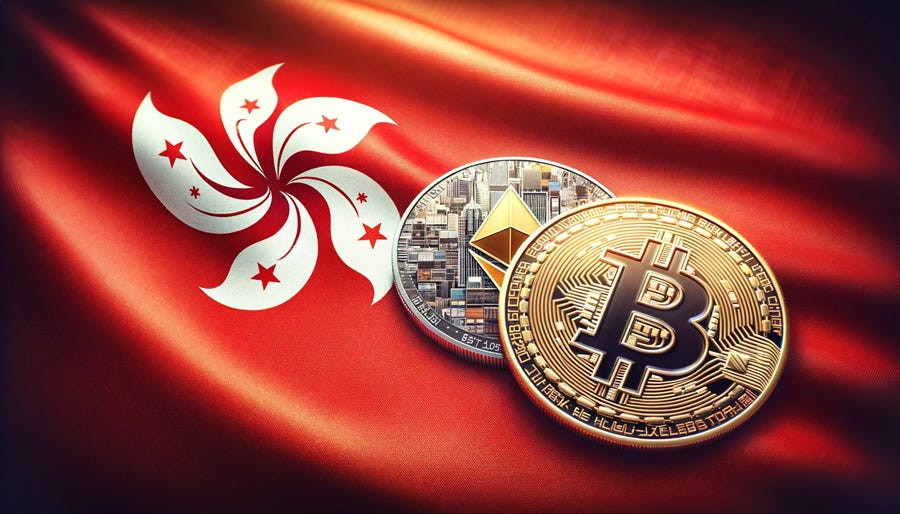
Hong Kong is rapidly shaping a multi-track digital finance system where stablecoins, tokenized bank deposits, and central bank digital money are evolving side by side, showing a broad transition in how money moves across Asia’s financial hubs.

The city’s approach is not centred on a single innovation but on parallel systems competing for the same payment and settlement flows. While global attention often focuses on stablecoins, Hong Kong’s real momentum is emerging from how these digital assets interact with bank-issued tokens and central bank infrastructure already in live use across major institutions.
— Asia Stablecoin Alliance (@AsiaStablecoin) April 29, 2026
Tokenized money is already moving value in real time
Beyond stablecoins, commercial banks are already processing real transactions through tokenized deposit systems that operate on existing banking rails. These instruments function like digital versions of traditional bank balances, allowing instant settlement between institutions and corporate clients without leaving the regulated banking system.
At the same time, Hong Kong’s central bank digital currency experiments are advancing on the wholesale side, enabling interbank settlement that extends beyond traditional operating hours. This infrastructure is increasingly positioning itself as the backbone of institutional payments, particularly for cross-border financial flows and large-scale asset transfers.
Together, these systems are already handling real economic activity, reducing reliance on traditional correspondent banking channels and reshaping liquidity movement across financial institutions.
Stablecoins face a crowded infrastructure, not a blank slate
Unlike earlier expectations, stablecoins are entering a market where core payment and settlement functions are already being absorbed by bank-led token systems and central bank digital rails. This creates a more competitive environment where stablecoins must find specific use cases rather than serve as default digital cash.
Their role is increasingly shifting toward retail payments, cross-platform transfers, and on-chain financial activity, rather than institutional settlement, where banks already have embedded solutions. This overlap raises questions about long-term demand distribution across the different forms of digital money.
At the same time, regulatory alignment across banking and securities authorities is ensuring that each layer of digital money operates within clearly defined boundaries, reducing fragmentation but increasing competition between systems.
Hong Kong’s stablecoin push is facing growing scrutiny as debate intensifies over a wider global issue: whether stablecoins can be adopted at scale without further strengthening U.S. dollar dominance. The result is a financial ecosystem where digital money is no longer a single product category, but a layered structure competing within the same economy from different angles.
Enjoyed this piece? Bookmark DeFi Planet, explore related topics, and follow us on Twitter, LinkedIn, Facebook, Instagram, Threads and CoinMarketCap Community for seamless access to high-quality industry insights.
“Take control of your crypto portfolio with DEFI PLANET PRO, DeFi Planet’s suite of analytical tools”