




















































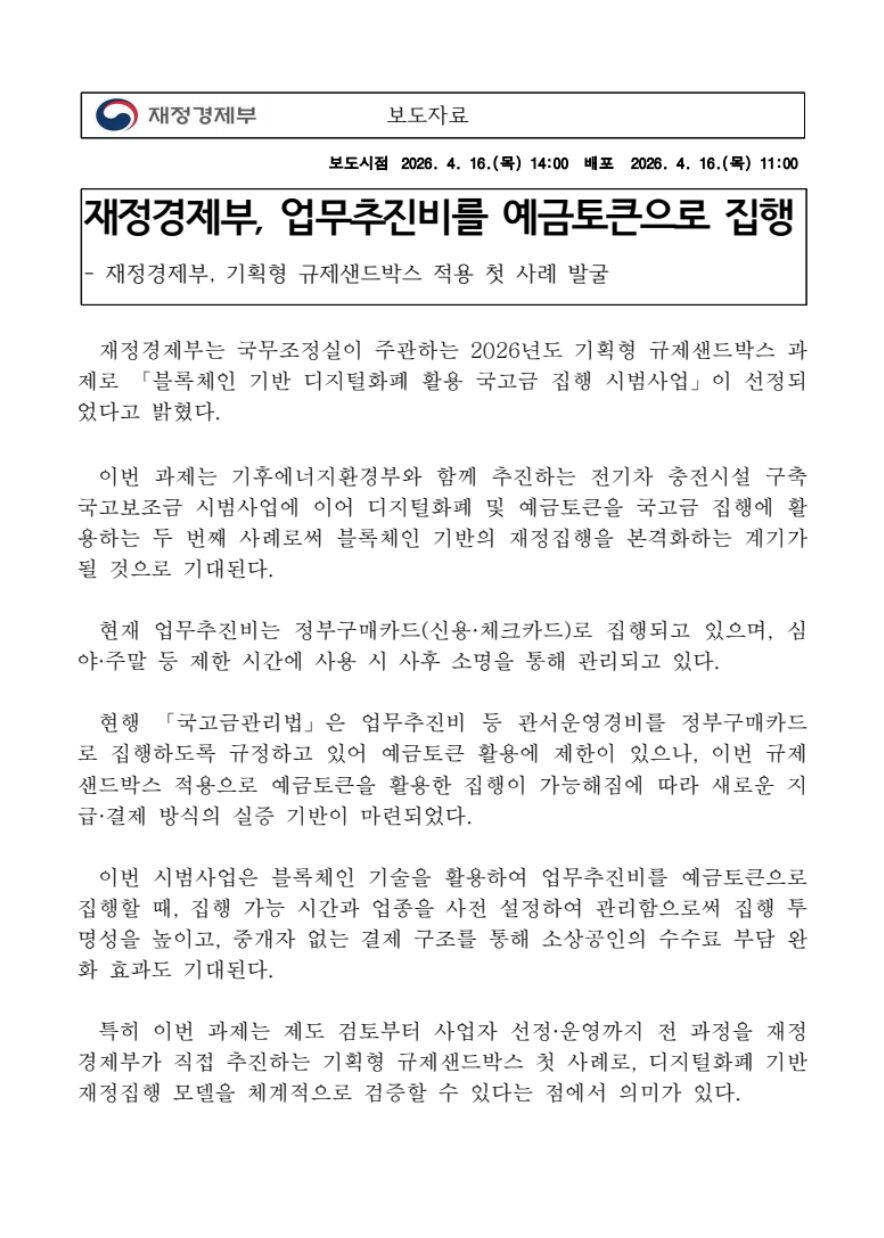
South Korea’s Ministry of Finance and Economy is preparing to launch a pilot program that will test the use of blockchain-based deposit tokens for official government expenses, marking a step toward modernizing public sector payments.

The initiative will replace parts of the current system where government departments rely on credit and debit cards for official transactions. Authorities say the new model is designed to streamline administrative processes while improving transparency and efficiency in public spending.
Blockchain-based deposit tokens are digital versions of bank deposits issued on a blockchain, fully backed 1:1 by fiat and representing a direct claim on a regulated bank. They enable instant, programmable, and compliant transactions, improving cross-border payments, treasury management, and asset settlement, while differing from stablecoins and CBDCs by being private bank-issued money.
Replacing card-based systems with programmable payments
Under the existing framework, government officials must complete additional reporting procedures when expenses are made outside standard working hours or on non-business days. These manual processes are often time-consuming and require multiple layers of review.
The proposed deposit token system introduces programmable features that allow spending conditions to be set in advance. This includes defining when funds can be used and which expense categories are permitted, reducing the need for after-the-fact approvals.
Officials say the blockchain-based structure will also enable real-time tracking of transactions, providing clearer oversight compared to traditional card systems. The removal of intermediaries could further reduce transaction fees, particularly benefiting small businesses that interact with government agencies.
Pilot rollout and broader digital finance strategy
The ministry plans to begin selecting operators for the pilot while coordinating with other government bodies and private sector participants. The initial rollout is expected to take place in Sejong City, South Korea’s administrative hub, with full implementation targeted for the fourth quarter of the year.
If the trial proves successful, the system could be expanded to cover a wider range of government functions. Meanwhile, South Korea’s crypto market entered a structural shift as retail participation slowed and institutional players moved in, according to a new report by Tiger Research.
Enjoyed this piece? Bookmark DeFi Planet, explore related topics, and follow us on Twitter, LinkedIn, Facebook, Instagram, Threads and CoinMarketCap Community for seamless access to high-quality industry insights.
Take control of your crypto portfolio with DEFI PLANET PRO, DeFi Planet’s suite of analytics tools.