

















































Last updated on May 12th, 2026 at 08:24 pm

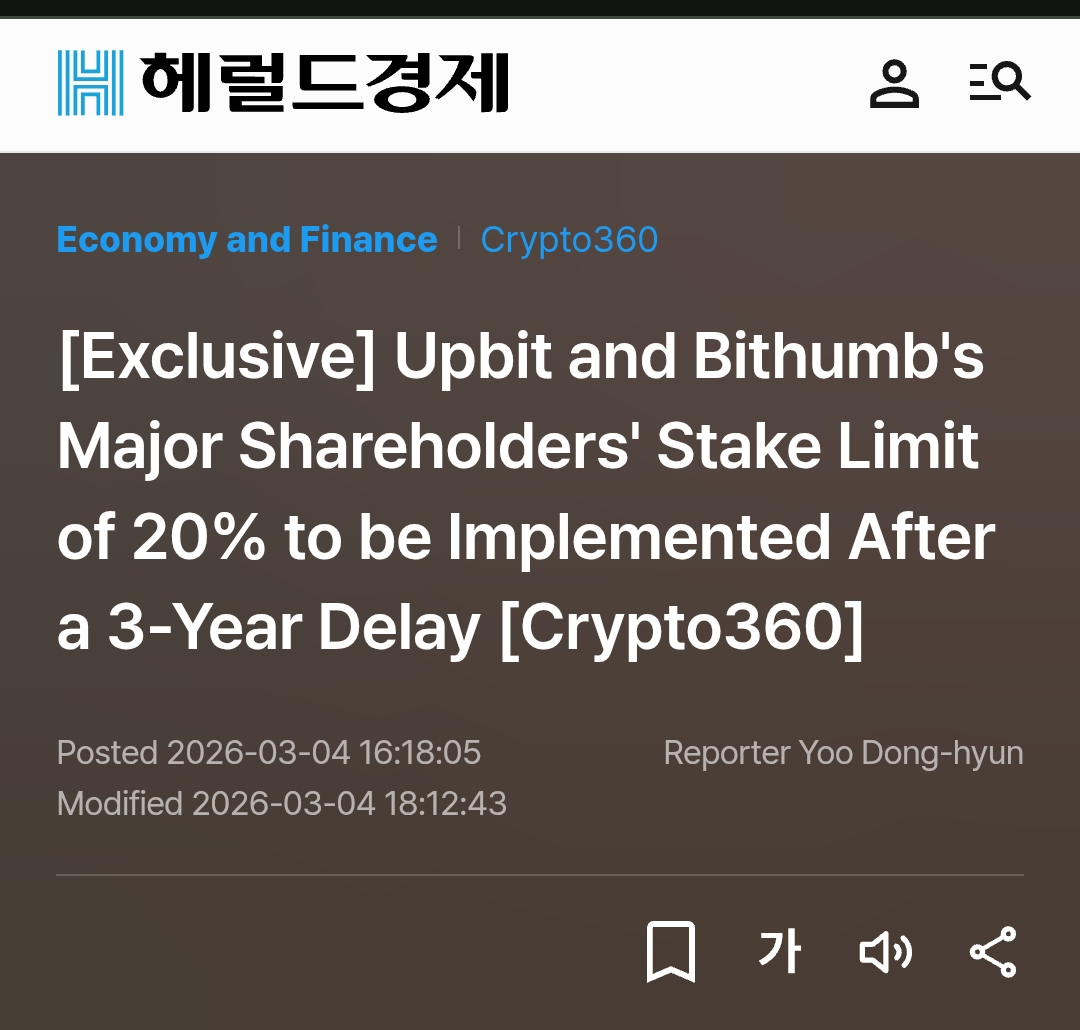
South Korea’s government and ruling party are pushing forward a proposal that could dramatically reshape the ownership structure of domestic cryptocurrency exchanges. Officials have reportedly agreed to introduce a 20% cap on the shareholding of major investors in local trading platforms, a move that would directly impact dominant players like Upbit and Bithumb.
According to local reports, the plan emerged from discussions between the Democratic Party’s digital asset task force and the Financial Services Commission (FSC). Regulators are said to have aligned on limiting controlling stakes to prevent excessive concentration of power in a sector increasingly viewed as systemically important.
Major exchanges face ownership shake-up
If enacted, the proposal would require exchanges to adjust their ownership structures within three years of the law taking effect. Smaller platforms may receive an additional three-year grace period, but larger exchanges, which collectively account for nearly 90% of South Korea’s crypto market, would be expected to comply within the initial window.
Current ownership levels far exceed the proposed cap. Upbit chairman Song Chi-hyung reportedly holds more than 25%, while Bithumb’s parent entity controls over 70% of its shares. Other exchanges, including Coinone, Korbit and GOPAX, also show concentrated ownership structures.
Authorities may permit exceptions of up to 34% for new businesses through an enforcement decree, referencing the 33.3% veto threshold under South Korea’s Commercial Act.
Reform push sparks industry debate
The proposal must still pass through the National Assembly, where debate is expected. While some regulators support the measure, critics argue it could hinder competitiveness and innovation. An industry insider described the plan as “unprecedented globally,” warning it may raise barriers to entry rather than strengthen the market.
The ownership cap discussion comes as Seoul tightens broader oversight. In January, lawmakers approved stricter licensing requirements for virtual asset service providers, expanding background checks on executives and major shareholders. Further amendments targeting investment disclosure rules are also reportedly in the pipeline, signalling a sustained regulatory push across South Korea’s crypto sector.
Enjoyed this piece? Bookmark DeFi Planet, explore related topics, and follow us on Twitter, LinkedIn, Facebook, Instagram, Threads and CoinMarketCap Community for seamless access to high-quality industry insights.
“Take control of your crypto portfolio with MARKETS PRO, DeFi Planet’s suite of analytics tools.”