


























































Quick Breakdown
- The apprehended suspects allegedly moved $102 million through multiple wallets, exchanges, and banks to hide the origin of funds.
- More reason why firms must monitor unusual transfers, report suspicious activity, and invest in advanced tools to meet regulatory standards. Proactive compliance not only helps avoid steep fines but also protects reputation and operational stability.
- South Korea Customs used digital tracking and bank data to uncover the scheme, highlighting the importance of cross-border collaboration. Exchanges and regulators that share information and monitor activity closely can prevent major laundering networks from thriving.

South Korean authorities recently uncovered a major cryptocurrency money laundering operation. It involved about 148.9 billion won (around $102 million) moved across borders using crypto and traditional banks. The scheme ran for nearly four years. disguised transfers as legitimate payments, such as cosmetic surgery and overseas education.
The case involved several Chinese nationals who have now been referred to prosecutors under South Korea’s Foreign Exchange Transactions Act. The network used multiple wallets, exchanges, and bank accounts to conceal the funds…yet another proof of how digital assets can be exploited across borders.
How Crypto Was Used to Move Funds
In the South Korea case, the suspects turned to digital assets to push money across borders in ways that traditional banks couldn’t easily detect. They bought cryptocurrency in several countries, then transferred those assets into wallets in South Korea before converting them into Korean won and sending the money through local bank accounts.
By breaking up the funds and moving them through multiple crypto wallets and accounts, they made the flow of money harder for regulators and banks to track.
This sort of activity is part of a broader pattern where digital assets are used in trade‑based financial crime because they allow quick and global transfers without the same controls as traditional financial systems.
Criminals often use techniques like layering, where funds are split into smaller amounts and shuffled across many wallets or chains to obscure their origin, making it much harder to trace back to the original source.
One reason cross-border crypto money laundering can be attractive is that it offers relative anonymity and speed. Transactions can be sent between people or entities anywhere in the world without passing through multiple intermediaries.
Criminals can use tools like decentralized exchanges, cross‑chain bridges, and mixers that further hide transaction paths and identities. These features reduce the visibility of illicit fund flows and can allow large sums to move quickly before law enforcement can act.
How the Laundering Operation Was Detected
South Korea Customs Service followed the money step by step. They used digital tracking tools and bank data to spot unusual patterns. The group moved funds through many bank accounts. They also split the money into smaller transfers. This made it harder to see where the money started. At one stage, they even withdrew cash from ATMs to reduce the digital trail.
To avoid attention, the group gave the transfers normal-looking labels. They claimed the money was for cosmetic surgery, overseas school fees, or regular remittances. On the surface, everything looked legal. But when investigators compared the transaction data, the timing and amounts did not add up. This is how the network was finally exposed.
What This Means for Crypto Compliance
The South Korea $102 million crypto money laundering case highlights important implications for exchanges and service providers:
Increased scrutiny
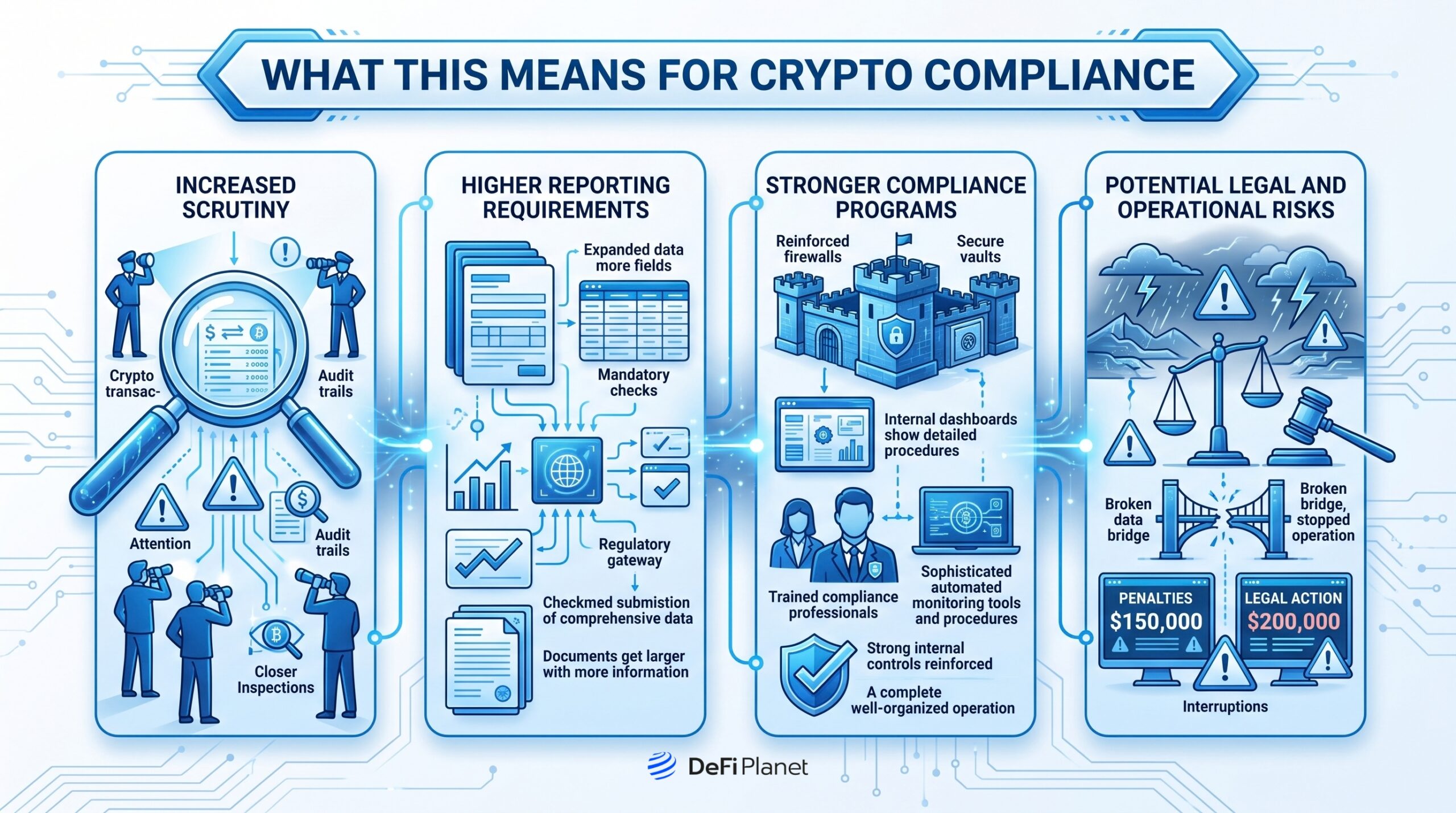
Regulators are paying much closer attention to how crypto exchanges operate. Any large or unusual transfers, especially those crossing borders, can now trigger investigations. Exchanges must assume that their entire transaction history could be examined. This means even small mistakes or oversights can attract regulatory action, so monitoring systems need to be precise and proactive.
Higher reporting requirements
Exchanges are now expected to report suspicious activity in detail. This includes documenting the origin and destination of funds, verifying the identities of the users involved, and maintaining records that demonstrate due diligence. Regular reporting may become mandatory, requiring firms to dedicate staff and resources to handle compliance tasks that were previously optional or less formal.
Stronger compliance programs
To meet these new expectations, exchanges may need to invest in advanced monitoring tools. These systems can detect patterns like layering, sudden spikes in transfers, or frequent cross-border movements. Compliance teams must be trained to interpret alerts, conduct investigations, and escalate cases to regulators when necessary. Without these safeguards, platforms risk being seen as negligent.
Potential legal and operational risks
Failing to meet regulatory standards can have serious consequences. This includes fines, penalties, or even losing the right to operate in certain markets. In extreme cases, exchanges may be forced to exit a country entirely. Operationally, meeting compliance standards can slow transaction processing or increase costs, but ignoring them can be far more damaging in the long run.
Lessons for global crypto crime enforcement and risk management
Beyond these direct effects on exchanges, the case also offers important lessons for global crypto crime enforcement and risk management:
Digital assets can be traced
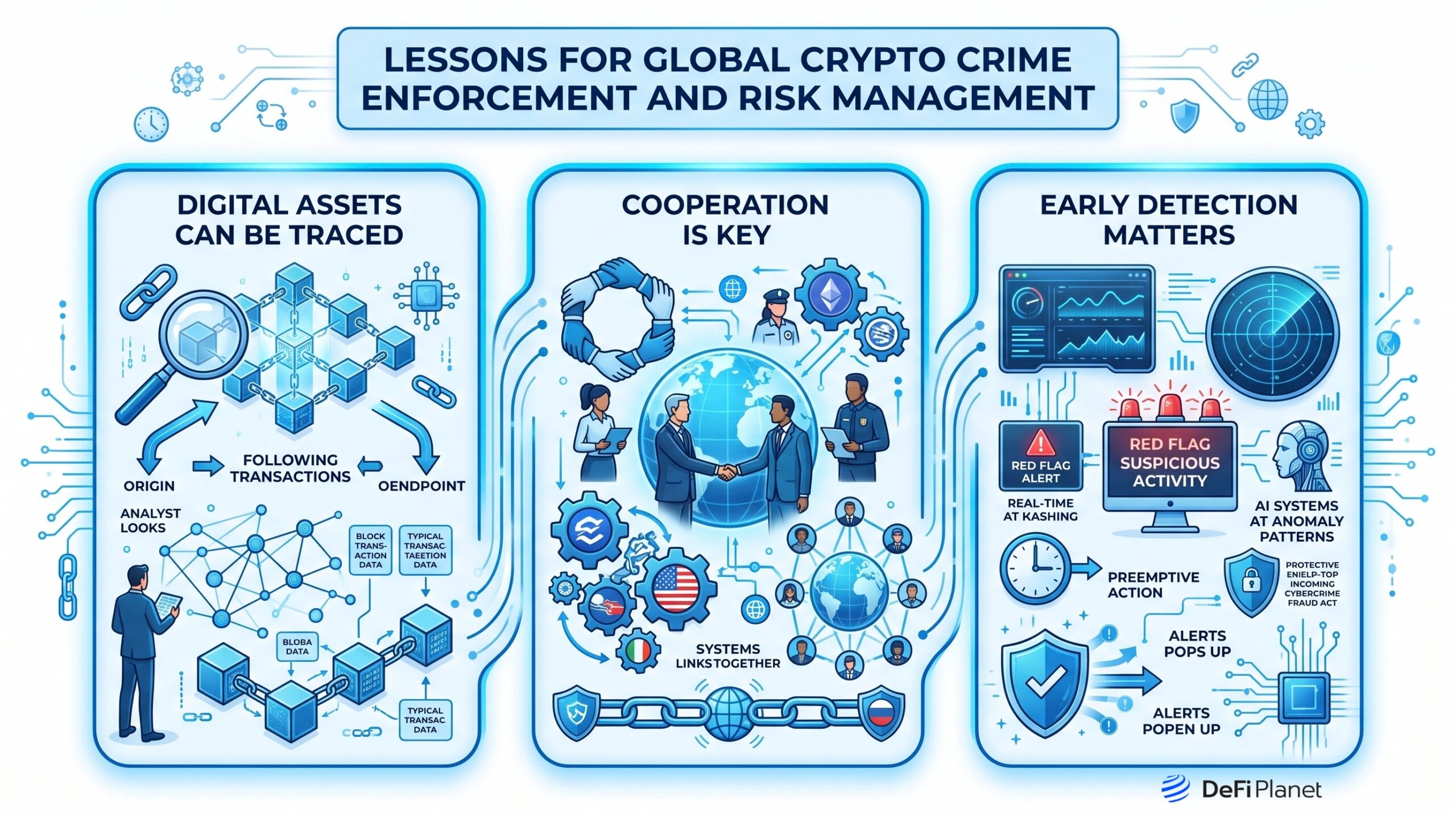
Even though cryptocurrencies are often seen as anonymous, every transaction leaves a digital record on the blockchain. Criminals may try to hide their activity by splitting funds into smaller amounts, using multiple wallets, or moving assets across different countries.
But skilled investigators can follow the chain of transactions, identify patterns, and link transfers back to the people or entities involved. This shows that digital finance is not a completely invisible playground for criminals.
Cooperation is key
The South Korea case highlights how cross-border collaboration can make a huge difference. Laundering schemes often operate across multiple countries, involving international banks, crypto exchanges, and digital wallets.
When regulators, law enforcement agencies, and exchanges share information, they can connect the dots faster and dismantle criminal networks more effectively. This lesson is important for every country handling global crypto flows.
Early detection matters
Platforms that invest in compliance and monitoring tools early can identify suspicious activity before it grows into a major problem. This includes automated alerts for unusual transactions, identity verification checks, and transaction pattern analysis.
Catching potential crypto money laundering early protects the exchange from legal penalties, fines, or license issues, and it also keeps users and the broader ecosystem safer. Preventing a crime before it escalates is far better than dealing with the consequences afterwards.
Strengthening Oversight in Crypto Markets
The South Korea $102 million crypto money laundering case shows that enforcement in Asia is becoming more proactive and sophisticated. Authorities are combining digital tracking, financial intelligence, and cross-border cooperation to catch illicit activity. Exchanges and service providers now face higher expectations for reporting, monitoring, and compliance, signalling a shift toward stricter oversight across the region.
This trend also has broader implications for blockchain transparency and compliance. As regulators demand clearer records and better risk management, crypto platforms are encouraged to strengthen internal controls and adopt more robust monitoring systems. In the long run, these efforts can make the industry safer, reduce opportunities for money laundering, and build trust in digital finance across Asia and beyond.
Disclaimer: This article is intended solely for informational purposes and should not be considered trading or investment advice. Nothing herein should be construed as financial, legal, or tax advice. Trading or investing in cryptocurrencies carries a considerable risk of financial loss. Always conduct due diligence.
Enjoyed this? Bookmark DeFi Planet, explore related topics, and follow us on Twitter, LinkedIn, Facebook, Instagram, Threads, and CoinMarketCap Community for seamless access to high-quality industry insights.
Take control of your crypto portfolio with DEFI PLANET PRO, DeFi Planet’s suite of analytics tools.