



















































The rise of Money2 marks a turning point in the history of finance, where the dominance of banks and paper-based systems gives way to stablecoins, smart contracts, and automated blockchain infrastructure.

The conversation around bank disruption is heating up because Money2 addresses the most persistent flaws in traditional finance: high fees, slow settlements, and limited accessibility. Stablecoins enable near-instant 24/7 payments, while DeFi platforms replicate lending, savings, and trading services without relying on physical branches or human gatekeepers.
This transformation is being driven by a powerful combination of decentralized finance, stablecoins, and automation. Together, they are reshaping how money is created, stored, and transferred. If the momentum continues, Money2 could become the backbone of a faster, more open, and more inclusive financial system.
What is Money2 and How It Differs from TradFi
The TradFi vs DeFi distinction is critical: in TradFi, institutions act as central authorities, while in DeFi, protocols distribute control through open code. Money2 represents the emergence of a new financial paradigm powered by digital assets, DeFi, and smart contracts.
It is built on core principles: decentralization, where control lies in transparent code, not institutions; transparency, every transaction is verifiable on public blockchains; and programmability, money behaves like software, flowing according to predefined rules rather than manual processes.
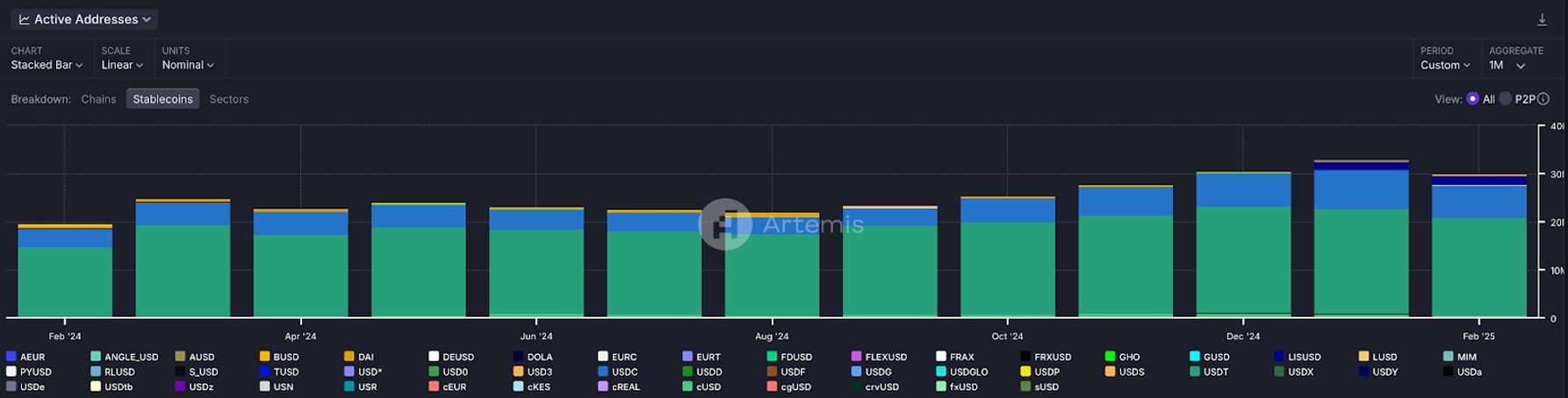
By early 2025, stablecoin supply had reached $225 billion, achieving 63% year-over-year growth. This is a clear signal that Money2 is already reshaping global value transfer outside the traditional banking infrastructure.
Payments, lending, and asset transfers can be executed automatically without human oversight or intervention. This code-driven model reduces fees, speeds friction, and the risk of gatekeeping; any user with a wallet can participate directly in the ecosystem.
In traditional banking, moving money often involves multiple institutions, manual compliance checks, delayed settlement, and hidden fees. Transfers may take days and rely on clearing houses or SWIFT messaging. In contrast, Money2 transactions usually settle in seconds, operate 24/7, and are verifiable on-chain.
Smart contracts enforce programmatic conditions, like escrow or collateral rules, without manual approval. This fundamentally shifts financial responsibility from institutions to open, verifiable code, offering a more efficient, accessible, and transparent alternative to legacy systems.
The Role of Stablecoins in Money2
Stablecoins are often called the “digital cash” of DeFi because they combine the stability of traditional currency with the speed and accessibility of blockchain. Unlike volatile cryptocurrencies like Bitcoin or Ethereum, stablecoins are pegged to stable assets, most commonly the U.S. dollar, making them a predictable medium of exchange.
This stability allows them to function like cash in the DeFi ecosystem. You can send, receive, and store value without worrying about sudden price swings, making them ideal for everyday use and large transactions alike. Stablecoins also fuel DeFi trading, acting as a stable medium of exchange on decentralized exchanges like Uniswap or Curve.
Use Cases: payments, remittances, on-chain savings
-
Payments:
Merchants and platforms can accept stablecoins without facing the volatility risks of other crypto assets. Transactions settle in minutes and can be sent globally without the high fees of credit cards or wire transfers.
For example, Shopify merchants using Coinbase Commerce can accept USDC payments instantly, avoiding card fees and chargebacks. In El Salvador, some coffee shops accept USDT directly from customers’ crypto wallets.

-
Remittances:
For cross-border transfers, stablecoins offer a faster, cheaper alternative to traditional money transfer services. Sending USDC or USDT to family abroad often costs pennies in fees and avoids days of waiting.
For example, Filipino overseas workers use USDT on Tron to send money home, where relatives cash out at local exchanges for near-zero fees compared to Western Union’s 5–10% charges. In Nigeria, freelancers receive stablecoin payments via Binance Pay to bypass restrictive banking rules.
-
On-chain savings:
In DeFi, stablecoins can be deposited into lending platforms or liquidity pools to earn interest, providing a secure way to grow savings without exposure to crypto market volatility.
For example, users deposit DAI into Aave or Compound to earn annual yields, or stake USDC in Curve Finance pools to earn trading fees. Platforms like Yearn Finance automatically optimize returns on stablecoin deposits.
Beyond savings, stablecoins are a core component in DeFi trading, enabling users to swap assets efficiently without relying on centralized platforms.
DeFi Lending vs Bank Loans
The debate of DeFi vs banks is becoming more relevant as users turn to platforms like Aave and Compound that offer lending services without traditional gatekeepers.
Borrowers deposit crypto as collateral, and lenders supply liquidity to the protocol in exchange for interest. The entire process is automated on the blockchain, from collateral management to interest payments, reducing costs and enabling 24/7 access.
Unlike traditional banks, there are no branch visits, lengthy applications, or credit checks; the only requirement is a compatible crypto wallet.
Interest rates, collateral models, and global accessibility
DeFi interest rates are determined algorithmically based on supply and demand. For example, if demand for borrowing stablecoins increases, the borrowing rate rises to encourage more lending. Collateral requirements are generally higher than in banking, often 120% to 150% of the loan amount, to protect lenders from price volatility.
However, DeFi loans are borderless: someone in Nigeria can borrow USDC from a lender in Canada instantly, without currency conversions or international banking fees. This global reach makes DeFi especially attractive in countries with limited access to affordable credit.
Transparency vs opacity in loan processes
The DeFi vs banks comparison also highlights a fundamental difference in transparency. In DeFi, users can verify terms and transactions instantly. All transactions, interest rates, and collateral levels are visible on the blockchain in real time, and anyone can audit the smart contract code.
In contrast, bank loans often involve opaque processes, hidden fees, and decisions made behind closed doors, with customers relying on the bank’s internal risk models.
While DeFi’s transparency builds trust, it also means that users must take responsibility for understanding the risks, as there’s no central authority to reverse mistakes or offer protections like deposit insurance.
Are Banks Adapting or Falling Behind?
Some forward-thinking banks are actively testing blockchain and digital asset integration. JPMorgan Chase operates its own permissioned blockchain network, Onyx, which facilitates tokenized deposits and cross-border payments. HSBC has piloted tokenized gold and digital bond platforms.
Standard Chartered and BNY Mellon have launched custody services for cryptocurrencies, while Santander has experimented with blockchain-based international transfers. These initiatives show that traditional institutions are exploring blockchain as a way to modernize payments, settlement, and asset management processes.
Structural challenges preventing fast adaptation
Despite these experiments, banks face significant hurdles in adopting blockchain and “Money2” systems at scale. Regulatory compliance is complex, especially when dealing with decentralized protocols that lack clear oversight.
Legacy IT infrastructure is another barrier; many banks operate on decades-old systems that are costly and time-consuming to replace. Additionally, risk-averse corporate cultures make rapid innovation difficult, as banks must balance shareholder expectations, regulatory obligations, and customer trust.
Could banks coexist with Money2 or be replaced entirely?
Banks could coexist with Money2 by becoming gateways that provide regulated access to digital assets, stablecoins, and decentralized financial services. For instance, they could offer hybrid accounts where customers hold both fiat and tokenized assets.
However, if DeFi and blockchain-based payment networks continue to improve in speed, cost-efficiency, and user-friendliness, they could bypass banks altogether for many financial services, from lending to cross-border payments.
Ultimately, whether banks adapt or get replaced will depend on their willingness to embrace open finance rather than compete against it.
Implications for Financial Inclusion
Money2 has the potential to improve financial inclusion by removing traditional barriers and expanding access to financial services. Here are the key ways it can make a difference:
Expanding access to the unbanked and underbanked
Money2 has the potential to bring financial services to the 1.4 billion unbanked adults worldwide who lack access to traditional banking. With only a smartphone and internet connection, individuals can store value, send payments, and access credit through decentralized platforms.
Lowering costs for everyday transactions
Traditional banking systems often impose high fees for remittances, international transfers, and small transactions, making them prohibitive for low-income users. Money2 solutions can reduce transfer fees from an average of 6–8% (via banks or Western Union) to under 1%. This cost reduction allows more money to stay in the hands of families and small businesses, directly supporting local economies.
Empowering micro-entrepreneurs and small businesses
By bypassing the delays and requirements of traditional credit systems, DeFi lending platforms can extend microloans to entrepreneurs in emerging markets who would otherwise be excluded. For instance, protocols like Goldfinch offer crypto-collateralized credit lines to small lenders in developing countries, enabling them to fund local businesses quickly and at competitive rates.
Potential challenges to inclusion
While Money2 can enhance inclusion, it’s not without hurdles. Digital literacy, reliable internet access, and regulatory clarity remain barriers in many regions. There’s also the risk that, without proper safeguards, predatory lending or volatile digital assets could harm vulnerable populations. Addressing these challenges will be key to ensuring that financial innovation genuinely benefits those currently excluded from the global financial system.
Final Thoughts
As the DeFi vs banks dynamic continues to evolve, we’re likely to see a redefinition of banking roles. While Money2 is already eroding some of the banking functions, full-scale displacement will likely unfold over the next decade or more. Adoption will depend on how quickly consumers, businesses, and institutions grow comfortable with on-chain systems and on how well the infrastructure scales to meet global demand.
Regulation will be the deciding factor in how far and how fast this transition happens. Clear, balanced rules can encourage innovation while protecting consumers, making it easier for institutional capital to flow into blockchain-based finance. On the other hand, overly restrictive laws could slow adoption and push activity into unregulated or offshore markets.
Smart contracts won’t necessarily eliminate banks, but they will force a redefinition of their role. Instead of being intermediaries for every transaction, banks may evolve into custodians, compliance hubs, and service providers that integrate with blockchain networks. In this future, banking could become less about holding your money and more about helping you interact safely and efficiently with programmable financial systems.
Disclaimer: This article is intended solely for informational purposes and should not be considered trading or investment advice. Nothing herein should be construed as financial, legal, or tax advice. Trading or investing in cryptocurrencies carries a considerable risk of financial loss. Always conduct due diligence.
If you would like to read more articles like this, visit DeFi Planet and follow us on Twitter, LinkedIn, Facebook, Instagram, and CoinMarketCap Community.
Take control of your crypto portfolio with MARKETS PRO, DeFi Planet’s suite of analytics tools.”