














Quick Breakdown
- South Korea’s NTS is stepping up crypto tax enforcement, moving beyond exchanges to trace hidden digital assets across wallets and blockchains.
- Authorities are exploring how cold wallets could be used for crypto tax seizure, tightening oversight on self-custody to prevent evasion.
- The enforcement push reignites debate over privacy rights, innovation, and whether state power should extend into decentralized storage.
South Korea’s Crypto Surge and the Taxman’s Wake-Up Call
South Korea’s crypto journey has been nothing short of explosive…a blend of swift adoption, professional-scale trading, and an evolving regulatory tug-of-war. According to the Chainalysis APAC 2025 Crypto Adoption Report, the country recorded over $300 billion in on-chain value between July 2024 and June 2025 reflecting South Korea’s unique trading culture: highly engaged, tech-savvy, and unafraid to take big risks.

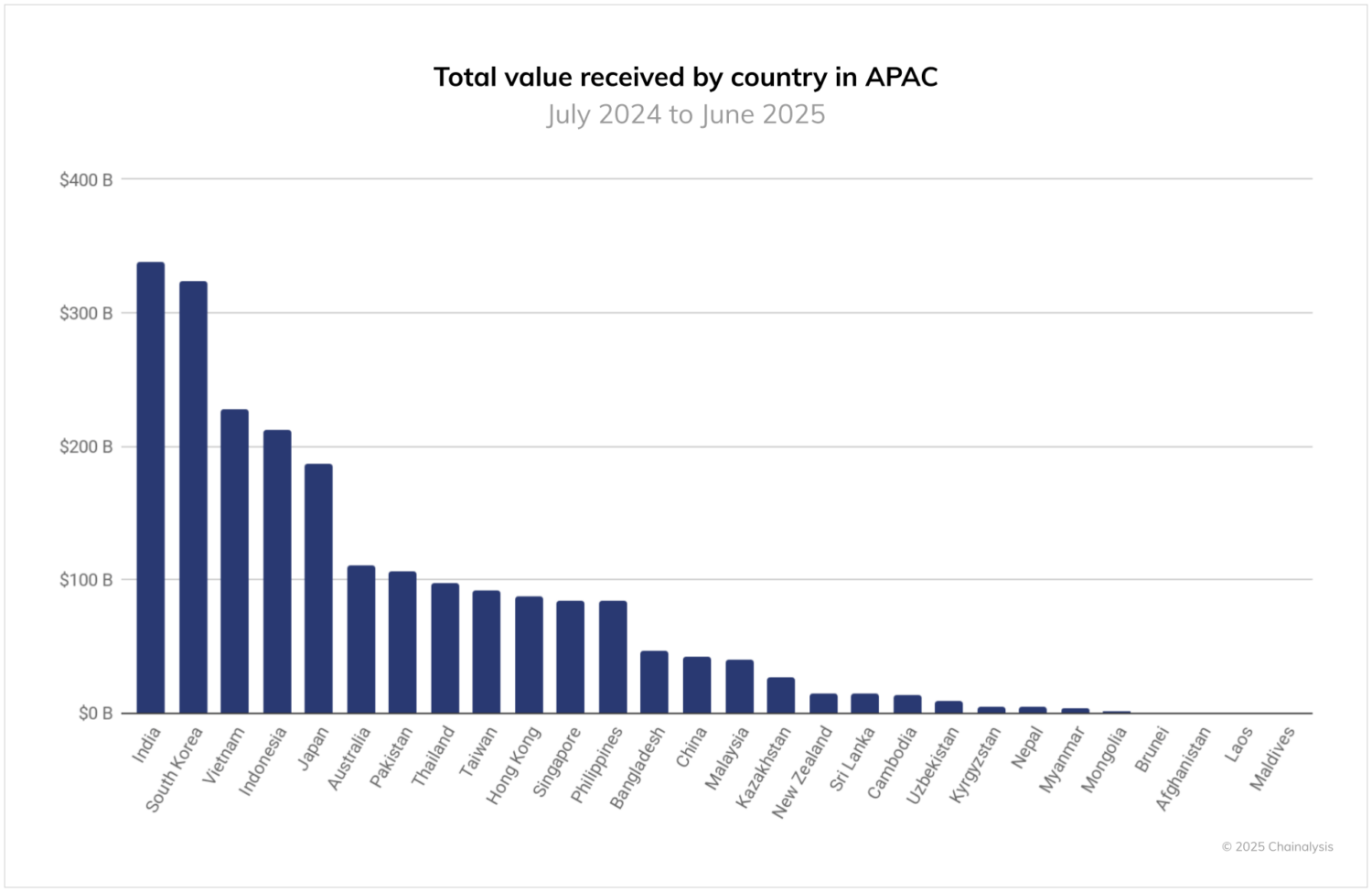
Crypto has moved from being a fringe interest to becoming a mainstream financial pursuit woven into the fabric of South Korea’s digital economy.
But as seen across the world, with great adoption comes even greater oversight. The surge in crypto activity has inevitably drawn the attention of the National Tax Service (NTS), particularly as reports of tax evasion involving digital assets have begun to rise. Since 2021, the agency has confiscated roughly $50 million worth of crypto from 5,700 tax evaders, marking the start of a more aggressive enforcement era.
Now, the NTS is going beyond its traditional exchange-focused approach. Authorities have announced that they are prepared to conduct home inspections, seize hardware wallets, and even liquidate assets tied to unpaid taxes. The intent: to close the loopholes that allow individuals to conceal assets through cold wallets and offshore transfers. With suspicious transaction reports (STRs) from virtual asset service providers (VASPs) on the rise, the government’s stance has hardened…ditto South Korea’s crypto tax enforcement efforts.
RELATED: How to Use a Crypto Hardware Wallet: A Step-By-Step Guide
Inside the NTS’s New Powers
From all indications, the National Tax Service (NTS) is no longer watching the crypto world from the sidelines. Armed with new legal authority and advanced forensic tools, the agency has expanded its reach beyond traditional exchange-based enforcement. According to reports, the NTS now uses blockchain-tracking programs to analyze transaction histories, tracing crypto movements across wallets and platforms. When on-chain data suggests that assets may have been transferred to cold storage to evade detection, the agency doesn’t stop at the screen—it goes to the source.
“We analyze the delinquent taxpayer’s coin transaction history using a virtual asset tracking program, and if we suspect offline hiding, we conduct a search and seizure at their home,”
an NTS official confirmed.
A Necessary Evil or an Overreach?
It’s hard not to see both sides of the coin. On one hand, as crypto becomes deeply embedded in the financial system, it seems inevitable that it should be held to the same standards as other assets. If people can freely move wealth into offline wallets to escape tax obligations, the entire idea of fairness and accountability in taxation begins to crumble. From that perspective, the NTS’s tougher stance feels like a necessary evolution.
Yet, there’s an uneasy side to this story. Expanding state power into personal storage spaces and potentially private devices raises uncomfortable questions about privacy, property rights, and jurisdiction, especially when assets can be held across borders or in decentralized networks. Some may view the enforcement mechanisms of South Korea’s crypto tax enforcement as stifling innovation. It’s also fair to wonder how far enforcement can or should go before it begins to discourage self-custody innovation or erode one of crypto’s defining principles: financial independence from centralized authority.
Ultimately, the issue sits on a delicate line. Is this a fair and measured response to tax evasion or the beginning of a slow encroachment on crypto’s foundational ethos of autonomy and privacy?
Market Implications: Fear, Compliance, and Innovation
The ripple effects of South Korea’s tougher enforcement approach are already visible, and they cut across compliance, investor behaviour, and innovation. Tighter scrutiny could lead to higher compliance costs for firms operating in the crypto space, as well as a noticeable shift in how individuals choose to store their assets. If self-custody begins to feel like a regulatory risk, more users may gravitate toward centralized or institution-backed custody solutions that promise a safer legal standing.
In the short term, this shift could even affect asset perception and pricing, with investors demanding a risk premium for tokens linked to self-custody or privacy-enhancing tools. Meanwhile, projects that emphasize transparency and auditability may enjoy renewed confidence in the eyes of regulators and mainstream investors alike.
However, there’s also a cost to this climate of caution. Innovation may slow if developers feel that self-custody wallets could attract regulatory raids or scrutiny. The market, in turn, may begin to favour “compliant but less radical” architectures, systems designed to align with legal expectations rather than push the boundaries of decentralization.
It’s a classic trade-off: as regulation tightens, trust may grow, but at the possible expense of the open, permissionless ideals that once defined crypto’s appeal.
Global Ripple Effect: Is the Era of Untouchable Crypto Ending?
Ultimately, watchers believe South Korea’s model may serve as a preview for other jurisdictions. If a major economy like South Korea treats cold wallets as enforceable assets, that sets a precedent. Countries with large cryptocurrency populations, such as Japan, Singapore, Europe, and the U.S., may also consider similar measures.
In that sense, perhaps we can say the era of totally “untouchable” crypto storage is waning. Even self-custody may come with compliance strings attached. The wave of South Korea crypto tax enforcement actions sends a message: holding assets offline isn’t a guaranteed shield. This global ripple means market participants must factor in a regulatory arms race and localization risk alongside protocol risk.
The burning question now is: how will the next generation of wallets, custodians and protocols respond? Will they embrace compliance and integration, or retreat further into decentralized shadows? And for you, as an investor or user, where do you stand in a world where code is sovereign, but taxation and enforcement still play a kingmaker role?
Disclaimer: This article is intended solely for informational purposes and should not be considered trading or investment advice. Nothing herein should be construed as financial, legal, or tax advice. Trading or investing in cryptocurrencies carries a considerable risk of financial loss. Always conduct due diligence.
If you want to read more market analyses like this one, visit DeFi Planet and follow us on Twitter, LinkedIn, Facebook, Instagram, and CoinMarketCap Community.
Take control of your crypto portfolio with MARKETS PRO, DeFi Planet’s suite of analytics tools.”






