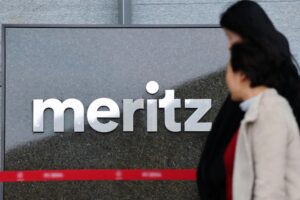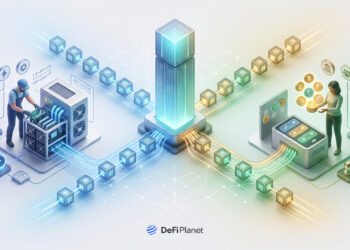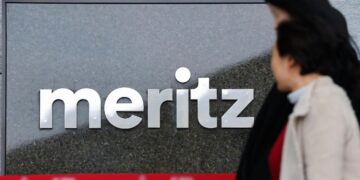















































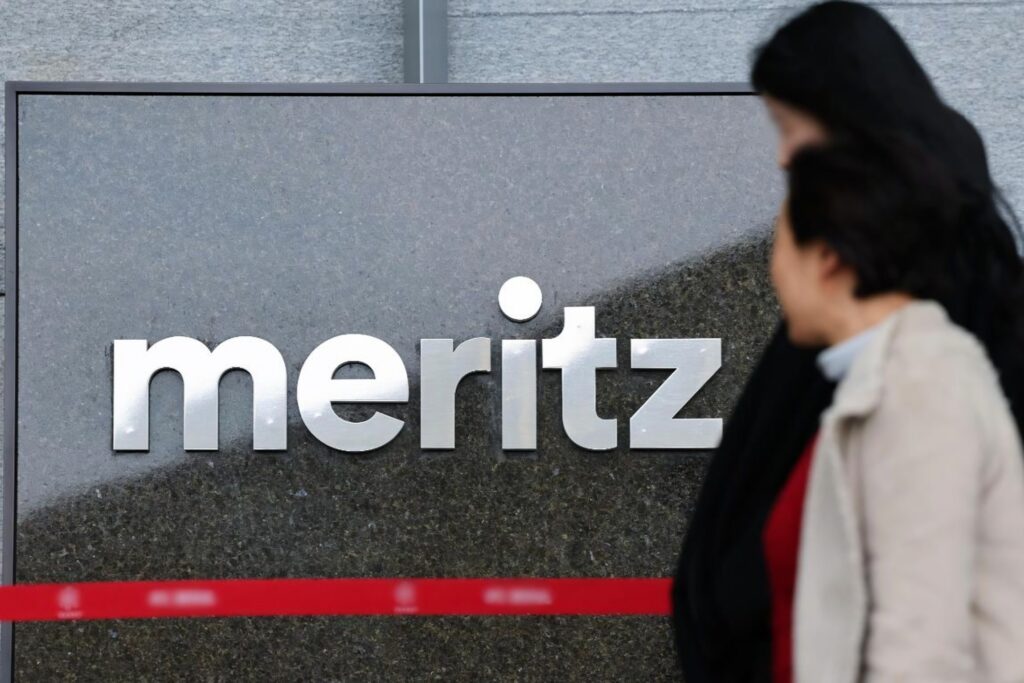
Meritz Securities, one of South Korea’s major brokerages, has signed a partnership deal with Ripple to explore digital asset custody and tokenization infrastructure for the country’s regulated capital markets.

The agreement was signed at Meritz’s headquarters in Seoul, with Meritz Securities CEO Jang Won-jae and Ripple President Monica Long in attendance. The partnership will focus on evaluating Ripple Custody, Ripple’s institutional digital asset custody platform, alongside its broader infrastructure for tokenizing financial assets on blockchain networks.
South Korean financial firm Meritz Securities is partnering with Ripple to bring institutional digital asset custody and tokenization to the local market.
The two companies will roll out these new services in stages as South Korea’s financial regulations officially embrace digital assets.
— XRP Myth Buster (@XRPMythBuster) October 7, 2026
The collaboration will initially remain within South Korea’s existing regulatory framework, with its scope expected to grow as digital asset rules develop. Meritz is also examining potential applications including spot crypto exchange-traded funds (ETFs), security token offerings (STOs), fractional investments and won-denominated stablecoins. The timing is notable as South Korea prepares for security-token regulatory amendments expected to take effect on February 4, 2027, potentially creating more room for blockchain-based financial products.
READ ALSO: Ripple Partners With Kyobo Life Insurance to Launch Tokenized Bond Settlement in Korea
XRP community sees Korea deal as institutional progress
XRP community members largely viewed the Meritz Securities partnership as another sign of growing institutional interest in Ripple’s infrastructure across Asia.
Baggehaglund described the development as part of continued Asian momentum, pointing to Meritz’s interest in Ripple Custody and tokenization technology as South Korea prepares for changes to its digital-asset rules. Others connected the announcement with strong XRP activity on Upbit and previous Ripple-related initiatives involving Korean financial institutions, interpreting the developments as evidence of a broader institutional pipeline rather than an isolated partnership.
Love seeing this 🇰🇷 Meritz Securities, a leading South Korean brokerage, has signed a strategic partnership with Ripple to explore bringing Ripple Custody and tokenization tech to Korea’s capital markets as the rules evolve.
Asia keeps showing up! ripple:native
https://t.co/hD3zrRRxZZ
— XRP_Biker 🪝🏴☠️ (@Baggehaglund) October 7, 2026
However, some users were careful not to equate the agreement with immediate demand for XRP. Clarkron stressed that Meritz is exploring custody, tokenized securities, trading infrastructure and stablecoins, while the announcement does not establish that XRP, RLUSD or the XRP Ledger will be used. Clarkron also noted that high XRP trading volume on Upbit does not necessarily represent buying pressure because volume includes both purchases and sales. This reflects a more measured reaction within the XRP community, where institutional adoption of Ripple’s technology is being viewed separately from direct XRP utility.
Users have compared the development with Ripple’s earlier work involving Kyobo Life and other Korean institutions, while noting that Ripple is competing with multiple technology providers for a role in the country’s tokenized-securities market. The partnership is still in its early stages, so users see it as positive for Ripple’s growth but not enough to drive a major XRP price increase.
READ ALSO: South Korea to Release Tokenized Securities Rules Ahead of 2027 Blockchain Market Launch
How brokerages could connect traditional finance to blockchain
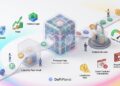
South Korea’s tokenization market is moving toward a structure where brokerages may control more than product distribution. The Financial Services Commission’s September roadmap places securities firms and the Korea Securities Depository at the centre of a three-phase infrastructure rollout, beginning in February 2027 with institutional-only private money market funds and bonds, unlisted stocks and publicly offered fractional-investment securities.
The race to build the infrastructure connecting traditional securities to blockchain is already producing different strategies among South Korean brokerages. Mirae Asset Securities has developed its own mainnet through the Next Finance Initiative, while Samsung Securities is preparing a distributed ledger based on Besu with Samsung SDS. Hanwha Investment & Securities is using Avalanche, and KB Securities has partnered with Securitize and the Optimism Foundation. Meanwhile, 12 brokerages, including Kiwoom and Daishin, have joined Koscom’s shared KoSTO platform.
Custody adds another layer to that competition. BDACS, one of Korea’s regulated digital-asset custodians, surpassed 80 billion won ($58 million) in assets under custody during the first half of 2026 and recently selected Fireblocks for institutional custody, stablecoin transactions and cross-chain operations. BitGo Korea also received VASP registration acceptance in August to provide custody and transfer services to institutional and enterprise clients, backed by Hana Financial Group and SK Telecom.
The Bank of Korea has separately identified custody, valuation, disclosure and liquidity as core infrastructure requirements for Korea’s tokenization market. This suggests the brokerage opportunity may extend beyond selling tokenized products. Firms that connect issuance, custody, trading and settlement could become the operational gateway linking conventional securities markets with blockchain-based assets.
Enjoyed this? Bookmark DeFi Planet, explore related topics, and follow us on Twitter, LinkedIn, Facebook, Instagram, Threads, and CoinMarketCap Community for seamless access to high-quality industry insights
Take control of your crypto portfolio with DEFI PLANET PRO, DeFi Planet’s suite of analytics tools.