














When Bitcoin launched, it was supposed to remove a familiar problem from money, and that was the need to trust another institution to keep the system honest. Satoshi Nakamoto’s 2008 Bitcoin paper was explicit about the goal in an era where online payments normally depended on financial institutions acting as trusted third parties. Bitcoin proposed replacing that model with cryptographic proof, a distributed network, and economic incentives, but almost two decades later, much of crypto looks surprisingly familiar.

People buy crypto through exchanges, they hold stablecoins issued by companies, and use custodians to protect assets. DeFi applications depend on oracle networks, cross-chain users depend on bridges, and developers rely on infrastructure providers, with many people interacting with blockchains through companies rather than running their own nodes.
So what exactly happened? The answer is not that crypto failed to eliminate trust, but that blockchain trust minimization was never the same thing as eliminating trust altogether, with the technology changing where trust is placed.
What Does “Trustless” Actually Mean?
“Trustless” is probably one of the most misunderstood words in crypto. It does not mean trust nothing. It means the system can reduce how much trust you need in a particular person or institution.
Take Bitcoin, for example. If you were sent Bitcoin directly, you wouldn’t need a bank to maintain a private database saying you were paid. The network independently verifies the transaction according to predefined rules, with Ethereum extending this concept through smart contracts. A properly designed contract can execute according to code rather than requiring an employee at a financial institution to approve every transaction.
Ethereum describes its model as “don’t trust, verify”: users can independently verify blockchain data rather than simply accepting another party’s claim about what happened, which is a major economic shift but does not remove uncertainty.
You may not need to trust the person sending you bitcoin, but you still need to trust that the underlying protocol, cryptography, software, and consensus mechanism function as expected. You have moved from trusting an institution to trusting a system of rules and incentives.
Trust Minimization Is Not Trust Elimination
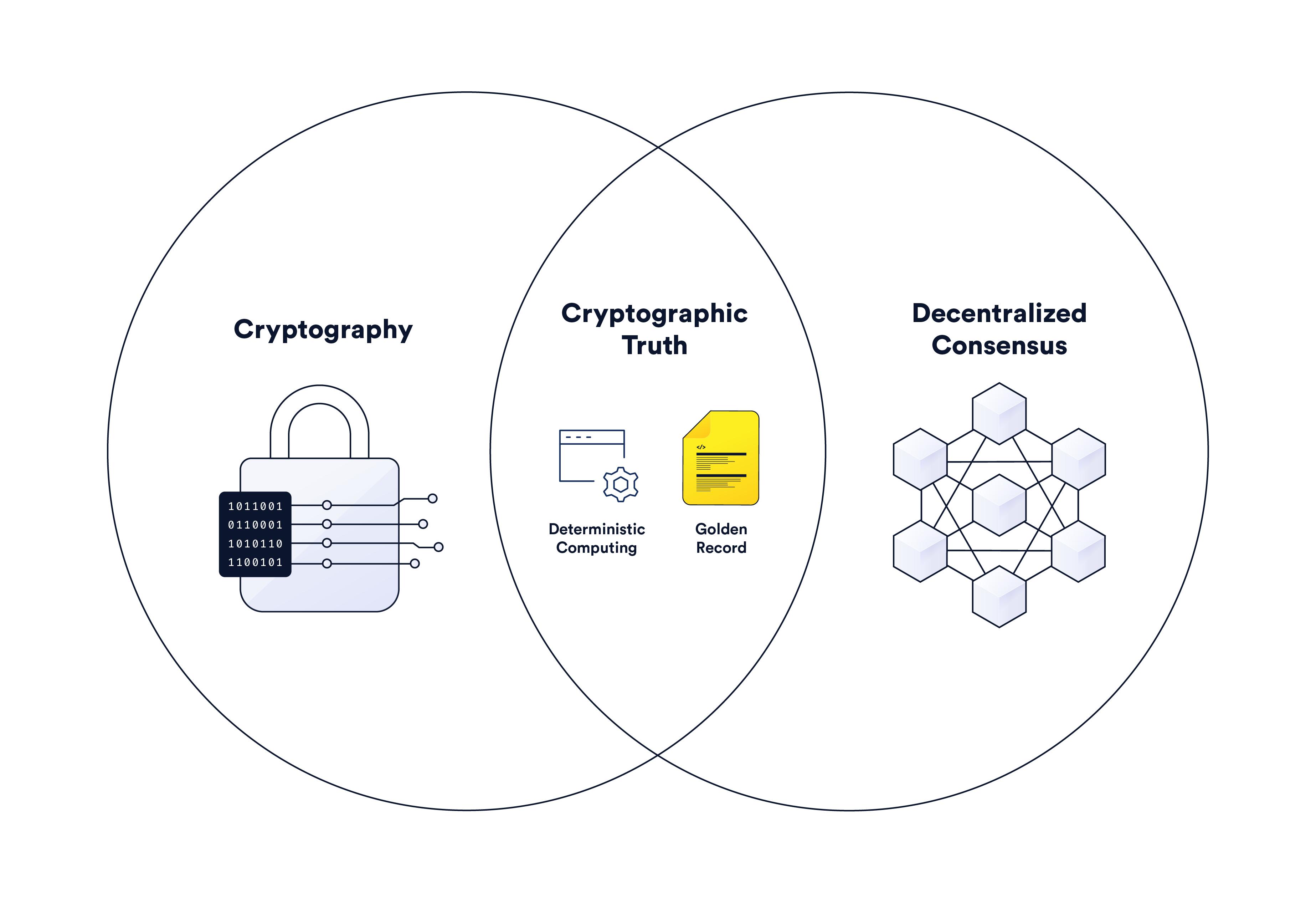
Imagine two ways to transfer $10 million: in the first, a bank maintains the ledger, and you trust the bank to record the transaction correctly, safeguard your assets, and follow the rules. In the second, a blockchain records the transaction through a distributed consensus mechanism. This system reduces dependence on a single institution, but suppose you now want to move that asset to another blockchain; you’d need a bridge, and suddenly a new trust question appears: Who or what is allowed to tell the destination blockchain that the original asset has been deposited?
Ethereum’s documentation makes this trade-off explicit, as some bridges rely on external validators, federations, multisignatures or oracle systems. Others try to inherit security from the underlying blockchains, with the difference ultimately coming down to how many additional trust assumptions the bridge introduces.
READ ALSO: Zero-Knowledge Everything: Trust, Privacy, and Verification in the Digital Age
Why Centralized Exchanges Became So Important

Bitcoin was designed to allow people to transact without financial institutions, but centralized exchanges became enormously important because they solve problems that ordinary users often do not want to solve themselves, such as providing an interface, liquidity, order matching, custody, and a connection between fiat currency and crypto. The IMF describes centralized exchanges as critical bridges between the traditional financial system and crypto, with users commonly relying on them when converting fiat into crypto and when converting crypto back into fiat.
The economic logic is straightforward: self-custody gives you control, but it also gives you responsibility. If you lose your private key, there may be no customer-service department to reverse the mistake, but to use a decentralized exchange, you must understand wallets, smart contracts, gas fees, slippage, and transaction signing.
A centralized exchange hides much of this complexity, and that convenience creates demand for an intermediary, and once that intermediary controls custody, users have to trust it, making centralized exchanges and trust far from a temporary contradiction. They reflect a real trade-off between sovereignty and convenience.
Stablecoins Quietly Brought Private Money Issuers Back
Stablecoins make the contradiction even more interesting because they may move across a decentralized blockchain, but the largest fiat-backed stablecoins generally depend on a centralized issuer. The issuer promises that one token is redeemable for a fixed amount of fiat currency and holds reserves to support that promise. The BIS notes that most stablecoins are issued by a single central entity whose reserves and ability to meet redemptions underpin the peg, meaning that owning a stablecoin involves a different kind of trust in cryptocurrency.
You are not simply trusting blockchain code; you are also trusting an issuer’s reserves, custody arrangements, redemption process, governance, and operational systems. This is why a stablecoin can be technically decentralized at the transaction layer while remaining economically centralized at the monetary layer.
The blockchain tells you who owns the token, but the issuer determines whether the token can reliably maintain its promised value. The BIS’s recent work also highlights how stablecoin regulation focuses on issuance, redemption, reserve management, and issuers’ activities because these functions create risks similar to those found in traditional financial intermediation.
Crypto’s attempt to create digital money without banks has produced an interesting outcome: some of the most widely used crypto money depends on private institutions that resemble monetary intermediaries.
Bridges Reveal the Hidden Price of Going Multichain
The more fragmented crypto becomes, the more important bridges will be; Ethereum, Layer 2 networks, and other blockchains do not automatically share state. Bridges let assets and messages move between these separate environments, but they raise another question: who verifies that something happened on Chain A before Chain B accepts it?
That might involve smart contracts, validators, oracle systems, cryptographic proofs, or some combination, but every design makes trade-offs: a bridge with external validators may be faster and more flexible, but users inherit the risk that those validators fail, collude, or are compromised. A more trust-minimized design may inherit more security from the underlying chains but sacrifice speed, flexibility or connectivity. When someone says a protocol is “decentralized,” ask: Decentralized where? The answer may differ for custody, validation, governance, data, bridging, and front-end access.
Oracles Create Another Unavoidable Trust Problem
Blockchains are very good at knowing what happened on the blockchain, but much worse at knowing what happened in the outside world. If a smart contract needs the price of oil, the weather in Lagos, or the result of an election, it needs external information, which is the oracle problem.
Ethereum’s documentation explains that oracles bring off-chain information into smart contracts, but this raises questions about whether the information is accurate, available, and resistant to manipulation.
Take a decentralized insurance contract, for instance: the blockchain can automatically pay a farmer if rainfall falls below a certain level, but it cannot look outside and observe rainfall. Someone has to provide the data, and then suddenly, the supposedly trustless financial contract depends on a data pipeline. The more valuable the contract becomes, the more economically important that pipeline becomes, which is one of the deepest lessons in decentralized finance intermediaries: decentralization at one layer can create dependency at another.
Code Itself Can Become An Intermediary
Another subtle form of trust is often ignored. When people say they don’t trust the company but trust the code, it usually sounds fundamentally different from traditional finance.
The trust has not necessarily disappeared, it just became embedded in technical architecture, creating a useful distinction between trusting a person and trusting a protocol. Trusting a person means relying on someone’s future behaviour, but trusting a protocol means relying on rules, code, incentives, and assumptions continuing to work as expected, which can be much more transparent and auditable but not totally risk-free.
Crypto May Be Redistributing Trust
The story gets more interesting when we examine the simple claim that crypto “failed” to become trustless; just as traditional finance concentrates trust in institutions, crypto can distribute some of that trust across cryptography, validators, smart contracts, economic incentives, and transparent ledgers.
You might eliminate the bank from settlement while creating dependence on an exchange for access. The same applies to eliminating a custodian or clearinghouse while depending on your own keys or an oracle. The result is not necessarily less trust; it is different trust, and the BIS has made a similar observation about the relationship between centralized and decentralized finance, arguing that complete decentralization is unrealistic because intermediation remains valuable to many users.
The Practical Question Is Not “Can I Avoid Trust?”
The practical question is: What exactly am I trusting, and what happens if it fails? This is a much better way to analyse crypto. Before depositing money on an exchange, ask who controls the assets. For a stablecoin, ask who issues it and what backs the token. For a bridge, ask who verifies cross-chain transactions. For depositing into DeFi, ask which smart contracts, administrators, and oracles the protocol depends on, and before calling a system decentralized, map its critical dependencies.
This is what blockchain trust minimization means: the achievement of crypto was never that humans suddenly stopped trusting one another. Its more important achievement was showing that some forms of economic coordination can be redesigned so that users need to place less discretionary trust in a single intermediary.
The next stage of crypto may therefore be less about creating systems with no trust and more about creating systems where trust is visible, measurable, replaceable, and constrained.
Disclaimer: This article is intended solely for informational purposes and should not be considered trading or investment advice. Nothing herein should be construed as financial, legal, or tax advice. Trading or investing in cryptocurrencies carries a considerable risk of financial loss. Always conduct due diligence.
Enjoyed this? Bookmark DeFi Planet, explore related topics, and follow us on Twitter, LinkedIn, Facebook, Instagram, Threads, and CoinMarketCap Community for seamless access to high-quality industry insights.
Take control of your crypto portfolio with DEFI PLANET PRO, DeFi Planet’s suite of analytics tools.