



















































A new analysis of the Stacks 2026 roadmap is reigniting debate over Bitcoin’s long-standing limitation as a passive asset, as developers push toward turning BTC into a productive financial layer through staking, lending, and decentralized applications.

The thesis centres on a core gap in the Bitcoin economy, while Bitcoin remains the most secure crypto asset, most of its supply remains idle due to limited native functionality beyond transfers and storage.
— Stacy Muur (@stacy_muur) May 6, 2026
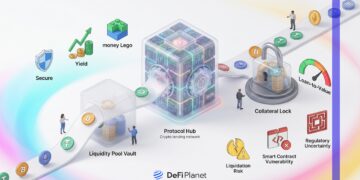
Bitcoin yield means earning returns on BTC without selling it, usually around 2%–6% APY through lending, staking, or DeFi strategies. Common methods include lending BTC on centralized or DeFi platforms, staking via protocols like Lombard or Babylon, and providing liquidity in DeFi markets.
The main risks are platform failure, smart contract vulnerabilities, and regulatory uncertainty. While yield opportunities are growing, especially through DeFi and wrapped Bitcoin systems, they come with higher security and structural risks compared to simply holding BTC.
Self-custodial staking at the core of capital strategy
At the heart of the roadmap is a self-custodial Bitcoin staking model designed to generate yield without requiring users to wrap assets or rely on centralized custodians. The system allows users to keep Bitcoin on-chain while pairing it with Stacks’ native token to earn BTC-denominated rewards.
The strategy targets institutional holders, who control a large portion of the Bitcoin supply but have largely avoided yield products due to custody and counterparty risks. By removing bridge and custodian dependencies, Stacks aims to unlock dormant Bitcoin capital while preserving security guarantees.
Scaling infrastructure for bitcoin-native financial markets
The second phase of development focuses on scaling throughput and reducing operational costs through upgrades such as Clarity Wasm, alongside performance improvements to the sBTC bridge and broader network efficiency upgrades.
The final phase targets a full Bitcoin-native financial ecosystem, including lending, derivatives, and automated applications powered by smart contracts. Early DeFi activity already exists on the network, with protocols such as Zest Protocol contributing to the growing total value locked.
Additional integrations across stablecoins and institutional platforms, including support from firms such as Circle and Fireblocks, have strengthened the network’s position in regulated and institutional crypto infrastructure.
In another development, crypto analysts have pointed out a growing trend in the DeFi space as liquidity remains concentrated around established platforms, with Aave remaining the benchmark for on-chain lending.
Enjoyed this? Bookmark DeFi Planet, explore related topics, and follow us on Twitter, LinkedIn, Facebook, Instagram, Threads and CoinMarketCap Community for seamless access to high-quality industry insights.
Take control of your crypto portfolio with DEFI PLANET PRO, DeFi Planet’s suite of analytics tools.