
















































Quick Breakdown

- Iran is pushing crypto-based transit payments through the Strait of Hormuz as sanctions pressure tightens, but this exposes global shippers to serious compliance uncertainty and potential penalties under international sanctions regimes.
- Crypto payments do not remove sanctions risk; they introduce multiple exposure points, including material support violations, indirect funding of sanctioned entities, secondary sanctions for non-US firms, and traceable blockchain records that regulators can later act on.
- While enforcement is improving through blockchain analytics and global regulator cooperation, gaps remain, meaning shippers operate in a high-risk environment where transactions are visible but regulatory consequences are often triggered after the fact.
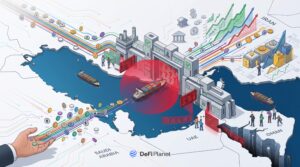
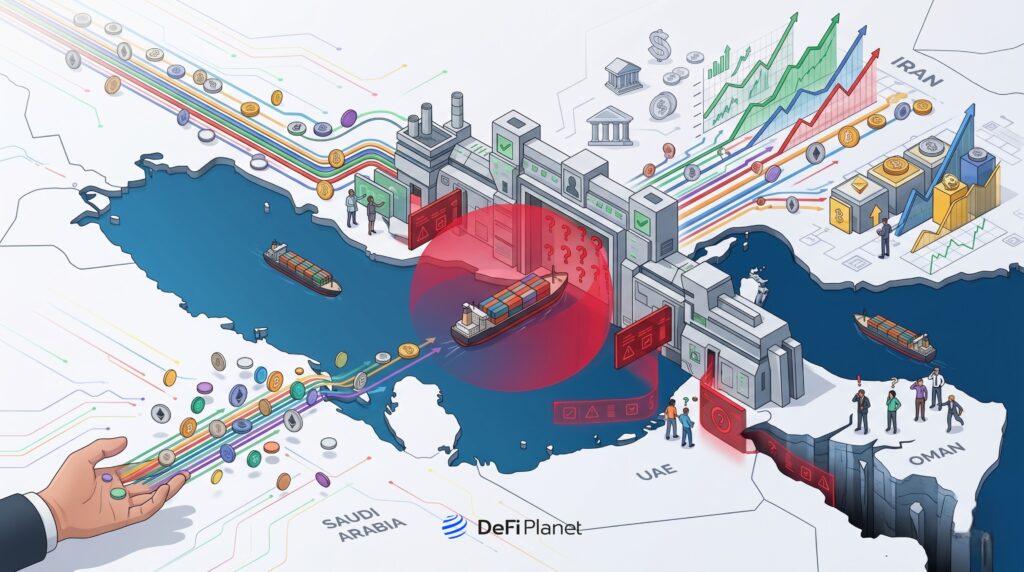
Tensions between the United States and Iran remain high despite a temporary ceasefire and ongoing talks. At the center is the Strait of Hormuz, a critical global oil route now being used as leverage, with shipping activity increasingly disrupted.
Having been under heavy sanctions and cut off from much of the global financial system, Iran is exploring alternative ways to monetize this control, including pushing for some ships to pay transit fees in cryptocurrency.
But this raises serious legal concerns. Analysts say such payments could carry significant sanction risks due to existing restrictions on Iran and its affiliated entities.
This leaves global shippers in a difficult position: decide to pay in crypto and risk sanctions, or refuse and face disruption.
What Sanctions Risks Could Crypto Payments to Iran Create for Shippers?
Iran has demanded that oil tankers and shipping vessels pay transit tolls in Bitcoin to pass through the Strait of Hormuz.
Paying Iran in crypto might seem like a workaround, but it can expose shipping companies to multiple layers of sanctions that go beyond just the payment itself.
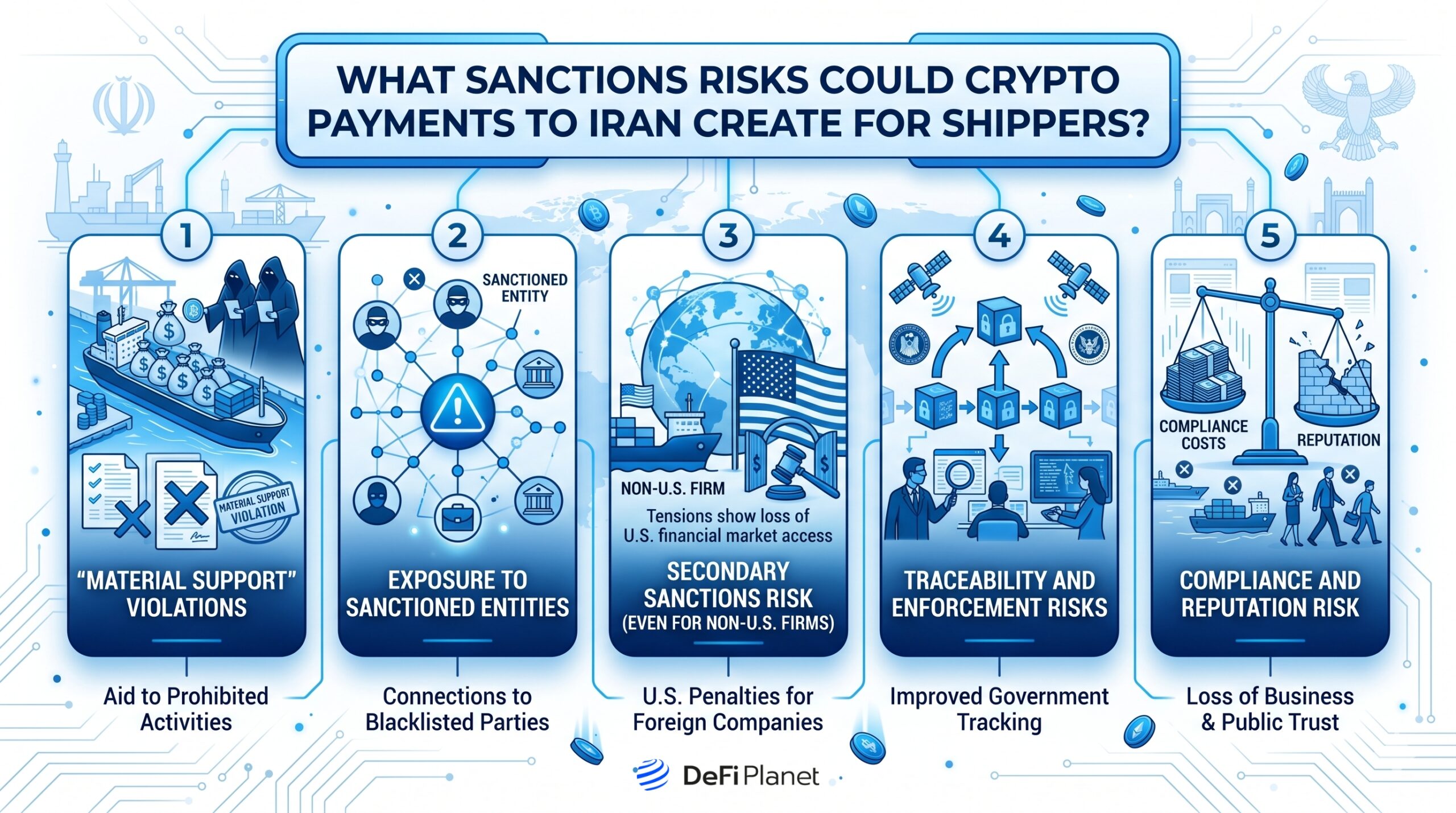
“Material support” violations
If a shipping company pays a transit fee that ultimately supports the Iranian government or state-controlled operations, that payment can be classified as providing “material support.”
The U.S. Executive Order 13622 provides authority for the Secretary of the Treasury to block the property and interests in property of persons determined to have materially assisted, sponsored, or provided financial, material, or technological support for, or goods or services in support of, NIOC (as well as other specified entities).
This is true whether cross-border payments are in dollars, euros, or digital currency. The danger in this instance is that normal transactions, such as those required for safe passage through certain waters, can amount to financial support to a sanctioned regime.
Such an act can attract punitive measures in the form of penalties, court action, and future bans on business.
Exposure to sanctioned parties
In the case of Iran, some of its economic activities are linked to sanctioned parties such as the Islamic Revolutionary Guard Corps (IRGC). Shippers face the difficulty of not knowing who will receive their payments at any given time.
Even though shippers believe the party receiving the payments is genuine, payments may still be diverted to sanctioned parties, either directly or indirectly.
Secondary sanctions risk (even for non-US firms)
One of the most far-reaching risks is the threat of secondary sanctions. These allow US authorities to penalize non-US companies for engaging in transactions with sanctioned countries like Iran. For global shipping firms, this can have serious consequences.
This would be a significant problem for shipping companies. It could prevent companies from accessing the US banking system, conducting business in dollars, and even having interactions with US affiliates. Thus, regardless of their location, all companies are required to comply with US sanctions to avoid legal issues.
Traceability and enforcement risks
Many people think that crypto is anonymous, but, in fact, it is not true. Regulatory bodies and analytics are able to trace how money flows from one wallet to another and detect connections between different organizations and sanctioned individuals.
For shipping companies, this means using crypto will increase the risk of fines or other legal challenges, as their activities would be permanently recorded on the blockchain.
Compliance and reputational risk
Aside from fines, there is the threat of additional costs to the business. The shipping industry is very much dependent on its banking and insurance relationships, and any involvement in a sanctioned transaction will prompt a compliance check or may result in being denied banking services or having higher insurance rates.
In the long term, reputational risk can affect your ability to land business or be licensed to do business in certain jurisdictions.
Compliance Challenges in a Crypto Payment Environment
Even if shippers want to stay compliant, the nature of crypto cross-border payments makes it difficult to fully control or verify where funds are going, creating a constant tension between operational needs and regulatory certainty.
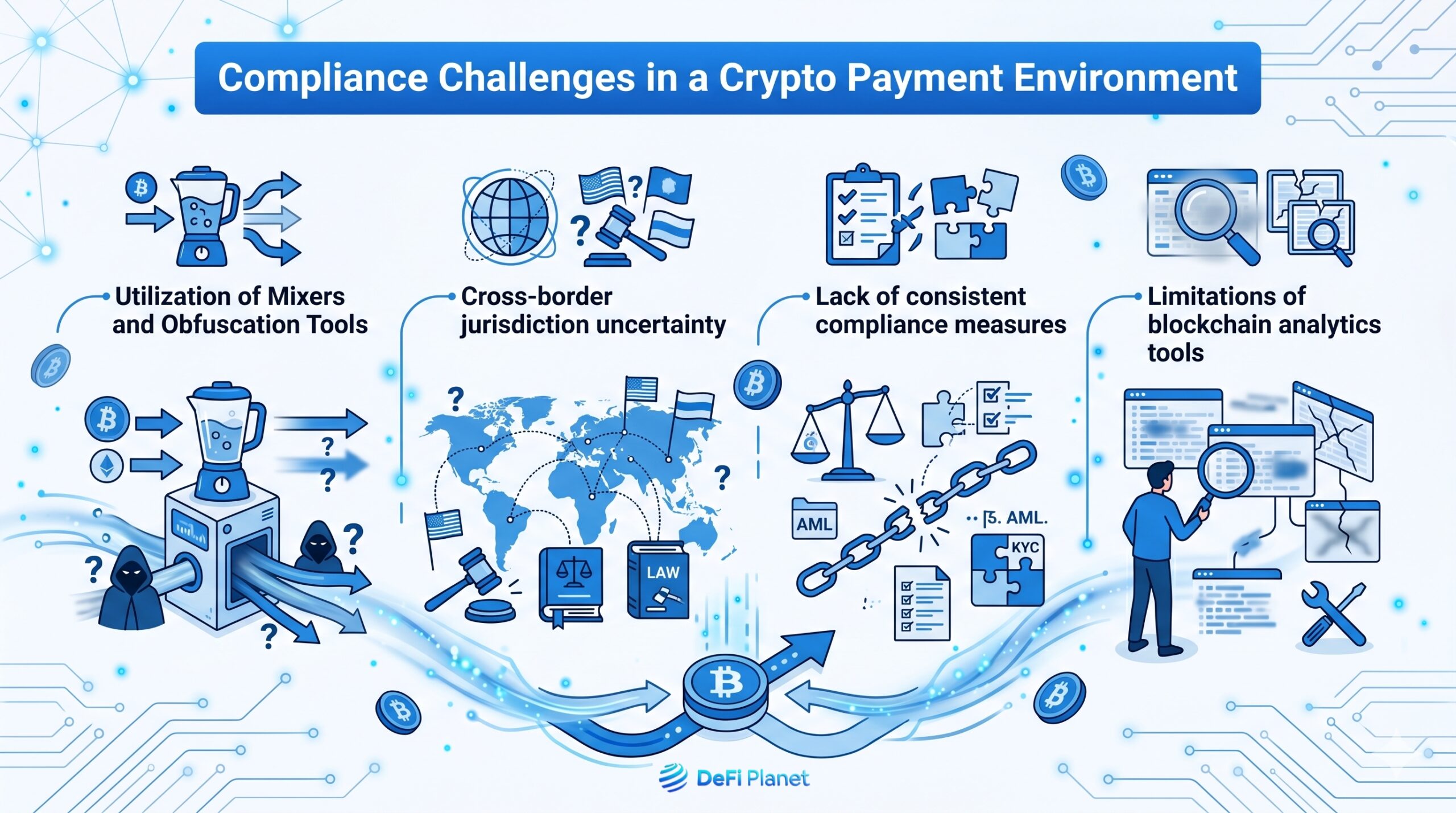
Utilization of mixers and obfuscation tools
Crypto transactions could be passed via certain privacy technologies like mixers or tumblers. Although those tools might be utilized for legitimate reasons, they are often employed when someone tries to disguise their money flow.
In regard to shipping payments, it poses a significant issue because a company may start a perfectly legal transaction, but even the slightest connection to such technologies in its payment process will make it suspicious. If funds were involved in any shady operations, it would be difficult to prove the audit trail later.
Cross-border jurisdiction uncertainty
Crypto payments tied to international shipping routes often move through multiple legal systems in a single transaction lifecycle. For example, a payment may originate from a European shipping firm, be processed through infrastructure governed by U.S. sanctions rules, and ultimately interact with entities linked to restricted jurisdictions.
This leads to regulatory overlap, in which compliance will no longer be based on the regulation of a single entity. In other words, the company will have to prepare for how various authorities would perceive the same transaction. This will create legal uncertainty since a transaction that would be perfectly fine under the jurisdiction of one country could still lead to potential enforcement issues in another country.
Lack of consistent compliance measures
In contrast to the conventional trade finance system that uses standardized compliance measures such as SWIFT messaging and correspondent banking, crypto-asset payment transactions in the shipping industry lack global standardization.
In other words, there is no uniform measure of what “proper due diligence” entails when handling crypto-denominated transactions. Therefore, companies are left with little choice but to create their own compliance system.
Limitations of blockchain analytics tools
To address compliance-related risks, most companies use blockchain analysis software that monitors transactions, assigns risk scores to wallets, and helps determine whether the entity or activities are subject to sanctions.
Nevertheless, this software cannot be considered an ultimate solution. It generates risk ratings based on historical data and heuristics, but does not provide legal classification, suggesting that compliance officers should consider several factors when interpreting the results.
Enforcement: Can Regulators Keep Up?
As crypto becomes more involved in global trade, regulators are no longer viewing it as something outside their reach. Instead, they are increasingly treating it as a system they can monitor and enforce rules on in real time.
Enforcement has become more visible through real-world cases. In 2025, the US Treasury’s Office of Foreign Assets Control (OFAC) reached a $3.1 million settlement with crypto wallet provider Exodus after it was found to have indirectly enabled users in Iran. Cases like this show that regulators are increasingly willing to act against services that unintentionally facilitate access to sanctioned regions.
Penalties can include financial fines, asset freezes, and long-term restrictions that limit a company’s ability to operate in key markets. For shipping and trade companies, this signals that regulators are willing to extend oversight beyond traditional banking and into crypto-based payment systems as well.
Another important shift is the growing cooperation between regulators and private blockchain analytics companies. Agencies such as the US IRS-CI, FBI, HSI, US Secret Service, DEA, DoD, DOJ, and the intelligence community now routinely work with firms like TRM Labs and Chainalysis to trace crypto flows linked to sanctions violations, ransomware networks, and illicit cross-border payments.
Governments now rely on their tools and data to strengthen enforcement. This partnership effectively extends regulatory visibility deeper into crypto networks than public agencies could achieve alone.
Even with these advancements, enforcement still has a timing gap. Crypto transactions can be tracked, but regulators often step in after suspicious activity has already happened rather than stopping it in real time. This means the system is becoming more transparent and easier to monitor, but enforcement is still largely reactive rather than fully preventative.
Broader Implications for Global Trade
The impact of crypto in sensitive areas like sanctions enforcement and cross-border shipping payments goes beyond individual transactions and starts to reshape the structure of global trade.
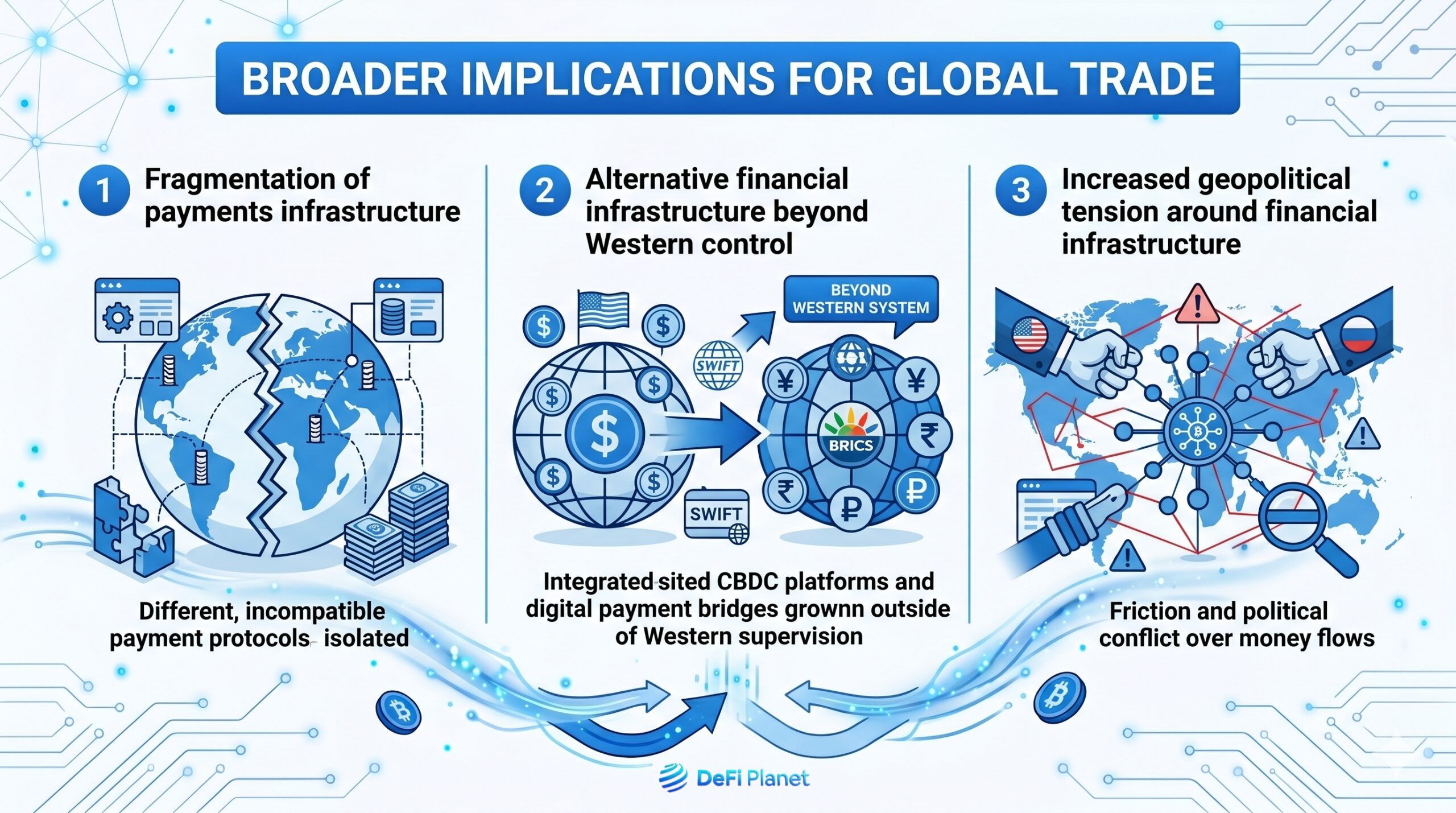
Fragmentation of payments infrastructure
More countries and corporations could start to use crypto or other alternative rails to get around regulations. In such a scenario, various parts of the world would be using different types of payment infrastructure that are not completely connected, making transactions difficult to settle, slower, and potentially less regulated.
Alternative financial infrastructure beyond Western control
In response to increasing pressure from sanctions, countries could begin using alternative, non-Western payment infrastructure.
Such a trend would mean reduced dependence on the global financial network controlled by the United States and the creation of an alternative mechanism to transfer value across international borders.
Increased geopolitical tension around financial infrastructure
The use of financial systems has evolved beyond just their purpose as a means of exchange of monetary value. Their increasing usage by countries like Iran makes the process geopolitically more complicated, especially when governments try to gain control over financial infrastructures.
Therefore, choices regarding how transactions will settle, what currencies will be used, and through what channels transactions will occur become part of geopolitics and have implications that reach far beyond the financial.
Crypto Payments to Iran and Sanctions Risk for Shippers
Yes, using cryptocurrency to pay Iran can lead to exposure to sanctions. The rules and regulations on sanctions are in place independently of the payment mechanism employed. Even simple operations like payment of transit fees may be viewed as exposing the parties involved to a restricted jurisdiction.
Law enforcement is increasingly capable of tracing blockchain transactions and linking them to sanctioned entities or regions. While this improves detection, it also means crypto cross-border payments leave a permanent record that regulators can later act on, turning what seems like a flexible workaround into a potential liability if flagged after the fact.
Ultimately, crypto does not remove sanctions exposure for shippers; it increases the need for strict compliance judgment. For the Strait of Hormuz, the risk is less about the technology and more about how easily legitimate operational payments can still fall within the scope of enforcement.
Disclaimer: This article is intended solely for informational purposes and should not be considered trading or investment advice. Nothing herein should be construed as financial, legal, or tax advice. Trading or investing in cryptocurrencies carries a considerable risk of financial loss. Always conduct due diligence.
Enjoyed this? Bookmark DeFi Planet, explore related topics, and follow us on Twitter, LinkedIn, Facebook, Instagram, Threads, and CoinMarketCap Community for seamless access to high-quality industry insights.
Take control of your crypto portfolio with DEFI PLANET PRO, DeFi Planet’s suite of analytics tools.”