





















































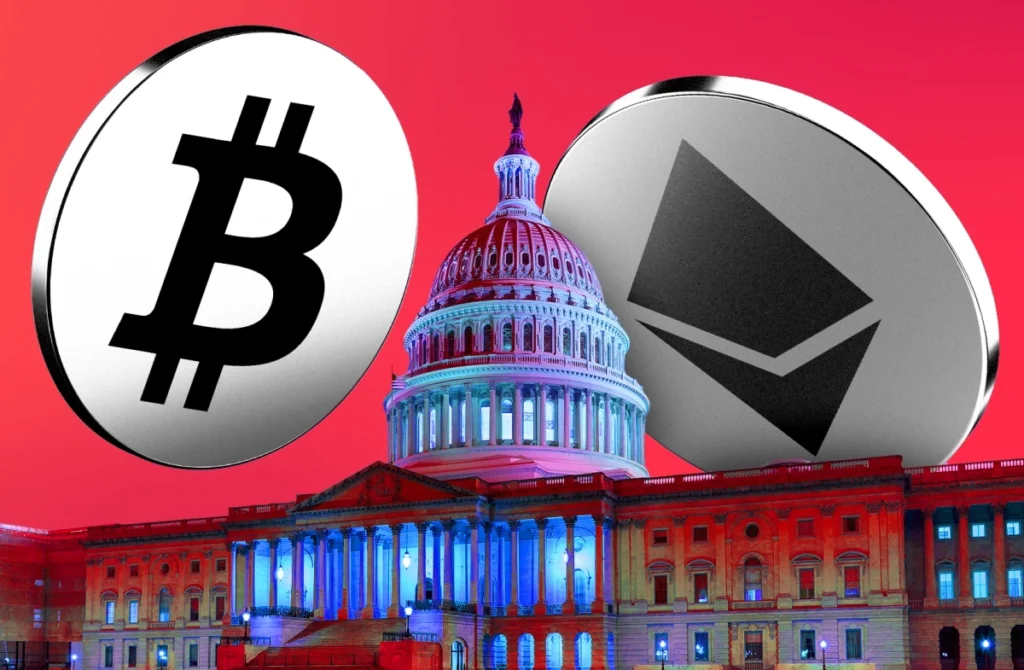
A bipartisan group of U.S. lawmakers has drawn a firm line under negotiations on stablecoin regulation, pointing out that a long-debated compromise is now final as momentum builds around the CLARITY Act.

On May 5, Senators Thom Tillis and Angela Alsobrooks confirmed they would not revisit the stablecoin yield provision, despite mounting resistance from banking groups. Their joint statement emphasized that months of negotiation had produced a balanced framework designed to protect traditional deposits while allowing crypto innovation to continue.
.@Sen_Alsobrooks and I have worked on a bipartisan basis with all stakeholders to address the banking industry’s concerns about deposit flight. They have had a seat at the table and have been directly sharing their feedback and ideas for months to inform the final product. We… https://t.co/ckwKcXtb3i
— Senator Thom Tillis (@SenThomTillis) May 5, 2026
Final compromise draws a clear line on stablecoin yields
At the heart of the debate is Section 404 of the CLARITY Act, which addresses whether stablecoin issuers should be allowed to offer yield-bearing incentives similar to bank interest.
According to Tillis, the finalized language explicitly bans rewards that are “economically or functionally equivalent” to interest on bank deposits, an issue that has been a major sticking point for the banking sector. The concern has been that attractive yields on stablecoins could pull funds away from traditional banks, creating what regulators describe as “deposit flight risk.”
However, the compromise still leaves room for crypto firms to incentivize users. Companies can offer activity-based rewards tied to actions such as trading, staking, or platform engagement, rather than passive interest.
“This is about not letting the perfect become the enemy of the good,”
Tillis noted, acknowledging that some opposition remains but insisting the deal represents meaningful progress.
Banking pushback persists as senate eyes may markup
The agreement has not fully satisfied industry groups like the American Bankers Association, which argues the current language does not go far enough to shield bank deposits.
Still, support within Congress appears to be consolidating. Senate Banking Committee Chair Tim Scott pointed to “real progress” on digital asset legislation, while Cynthia Lummis described the yield compromise as effectively settled after months of bipartisan effort.
The crypto industry has also welcomed the development. Paul Grewal and Brian Armstrong both signalled urgency for moving the bill forward.
With negotiations largely concluded, lawmakers are now targeting a committee markup as early as mid-May, potentially setting the stage for a full Senate vote this summer. If passed, the CLARITY Act could mark one of the most significant regulatory milestones for the U.S. crypto market to date.
Enjoyed this? Bookmark DeFi Planet, explore related topics, and follow us on Twitter, LinkedIn, Facebook, Instagram, Threads and CoinMarketCap Community for seamless access to high-quality industry insights.
Take control of your crypto portfolio with DEFI PLANET PRO, DeFi Planet’s suite of analytics tools.