









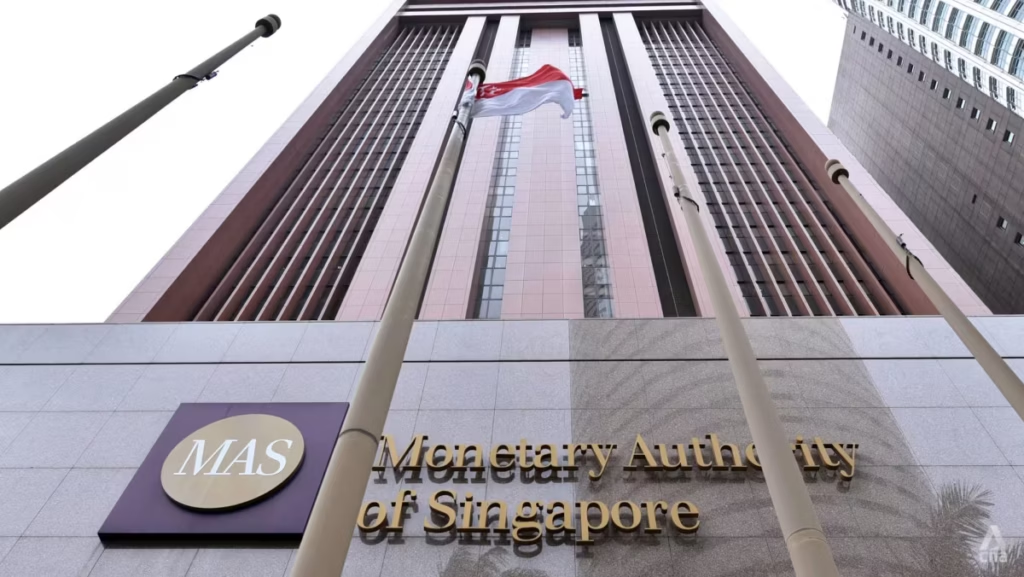
The Monetary Authority of Singapore (MAS) and five major local banks, DBS, OCBC, UOB, Standard Chartered, and Citibank, are launching a shared scam detection system early next year.

These institutions are currently combining their customer transaction data to catch fast-moving financial fraud.
Five banks in Singapore are pooling transaction data to spot scams that one bank might miss. The reason: a victim’s money can cross several institutions within minutes.
— gin.hl (@gin_cryptodiary) November 18, 2026
The government initiated this project because criminals can quickly move stolen money through multiple corporate accounts within minutes, exploiting the blind spots between competing financial companies.
Through this sharing of their private databases, these institutions hope to spot unusual account behavior and block stolen money before it leaves the local economy.
Online, people weighed in on the technical challenges of this new government project. On X, Alloco pointed out that connecting fraud models to existing financial processes is just the first step, noting that getting the data to run smoothly and reliably every single day is the real hurdle.

Agreeing with the need for speed, Chen on X stated that because fraudulent funds can be transferred across accounts in minutes, securely pooling data is the best way to detect anomalies in real time.

Praising the country’s proactive approach, CoinMarketCap product marketer @MacroBombastic noted that Singapore is moving early to solve a global financial problem.
@business singapore moving early as usual, honestly
— Macro Bombastic (@MacroBombastic) November 18, 2026
READ ALSO: Singapore’s DBS Survey Finds 88% of Businesses Using or Testing Tokenized Money
How blockchain tracking tools help crypto exchanges trace stolen funds, stop scammers
The problem highlighted by the new government initiative is the speed of modern financial scams. Criminals move between different bank accounts in a matter of minutes to hide their digital tracks. In the cryptocurrency industry, digital money moves across international borders in seconds. The digital asset industry relies on highly advanced, automated tracking software known as on-chain analytics.
Cybersecurity companies build programs that constantly watch the public blockchain for scam behavior. The analytics software automatically tracks money moving across the network. If a digital wallet is linked to a known scam, the tracking software flags it immediately. When the scammer finally attempts to send the stolen crypto to a regulated trading exchange to cash it out for fiat, the exchange freezes the account.
Zero-knowledge proofs can help detect fraud while protecting user privacy
Creating shared databases of financial transactions can introduce new cybersecurity risks. If several financial institutions store sensitive customer information in one centralized system, a successful cyberattack could expose records belonging to customers across multiple banks. Such information could reveal people’s spending patterns, transaction histories, and other private financial details.
The challenge for any government-backed data-sharing initiative is to improve fraud detection without unnecessarily exposing customers’ personal information. This requires strong access controls, encryption, and systems that allow institutions to exchange only the information needed to identify suspicious transactions.
The cryptocurrency industry offers another approach through Zero-Knowledge Proofs (ZKPs). This cryptographic technology allows one party to prove that a particular condition has been met without revealing the underlying information. For example, a financial network could verify that a user has passed required identity checks without exposing their personal identification details to everyone involved in a transaction.
Although ZKPs do not eliminate every privacy or security risk, they demonstrate how financial systems could verify compliance and transaction conditions without routinely exposing sensitive customer information
Meanwhile, Singapore is having two very different conversations about AI. The government is pushing businesses and public agencies to use AI more, while the country’s financial regulator is warning about the risks behind the investment boom.
Enjoyed this? Bookmark DeFi Planet, explore related topics, and follow us on Twitter, LinkedIn, Facebook, Instagram, Threads, and CoinMarketCap Community for seamless access to high-quality industry insights.
Take control of your crypto portfolio with DEFI PLANET PRO, DeFi Planet’s suite of analytics tools