













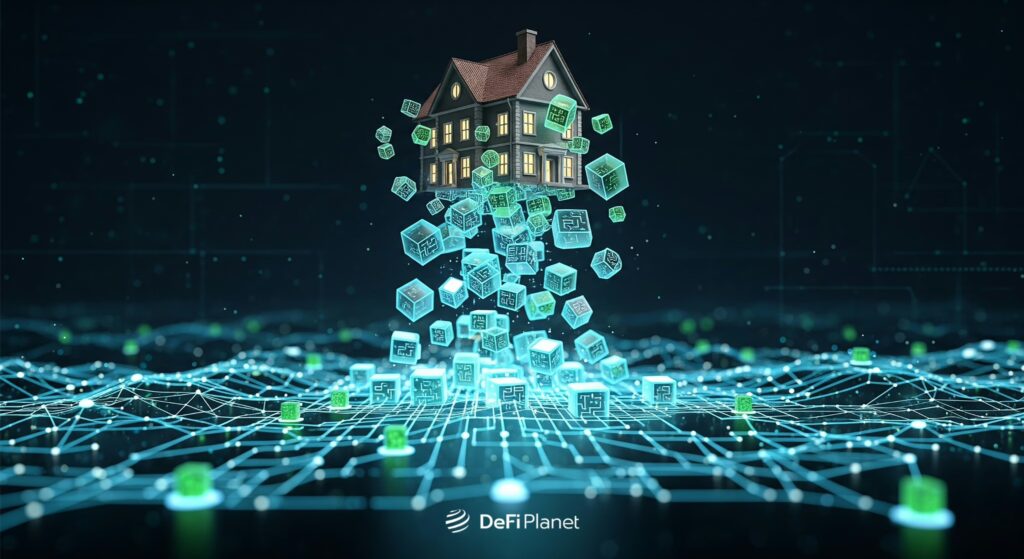
The convergence of blockchain technology and real estate has given rise to a powerful innovation: tokenized real estate. This groundbreaking concept is transforming how people invest in, own, and manage real estate, traditionally one of the most exclusive and illiquid asset classes. With tokenization, the doors to property investment are opening wider, allowing both institutional and retail investors to participate in real estate markets like never before.

This article explains what it means to tokenize real estate, how it works, the benefits it offers, legal and regulatory implications, associated risks, and what the future may hold.
What is Real Estate Tokenization and How Does it Differ From Real Estate Investment Trust (REIT)
Real estate tokenization refers to the process of converting ownership rights in a physical property into digital tokens on a blockchain. Each token represents a fractional share of the asset, granting the holder partial ownership or rights tied to the property. These tokens can be bought, sold, or traded on blockchain platforms similar to how stocks or cryptocurrencies are exchanged, offering investors more flexibility and access.
Traditional real estate investment often requires large upfront capital, involves complex legal procedures, and lacks liquidity. Tokenization simplifies and democratizes access by allowing properties, whether residential, commercial, or industrial, to be divided into thousands of tokens. With as little as the cost of a single token, investors can gain exposure to high-value real estate markets that were once limited to institutional players or wealthy individuals.
For example, consider a $5 million apartment complex in New York City. Through tokenization, this asset could be divided into 500,000 tokens, each worth $10. This means someone with just $100 can own a fractional interest in a premium real estate asset, receive a share of rental income, and benefit from potential property appreciation.
In contrast, a Real Estate Investment Trust (REIT) works differently. REITs are companies that own, operate, or finance income-generating properties. When you invest in a REIT, you\’re buying shares in the company—not the individual properties. Investors earn returns in the form of dividends, as REITs are legally required to distribute at least 90% of their taxable income. However, you do not have direct ownership of the real estate assets, nor can you influence their management or operations.
For instance, if you invest $1,000 in a publicly listed REIT, your money goes into a diversified portfolio of properties such as office buildings, shopping malls, or hospitals managed by professionals. You receive regular dividend payouts, but your investment is tied to the overall performance of the REIT’s portfolio and the stock market, not a specific property.
READ ALSO: Top 10 Top Use Cases of Asset Tokenization
So, what is the difference between tokenized real estate and REITs?
The main difference lies in ownership and control: tokenized real estate offers direct fractional ownership of individual assets with more transparency and potentially higher liquidity, while REITs provide indirect exposure to professionally managed real estate with consistent dividend income but less flexibility and personal control.
As blockchain adoption grows, tokenized real estate is positioning itself as a transformative force in the investment world, bridging traditional property markets with decentralized finance and offering a new level of accessibility, efficiency, and transparency for investors globally.

How Does Tokenized Real Estate Work?

-
Blockchain Foundation
Blockchain is the technological backbone that makes tokenization possible. But how does tokenized real estate work on the blockchain? In practice, here\’s how blockchain enables secure, transparent, and decentralized fractional ownership:
-
Immutable Record Keeping
Every transaction, whether it’s a token purchase, sale, or transfer, is recorded on the blockchain ledger. This provides an immutable, tamper-proof record of ownership and transaction history, eliminating the need for traditional, manual documentation.
-
Smart Contracts
These are self-executing pieces of code embedded on the blockchain. Smart contracts automate processes like dividend payments, rental income distribution, or ownership transfers when predefined conditions are met without needing middlemen.
-
Decentralization and 24/7 Access
Unlike traditional real estate markets that operate during business hours and often through intermediaries, blockchain allows round-the-clock access to property markets via decentralized platforms. No banks, brokers, or notaries are required for token trades.
-
Global Participation
Blockchain enables global reach. A person in Singapore can invest in a real estate project in Canada without physically being there or dealing with local paperwork, provided regulatory guidelines are followed.
What Are the Benefits of Tokenized Real Estate?
Tokenization introduces a number of advantages that transform the traditional real estate model:
-
Improved Liquidity
Traditional real estate transactions can take weeks or months to close. Tokenization introduces secondary markets where tokens can be quickly traded, allowing investors to exit positions without selling the entire property. This liquid market for an otherwise illiquid asset class is a game-changer.
-
Accessibility for All
Real estate has long been reserved for high-net-worth individuals and institutions. Tokenization lowers the barrier to entry, enabling retail investors and smaller players to gain exposure to the market with minimal capital.
-
Global Diversification
With tokenized real estate, investors can build geographically diverse portfolios with ease. A single investor could hold tokens representing properties in Paris, São Paulo, and Cape Town—all from a mobile app.
-
Transparency and Efficiency
All transactions are transparent, auditable, and traceable on the blockchain. Investors can verify ownership records, rental income, expenses, and asset history in real-time. Smart contracts also remove paperwork and intermediaries, streamlining the entire investment lifecycle.
-
Automated Compliance and Dividends
Smart contracts can enforce regulatory requirements and automatically distribute rental income or dividends proportionally to token holders, ensuring faster and more accurate payouts.
RELATED: Is Real World Asset Tokenization Positioning DeFi to Outpace TradFi?
Risks and Challenges in Tokenized Real Estate Investments
As with any emerging technology, tokenized real estate presents significant challenges and risks:
-
Smart Contract Vulnerabilities
Smart contracts are only as reliable as the code behind them. Bugs, design flaws, or malicious actors can result in loss of funds, and once assets are stolen or misrouted, recovery is often impossible.
-
Regulatory Ambiguity
The lack of clear legal frameworks in many jurisdictions may expose investors and issuers to unforeseen legal action, halted projects, or delisted tokens if regulators intervene.
-
Investor Education
Tokenized assets can be confusing for traditional real estate investors unfamiliar with blockchain. Without proper education and transparency, the risk of misunderstanding investment terms is high.
-
Market Infrastructure Limitations
Despite growth, secondary markets for real estate tokens are still underdeveloped. Low liquidity, limited buyer interest, and lack of interoperability between platforms remain challenges.
Pros and Cons of Tokenized Real Estate

READ ALSO: Is Tokenization All That It’s Cracked Up To Be?
Legal and Regulatory Considerations
While tokenized real estate holds promise, navigating its legal landscape is still a work in progress.
-
Securities Classification
In many jurisdictions, tokenized real estate offerings are considered securities and must comply with relevant securities laws. This often means adhering to KYC (Know Your Customer), AML (Anti-Money Laundering), and investor accreditation requirements
-
Licensing and Compliance
Launching a tokenized offering typically requires a regulated platform or broker-dealer license, and may need to pass through a Security Token Offering (STO) process similar to a public IPO but for tokenized assets.
-
Jurisdictional Fragmentation
Real estate laws differ significantly across countries, and even between states or provinces within a country. Legal enforceability of smart contracts, recognition of digital ownership, and tax implications must be assessed on a case-by-case basis.
-
Taxation Uncertainty
Token holders may be subject to property taxes, capital gains taxes, or income taxes, depending on how revenue from the property is structured. Unfortunately, global tax guidance for tokenized assets remains inconsistent, and in many regions, undefined.
Is Tokenization the Future of Real Estate?
Signs point to yes. Despite the existing hurdles, the momentum behind tokenized real estate is steadily gaining ground, signalling a potential paradigm shift in how global property markets operate over the next decade. This transformation is being fueled by a convergence of technological innovation, institutional interest, and evolving regulatory frameworks.
Institutional players, including private equity firms and real estate developers, are increasingly exploring tokenization as a means to unlock new capital streams and streamline operational inefficiencies. By digitizing ownership and transactions on the blockchain, these entities are able to reach a broader investor base while reducing costs associated with traditional real estate processes.
RELATED: The Role of Real World Assets (RWAs) in the Next DeFi Boom
At the same time, compliant platforms are on the rise. Blockchain startups are working closely with legal and regulatory bodies to ensure that their systems meet the standards required for identity verification, tax reporting, and financial disclosure. This collaborative approach is fostering trust and paving the way for mainstream adoption.
Tokenized real estate is also part of a larger trend known as the Real-World Asset (RWA) boom. Beyond property, this movement encompasses tokenized versions of art, commodities, and infrastructure with the RWA market. As this trend accelerates, real estate is poised to be one of its most significant beneficiaries.
In essence, tokenized real estate is ushering in a new era of accessibility, liquidity, and efficiency for global property investment. By leveraging blockchain technology, it challenges the traditional barriers of high capital requirements, slow transactions, and limited market access. However, as with any emerging innovation, navigating the legal, technical, and financial complexities is crucial.
For those prepared to engage with this evolving landscape, the future of real estate lies not just in bricks and mortar but in blocks and tokens.
Disclaimer: This article is intended solely for informational purposes and should not be considered trading or investment advice. Nothing herein should be construed as financial, legal, or tax advice. Trading or investing in cryptocurrencies carries a considerable risk of financial loss. Always conduct due diligence.
If you want to read more market analyses like this one, visit DeFi Planet and follow us on Twitter, LinkedIn, Facebook, Instagram, and CoinMarketCap Community.
Take control of your crypto portfolio with MARKETS PRO, DeFi Planet’s suite of analytics tools.”






