
























































Chinese President Xi Jinping has called for a global AI framework centred on open-source technology, positioning China as an alternative to the United States in shaping the future of AI governance.

Speaking at the opening of the World Artificial Intelligence Conference (WAIC) in Shanghai on Friday, Xi urged countries to seize what he described as a historic opportunity presented by open-source AI. He pledged support for developing nations through AI training, technology sharing, and cooperation, warning that unequal access to AI could create new forms of global inequality.
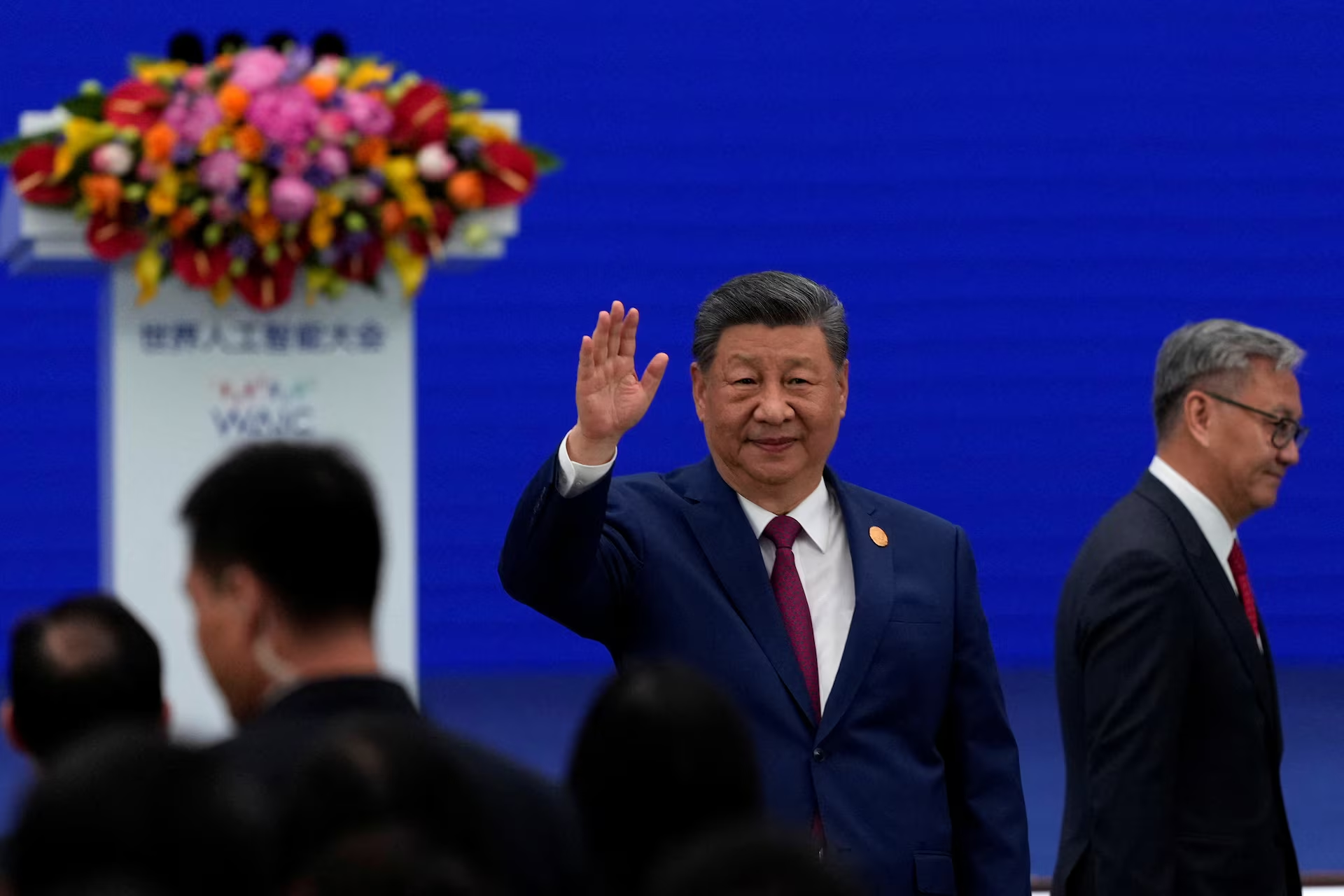
Xi compared AI’s importance to the steam engine and electricity, saying China would work with countries across the Global South while helping establish international standards for AI development. He also called for AI systems to remain under human control and urged governments to introduce early warning and emergency response mechanisms to manage potential risks from autonomous AI.
Why are countries investing in open-source AI?
Governments are increasingly viewing open-source AI as a way to strengthen domestic innovation, reduce reliance on foreign technology, and give researchers and businesses greater access to advanced AI tools. Making AI models more accessible can also help local developers build applications without depending entirely on proprietary systems.
China is one of several countries supporting this approach. France has backed open-source AI development through Mistral AI, the United Arab Emirates has supported open-weight models through the Technology Innovation Institute, and India has announced plans to develop its own open-source foundation models. The growing interest suggests that open-source AI is becoming part of national technology strategies, alongside investments in computing infrastructure and AI talent.
AI leadership is becoming a diplomatic contest
Governments are increasingly competing to shape the rules, partnerships, and technical standards that could influence how AI develops globally. China’s push for open-source AI and its new international alliance shows the effort to strengthen its influence among developing economies while presenting an alternative to United States backed initiatives.
The United States has taken a different approach, rallying support through its AI Opportunity Statement, which has backing from 35 countries. As Washington and Beijing prepare for their first government-level AI talks under President Donald Trump’s administration, competition over AI is extending beyond technology into diplomacy and trade.
Last year, Nvidia was reportedly in talks, preparing to launch a lower-cost AI chip for the Chinese market to comply with tighter US export restrictions on advanced processors.
Enjoyed this? Bookmark DeFi Planet, explore related topics, and follow us on Twitter, LinkedIn, Facebook, Instagram, Threads and CoinMarketCap Community for seamless access to high-quality industry insights
Take control of your crypto portfolio with DEFI PLANET PRO, DeFi Planet’s suite of analytics.