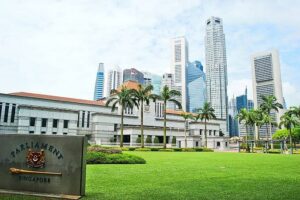

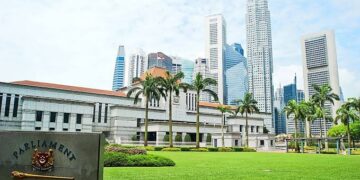





















































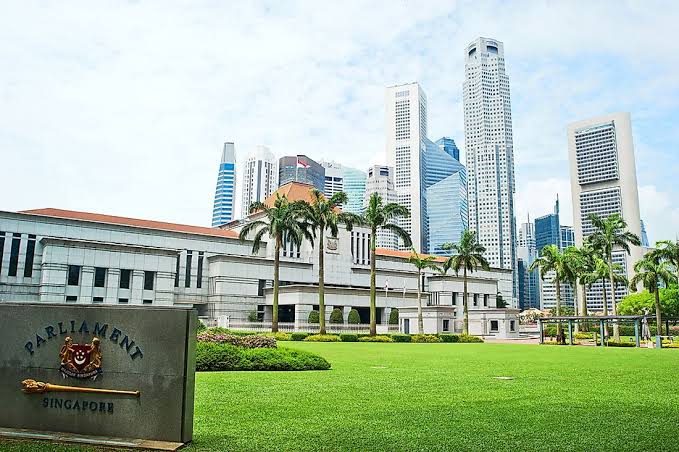
Singapore is having two very different conversations about AI. The government is pushing businesses and public agencies to use AI more, while the country’s financial regulator is warning about the risks behind the investment boom.

Speaking at Digital@UNGA, Minister Josephine Teo said Singapore is focused on using AI to improve real-world services rather than simply building more powerful technology. Nearly 70% of public officers already use AI tools daily, and the government is testing whether AI agents can safely take on larger parts of public-sector workflows. Prime Minister Lawrence Wong has backed the push, launching a National AI Council and telling Parliament that “Fear cannot be Singapore’s response.”
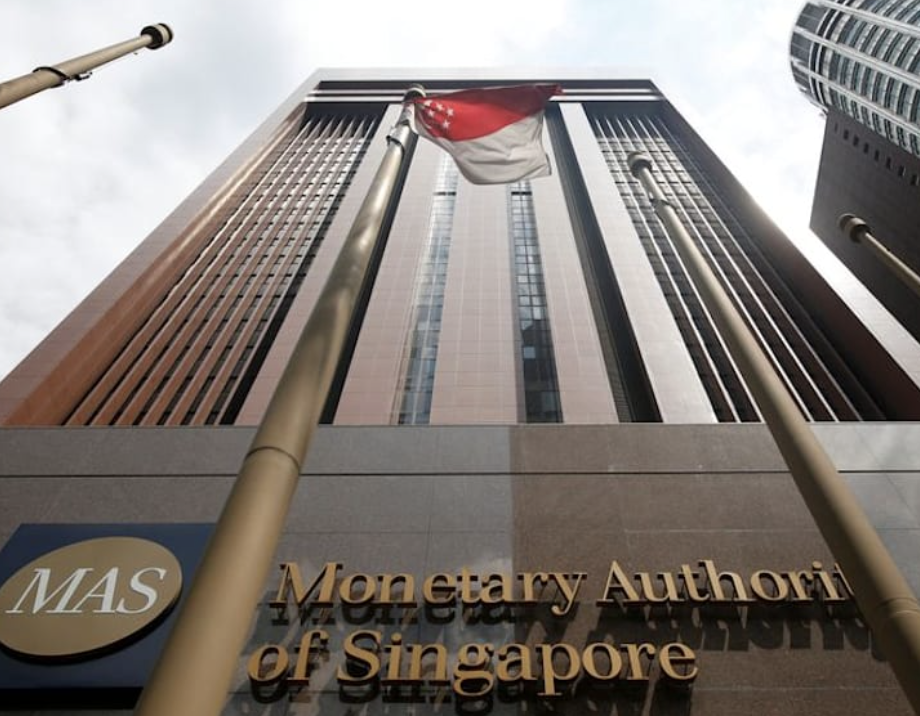
But the Monetary Authority of Singapore (MAS) is looking at the other side of that growth. In its Financial Stability Review, MAS Managing Director Chia Der Jiun warned that global growth and markets are becoming increasingly dependent on continued AI spending. The concern is not that the AI boom is fake, but that companies are investing far more in data centres and AI systems than their current revenue can support. AI-linked companies now account for about 40% of the S&P 500’s value, adding to the market’s exposure if expectations around AI change.
Singapore puts more money into AI despite its own warning
The tension isn’t just political, it’s financial, and it runs through Singapore’s own state funds. Temasek and GIC, the two vehicles that manage Singapore’s reserves, are among the few investors in the world holding direct stakes in both Anthropic and OpenAI, along with a position in Nvidia. Temasek said in July it’s targeting a jump in AI exposure from 6% of its portfolio to as much as 15% by 2031, and completed 13 AI-related deals in the first half of 2026 alone. CEO Dilhan Pillay called AI’s advance “a pivotal phase that will create vast new opportunities” the same week its portfolio hit a record S$518 billion.
That optimism sits awkwardly next to the exact warning MAS itself put on record. Chia Der Jiun didn’t just flag a valuation risk, he specifically warned that the AI boom risks concentrating wealth and market power in fewer hands, a combination he said could destabilise the financial system on its own.
BlackRock CEO Larry Fink made almost the identical point in his own 2026 shareholder letter, independently, months earlier, writing that AI threatens to repeat a pattern where “a dollar in the U.S. stock market has grown more than 15 times the value of a dollar tied to median wages,” concentrating gains among the companies and investors positioned to capture them.
Fink is calling for market access to spread the gains, Temasek is doing the opposite, deepening its own concentrated bet, on the theory that being inside the boom is safer than watching it from outside.
Singapore’s AI expansion comes with rising infrastructure costs
Singapore has allocated 200 megawatts of new data centre capacity this year, on top of a planned 700-megawatt park on Jurong Island, its largest yet. Amazon Web Services has pledged SGD 12 billion and Google has committed 5 billion US dollars toward AI and cloud infrastructure, in a country with only 734 square kilometres of land total.
Electricity demand tied to data centres is projected to nearly triple between 2025 and 2030, growing from 4% of total consumption to around 11%, in a country that generates almost none of its own power.
Princeton Digital Group, a Singapore-based data centre operator, plans to raise 5 billion US dollars in debt this year alone to fund its regional expansion, on top of an 856 million dollar financing round it closed earlier in the year for a single Jakarta campus. This is the exact pattern MAS itself flagged as the risk to watch, spending running ahead of proven returns, playing out inside Singapore’s own backyard, not somewhere else in the world.
That gap between money committed and returns proven is also what’s making some of Singapore’s own investors uneasy. Temasek CIO Rohit Sipahimalani has warned that parts of the AI market are already showing signs of “froth.” T. Rowe Price portfolio manager Sebastien Mallet has raised a similar question from outside Singapore, whether all the money going into AI infrastructure will actually produce returns to match it.
Meanwhile, DeFi Planet reported that Singapore’s electronics exports jumped 131.8% in August from a year earlier, while exports of personal computers, including data-centre servers, rose 238%. The figures show how the global AI boom is feeding into Singapore’s economy through strong demand for computing hardware.
Enjoyed this? Bookmark DeFi Planet, explore related topics, and follow us on Twitter, LinkedIn, Facebook, Instagram, Threads, and CoinMarketCap Community for seamless access to high-quality industry insights
Take control of your crypto portfolio with DEFI PLANET PRO, DeFi Planet’s suite of analytics tools.