














































Quick Breakdown

- Over the years, Ethereum has grown into a platform which supports institutional-grade products, including ETFs, tokenized bonds, DeFi lending, derivatives, and secure custody solutions, attracting banks, hedge funds, and asset managers.
- Ethereum makes 24/7 trading, programmable transactions, fractional ownership, transparency, and compliance possible. It also supports faster cross-border payments, more DeFi opportunities, global financial inclusion, and better portfolio diversification.
- Regulatory Clarity and Traditional Finance Integration: Clear rules, legal recognition of tokenized assets, and partnerships with banks and fintech firms help Ethereum connect decentralized innovation with mainstream finance. This boosts liquidity, market depth, and investor confidence.
In the last decade, Ethereum has expanded well beyond its start as a decentralized smart contract platform. What began as a space for developers and crypto enthusiasts now attracts banks, hedge funds, and asset managers interested in its smart contracts, DeFi protocols, and tokenization features.
Recent network upgrades and Layer 2 solutions have made Ethereum faster and more scalable, enabling larger transactions and more complex financial products. All of these developments lead to an important question: Is Ethereum becoming the ‘Wall Street’ of crypto?
Institutional Products Built on Ethereum
Ethereum has grown beyond a decentralized smart contract platform into a foundation for institutional-grade financial products. Ethereum institutional adoption offers efficiency, transparency, and new opportunities for investors.
Ethereum-based ETFs
Ethereum ETFs allow both institutional and retail investors gain exposure to ETH without owning it directly. By tracking the price of Ethereum, ETFs provide a regulated way to invest in crypto through traditional brokerage accounts.
Major firms, such as Grayscale with its Ethereum Trust, have paved the way for institutions to get involved. ETFs increase market accessibility and encourage institutional inflows, which can stabilize price volatility and boost liquidity.
Tokenized bonds and debt instruments
Ethereum makes it possible to issue tokenized bonds, so governments, companies, and institutions can raise capital directly on the blockchain. Tokenization cuts out intermediaries, speeds up settlements, and allows for fractional ownership.
READ ALSO: Is Tokenization All That It’s Cracked Up To Be?
For example, entities like the European Investment Bank have experimented with blockchain-based bonds, signaling the potential for Ethereum to streamline traditional debt markets. Tokenized debt on Ethereum can also improve transparency and real-time tracking of obligations, reducing operational risk.
Crypto lending and DeFi platforms
Ethereum hosts decentralized lending protocols where institutions can lend or borrow digital assets, including ETH and stablecoins. Platforms like Aave and Compound allow institutions to earn yield or access liquidity quickly.
Lending on Ethereum bypasses traditional banking infrastructure, offering faster settlement and programmable interest rates. For institutions, this provides alternative returns and diversifies exposure to crypto-native assets while maintaining risk controls through smart contracts.
Derivatives and structured products
Ethereum-based derivatives, including options and futures, let institutions hedge positions or gain leveraged exposure to ETH and other digital assets. Protocols like Synthetix or CME-traded ETH derivatives allow sophisticated trading strategies.
Structured products, such as tokenized notes that combine ETH with yield-generating strategies, are emerging as tools for portfolio management. These instruments increase market sophistication and deepen institutional engagement.
Custody solutions and institutional wallets
Secure storage and custody solutions are essential for Ethereum institutional adoption. Ethereum supports multi-signature wallets, custodial services from firms like Coinbase Custody and BitGo, and insurance-backed storage.
Institutional wallets ensure compliance with DeFi regulations, reduce counterparty risk, and provide confidence for large-scale investment. Safe custody is a prerequisite for widespread Ethereum institutional adoption.
Impact on liquidity, market depth, and adoption
- Liquidity: Institutional products bring in more capital, which increases trading volumes and reduces slippage in ETH markets.
- Market Depth: The market can now handle large buy and sell orders more easily, which helps stabilize prices and reduce sudden volatility.
- Adoption: As traditional investors get regulated access, Ethereum becomes more mainstream. This attracts both new institutions and retail investors who want to join a well-structured, liquid market.
- Ecosystem Growth: Institutional activity fuels development of more sophisticated financial instruments, Layer 2 adoption, and enterprise-grade infrastructure, creating a self-reinforcing cycle of market maturity.
The Rise of Tokenized Assets and Stablecoins
Ethereum lets traditional assets like stocks and commodities be turned into digital tokens on its blockchain.
Tokenized equities give investors a claim to company shares on the blockchain, while tokenized commodities let people own fractions of gold, oil, or other resources.
Stablecoins, pegged to fiat currencies like the US dollar, provide a stable medium of exchange for trading, lending, and payments.
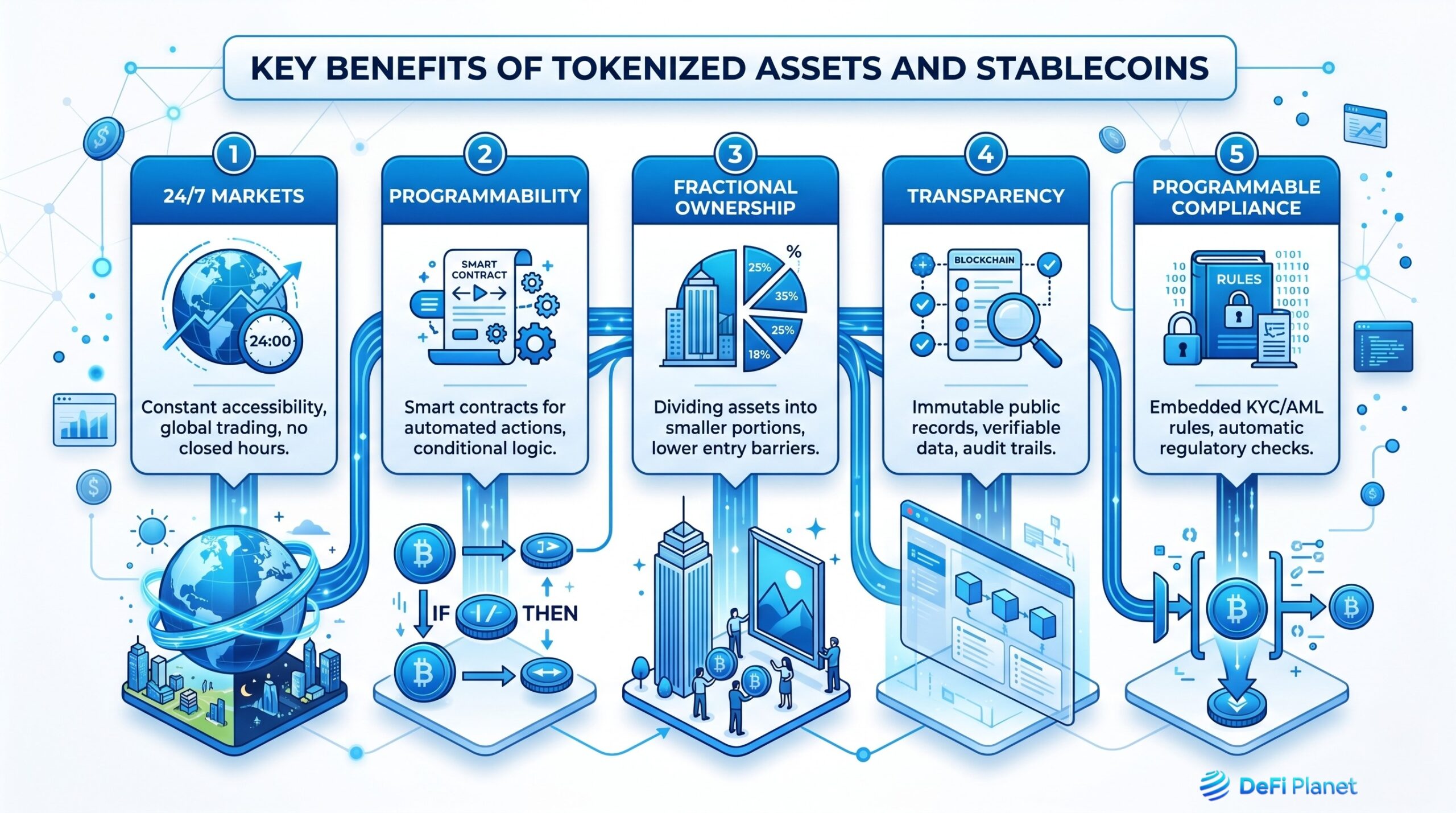
By leveraging Ethereum, these assets offer the following benefits:
24/7 markets
Ethereum-based assets can be traded anytime, unlike traditional exchanges that close after hours. This 24/7 access gives investors more flexibility and lets them react quickly to market changes.
Programmability
Smart contracts let tokenized assets and stablecoins handle things like paying dividends, adding interest, or managing collateral automatically. This programmability cuts out middlemen, lowers costs, and supports more complex financial strategies.
Fractional ownership
Tokenization lets high-value assets be divided into smaller parts, so more people can invest. Fractional ownership opens up access to expensive stocks or commodities and increases liquidity by letting more people buy and trade smaller shares.
Transparency
Every transaction on Ethereum can be checked by anyone on the blockchain. This transparency builds trust, lowers the risk of fraud, and keeps a clear record of who owns what.
Programmable compliance
DeFi regulations can be built into smart contracts, allowing tokenized assets to comply automatically with KYC/AML rules or regional investment restrictions. This reduces the burden on issuers and increases confidence among institutional investors.
Influence on cross-border payments and DeFi markets
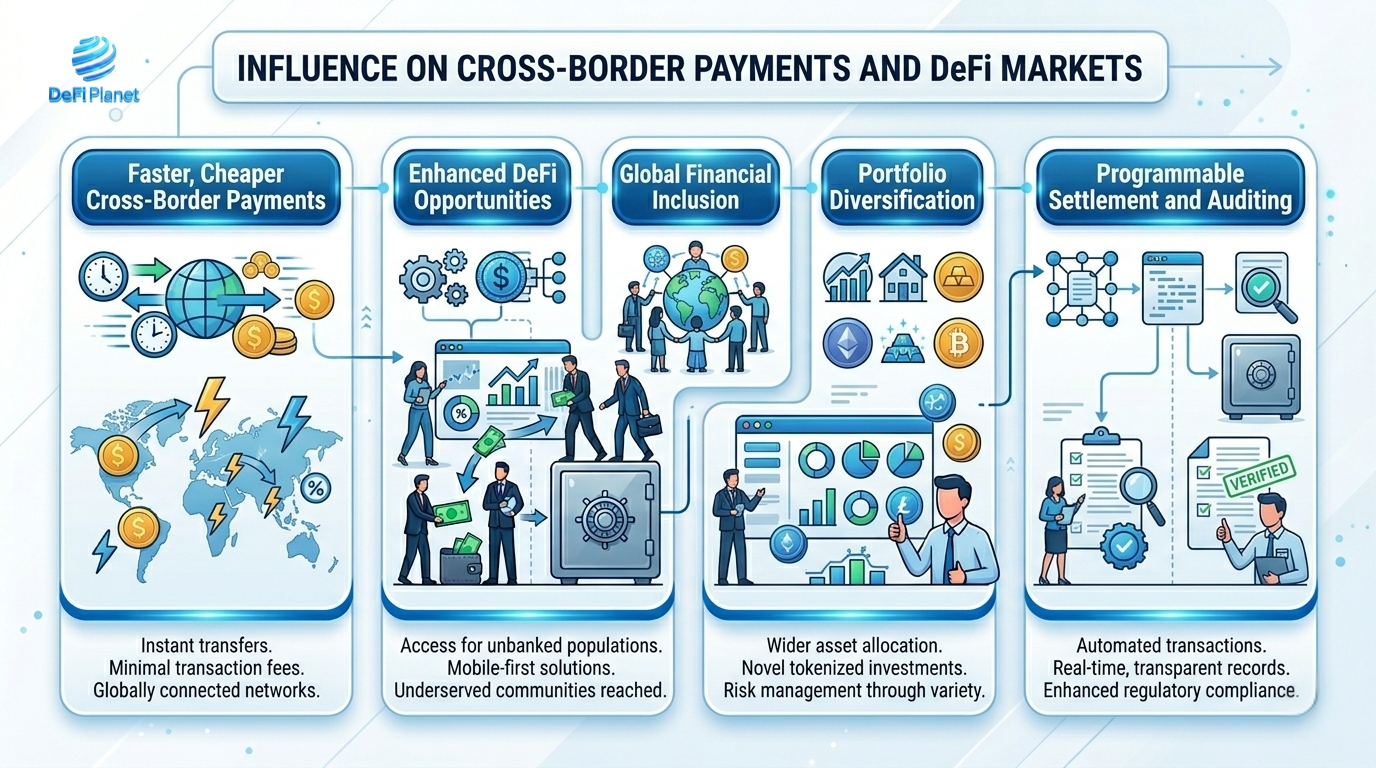
Tokenized assets and stablecoins are changing global finance by enabling faster cross-border payments, expanding DeFi options, and improving access and efficiency in international markets.
Faster, cheaper cross-border payments
Tokenized assets and stablecoins allow instant settlement of international transactions without traditional banking delays or high fees. This reduces friction in global trade, remittances, and business-to-business payments.
Enhanced DeFi opportunities
DeFi platforms use Ethereum-based tokens for lending, borrowing, staking, and yield farming. This lets users earn interest, get liquidity, and try financial services that weren’t available to most people before.
Global financial inclusion
By leveraging tokenized assets and stablecoins, Ethereum helps expand financial services to regions with limited banking infrastructure. People in developing countries can access investments, savings, and payments on a blockchain, bridging gaps in traditional finance.
Portfolio diversification
Tokenized assets allow investors to access global markets and a wider variety of assets that may have been previously unreachable. This enables more diversified portfolios and reduces dependency on a single financial system or region.
Programmable settlement and auditing
Smart contracts automate settlement and reporting for financial transactions, enabling faster audits and reducing human error. This enhances efficiency for both retail and institutional participants and could set a new standard for global financial operations.
Regulation and Integration with Traditional Finance
One of the biggest hurdles for Ethereum institutional adoption has been uncertainty around DeFi regulations. Ethereum has benefited from clearer guidance in several major markets, including the U.S., EU, and Singapore. By establishing frameworks around token classification, securities laws, and taxation, regulators reduce the legal risk for institutional investors.
This clarity encourages banks, hedge funds, and asset managers to explore Ethereum-based products with more confidence. Clear rules also help protect retail investors by defining rights, obligations, and recourse in case of disputes.
Collaboration between Ethereum protocols and traditional financial institutions
Ethereum isn’t just growing independently; it’s increasingly working alongside banks, asset managers, and fintech companies.
Protocols are partnering with institutions to tokenize bonds, issue stablecoins, and develop lending platforms that comply with existing financial laws. This collaboration accelerates adoption by combining blockchain innovation with the trust, liquidity, and infrastructure of established finance.
For example, major banks have experimented with Ethereum-based settlement systems for cross-border payments, reducing costs and processing times.
Compliance challenges and investor protection measures
- Adapting KYC/AML Standards – Ensuring that Ethereum-based platforms can meet Know Your Customer and Anti-Money Laundering requirements remains a challenge. Smart contracts and tokenized products must integrate verification processes without compromising the decentralized nature of the network.
- Mitigating Fraud and Market Manipulation – With institutional participation comes increased scrutiny. Regulators and platforms must monitor for manipulation, wash trading, or insider activity to protect investors.
- Balancing Innovation with Regulation – Maintaining Ethereum’s decentralized innovation while meeting regulatory standards is delicate. Protocols are exploring solutions like permissioned layers, tokenized compliance rules, and reporting mechanisms to allow institutional participation without stifling creativity.
- Custody and Security Measures – Institutional investors require secure custody solutions for Ethereum holdings. Multi-signature wallets, insurance protocols, and regulated custodians are increasingly integrated to meet these standards.
- Legal Recognition of Tokenized Assets – Governments are starting to recognize tokenized securities and stablecoins as legitimate financial instruments. This provides legal certainty and ensures investor rights in case of disputes, making Ethereum a more attractive platform for mainstream finance.
Conclusion: Ethereum as the Wall Street of Web3
Ethereum has grown from a decentralized smart contract platform into a hub for institutional finance, showing its bigger role in the crypto world. With tokenized assets, stablecoins, and lending platforms, Ethereum now supports advanced financial products and boosts liquidity, market depth, and adoption. Working with traditional banks and having clear regulations make it an even stronger link between Web3 innovation and mainstream finance.
For retail investors, Ethereum presents opportunities for participation in cutting-edge financial products, though risks remain in terms of volatility and regulatory changes. Institutional players benefit from scalable, programmable, and transparent platforms that can integrate with existing financial infrastructure. As the ecosystem matures, Ethereum could very well become the backbone of a regulated crypto economy, balancing decentralization with the trust and compliance demanded by global markets. Let’s see how it all unfolds.
Disclaimer: This article is intended solely for informational purposes and should not be considered trading or investment advice. Nothing herein should be construed as financial, legal, or tax advice. Trading or investing in cryptocurrencies carries a considerable risk of financial loss. Always conduct due diligence.
Enjoyed this piece? Bookmark DeFi Planet, explore related topics, and follow us on Twitter, LinkedIn, Facebook, Instagram, Threads, and CoinMarketCap Community for seamless access to high-quality industry insights.
Take control of your crypto portfolio with MARKETS PRO, DeFi Planet’s suite of analytics tools.”