


























































Quick Breakdown

-
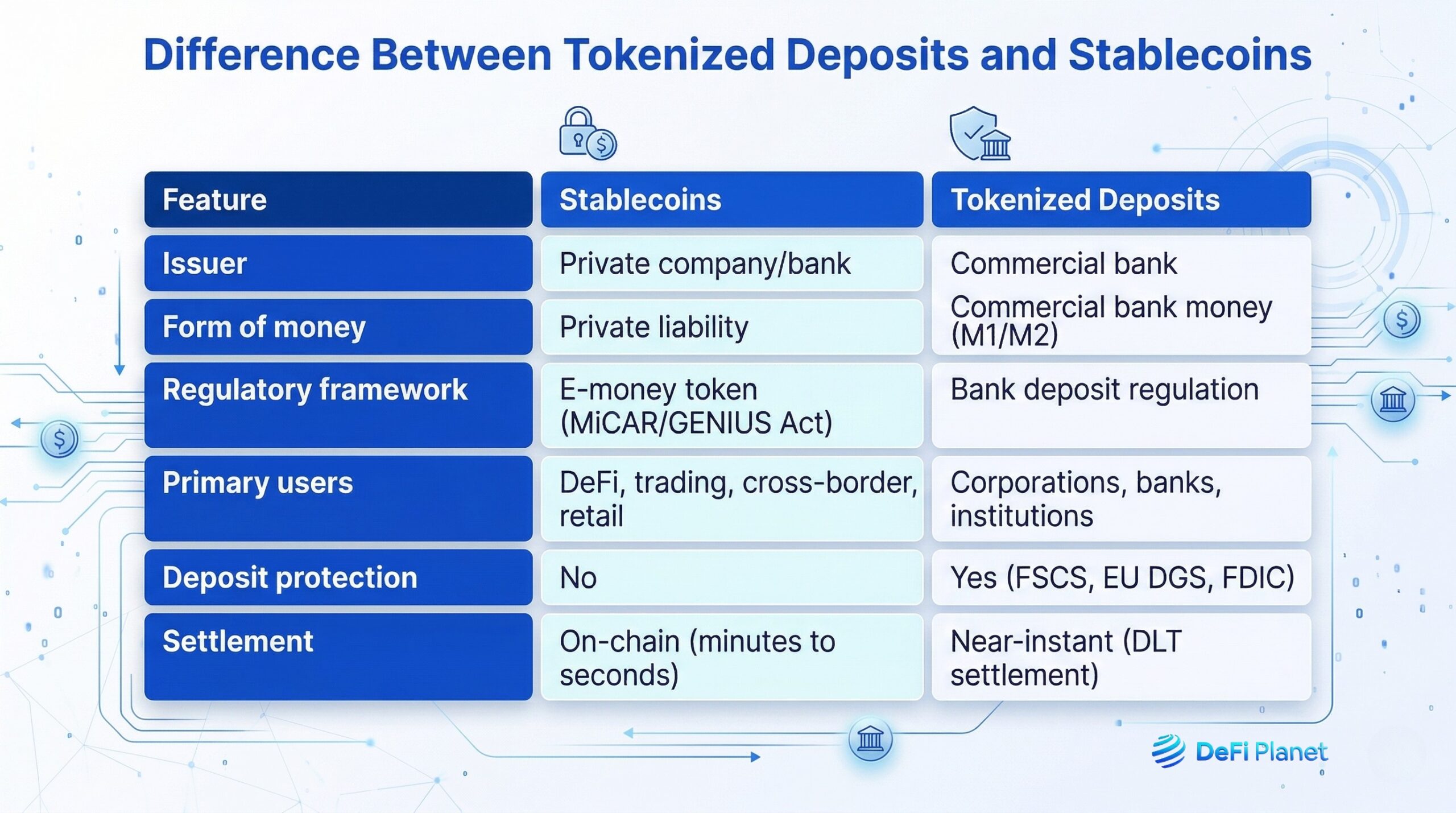
- Stablecoins lead in DeFi, trading, and cross-border payments because they are fast, easy to use, and widely available. Tokenized deposits, on the other hand, work best for regulated institutional settlements and corporate payments, where trust and bank connections are key.
- Both systems can compete in some areas but also complement each other; hybrid models allow tokenized deposits to leverage stablecoin-like functionality while staying fully regulated.
- The future of on-chain cash depends on trust, liquidity, regulation, and usability, with banks and crypto-native players likely coexisting in a layered ecosystem shaped by adoption, infrastructure, and legal frameworks.
What feels like a new competition between tokenized deposits and stablecoins is beginning to take shape in the world of digital finance. Banks are pushing tokenized deposits as a regulated, familiar form of on-chain money, while crypto-native stablecoins continue to dominate as the go-to digital cash across DeFi and global payments.
This rivalry matters because both are competing to become the default form of digital cash, the asset people and institutions use to move money, settle transactions, and power financial applications on-chain.
The key question now is clear: will traditional banks reclaim control of digital money through tokenized deposits, or will crypto-native stablecoins continue to lead the future of on-chain finance?
Tokenized Deposits vs Stablecoins: Where Each Has the Edge
As the race for on-chain cash heats up, tokenized deposits and stablecoins have distinct strengths, but with recent discussions, it looks like the lines are starting to blur.
Tokenized deposits
Tokenized deposits are gaining serious momentum as banks push deeper into blockchain-based finance. According to a recent report from RWA.io, major institutions like Citi, BNY, JPMorgan’s Kinexys, Standard Chartered, ABN Amro, and UK Finance are actively developing tokenized deposit systems.
“The global financial system still runs on commercial bank money, and bringing that money onto digital rails will underpin the next generation of digital finance.,” said Marko Vidrih, co-founder and COO at RWA.io.
Because they’re issued and backed by regulated banks, tokenized deposits plug directly into existing financial infrastructure. This makes them a natural fit for institutional settlement and corporate payments, where trust and compliance matter most.
Their biggest advantage is seamless integration with the banking system. Institutions can move funds faster, often near-instantly, without leaving regulated rails. This is valuable for interbank transfers, treasury operations, and large corporate payments, where efficiency and security are critical.
However, this edge is still emerging rather than dominant. Most activity today is happening in bank-led pilots and closed networks, meaning adoption remains limited compared to stablecoins.
Stablecoins
Stablecoins like USDT and USDC are the backbone of today’s on-chain economy. As crypto-native assets, they’re built for speed, flexibility, and global access, making them the go-to choice across DeFi, trading, and cross-border payments.
Their biggest strength is usability at scale. Stablecoins already process hundreds of billions in monthly volume and have a combined market cap of over $300 Billion, showing just how deeply they’re embedded in the system.
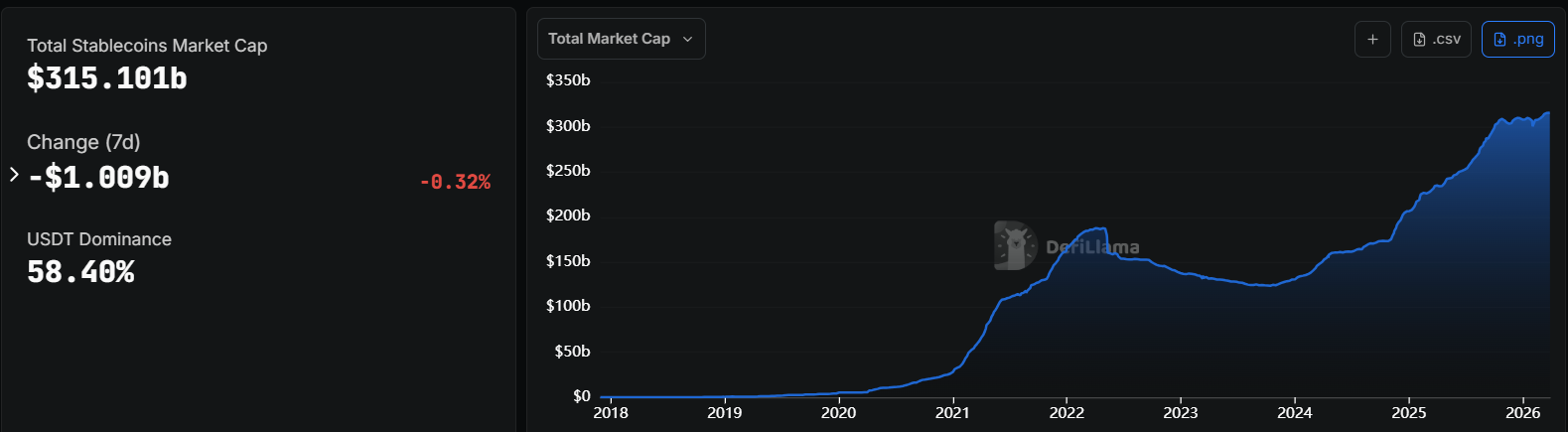
They dominate key areas like:
- DeFi liquidity pools and lending protocols
- Crypto exchange trading pairs (where they act as the main quote currency)
- Cross-border transfers, especially in emerging markets where they offer a faster, cheaper alternative to traditional banking
Because they run on blockchain rails, stablecoins are available 24/7, highly programmable, and don’t rely on banks to operate. This makes them ideal for everything from automated financial services to instant global payments.
Stablecoins have a massive first-mover advantage and remain the default form of on-chain cash today, with real usage, global reach, and unmatched liquidity.
RELATED:
Market Dynamics: Competition or Coexistence?
European Central Bank Executive Board member, Piero Cipollone, has noted that the growing ecosystem of stablecoins and tokenized deposits will require a trusted public anchor in the form of central bank money, public-private cooperation, and a stronger legal framework to achieve true stability.
Piero emphasized that while private digital assets play a significant role, they cannot fully substitute the safety of government-backed currency in a tokenized economy.
But the rise of these digital cash systems doesn’t mean one will beat the other. In reality, they could compete in some ways but also work together, depending on how people and institutions use them, the rules that apply, and the tech that supports them.
Direct competitors or working together?
Sometimes stablecoins and tokenized deposits can do the same job; they can both be used for payments, settlements, or cross-border transfers.
But they also have different strengths: stablecoins are great for crypto trading and DeFi, while tokenized deposits are better for regulated institutions. This means they can coexist, each serving the users who need them most.
Hybrid models are possible
Some companies are creating systems that combine the best of both. For example, a corporate treasury might use tokenized deposits for compliance and settlement but stablecoins for cross-border transfers or DeFi liquidity. Some tokenized deposits can even be used on-chain like stablecoins while staying fully bank-backed.
User choice and infrastructure matter
Which system wins or how they work together depends on what people and institutions value most: speed, ease of use, trust, and cost. Retail users may prefer stablecoins for convenience, while banks and large companies prioritize regulatory safety.
Tech infrastructure, like payment networks, blockchain connections, and settlement systems, will decide which system works best in practice.
Both stablecoins and tokenized deposits will likely coexist, with hybrid solutions helping bridge the gap between regulated finance and open crypto markets.
Final Take: Who Wins the Long-Term Race?
The long-term winner between tokenized deposits and stablecoins will depend on trust, liquidity, regulation, and ease of use. Banks and institutions may push tokenized deposits as a safe, regulated option, while crypto-native users may continue favouring stablecoins for open access, speed, and integration with DeFi. The influence of CBDCs could also provide a public anchor that reinforces confidence in digital cash systems.
In reality, the market may not be a zero-sum game. Hybrid models and layered solutions are likely, where tokenized deposits and stablecoins coexist, each serving the needs of different users and use cases. The ultimate outcome will be shaped by adoption, infrastructure, and regulatory frameworks, creating a digital cash ecosystem that blends the strengths of both traditional finance and crypto innovation.
Disclaimer: This article is intended solely for informational purposes and should not be considered trading or investment advice. Nothing herein should be construed as financial, legal, or tax advice. Trading or investing in cryptocurrencies carries a considerable risk of financial loss. Always conduct due diligence.
Enjoyed this piece? Bookmark DeFi Planet, explore related topics, and follow us on Twitter, LinkedIn, Facebook, Instagram, Threads and CoinMarketCap Community for seamless access to high-quality industry insights.
Take control of your crypto portfolio with DEFI PLANET PRO, DeFi Planet’s suite of analytics tools.”