




















































Quick Breakdown
- Once seen as a regulatory nightmare, stablecoins are now being reexamined as tools that could strengthen financial transparency and trust if paired with robust anti-money laundering (AML) safeguards.
- AML features, such as traceability, KYC checks, and transparency, could help stablecoins gain regulatory approval, attract institutions, and accelerate adoption for payments, remittances, and cross-border finance.
- Strong AML compliance boosts market credibility but could also raise concerns about surveillance, centralization, and data security. How issuers strike this balance will determine whether AML becomes a catalyst or a constraint for stablecoin adoption.

Stablecoins have become a central part of the crypto ecosystem, offering a stable bridge between traditional currencies and crypto assets and enabling faster payments, easier cross-border transfers, and driving financial inclusion.
But, they face intense scrutiny from regulators. Authorities worry about money laundering, fraud, and systemic risk, which have slowed wider adoption. Yet, the very frameworks designed to prevent these risks, anti-money laundering (AML) measures, could become a key factor in driving trust and encouraging more investors and businesses to embrace stablecoins.
This raises a critical question: can stronger AML compliance actually boost stablecoin adoption and fuel the next wave of crypto market growth?
Why Regulators Might Support Them
Stablecoins have a better chance of being positively perceived by regulators when they are consistent with current policy objectives, particularly transparency, financial stability, and consumer protection. Regulated stablecoins, in contrast to entirely decentralized cryptocurrencies, can be programmed with compliance features, which makes it simpler to track transactions and avoid illegal behaviour.
By maintaining stablecoins with high AML and KYC standards, the authorities could achieve a number of objectives: reducing fraud, improving the monitoring of cross-border transactions, and providing confidence in the digital financial markets. The stablecoins under this compliance approach are an easy technology to apply as a complement to regulatory priorities to bridge the disparity between innovation and policymaking.
Also, regulators may view stablecoins as a less risky on-ramp for mainstream users and institutions. They are more stable and traceable, and thus can be easily integrated into traditional banking and payment systems, enabling the development of a digital currency that still meets people’s needs without compromising financial security. This “fit” with policy goals could accelerate approval and stablecoin adoption, driving both market growth and regulatory trust.
AML Strengths
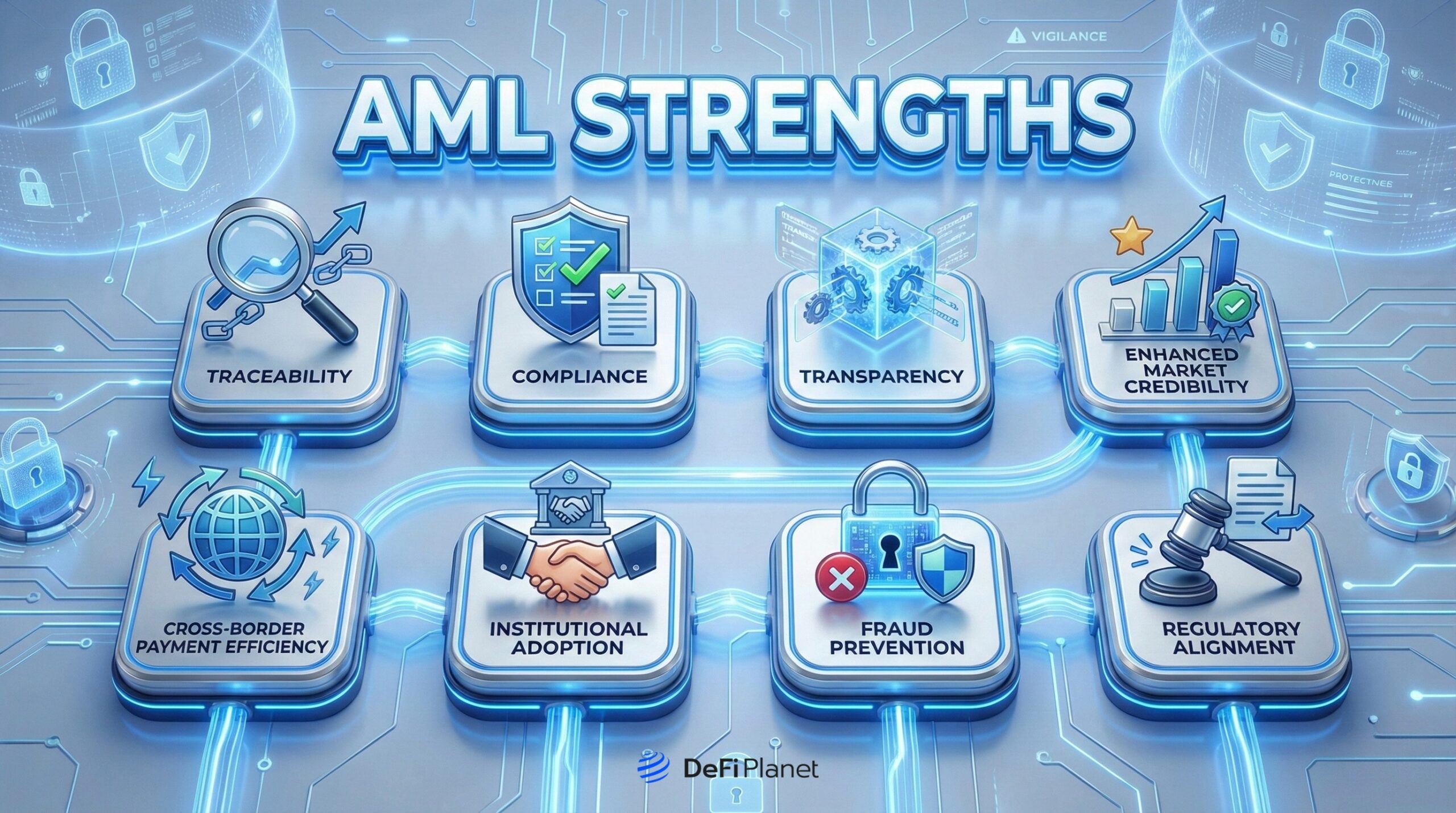
Strong AML features give stablecoins an advantage by making them safer, more transparent, and easier to regulate.
Traceability
All transactions made on the blockchain are stored forever and may be traced in real time. This enables authorities, exchanges, and businesses to track the movement of funds, detect suspicious trends and move fast to eliminate fraud, money laundering or any other illicit activities. Traceability helps to build more trust in stablecoins as a valid financial instrument.
Compliance
A large number of stablecoins apply KYC and AML checks directly into their services. Verification of identity prior to a transaction is often required by the user and will guarantee regulation compliance and minimize the likelihood of non-compliance by issuers and service providers. This aspect makes stablecoins a legal and reliable means of payment to retail and institutional clients.
Transparency
Reserve audits, proof-of-backing reports, and summaries of transaction activity are also common publications by the issuers. Transparency enables regulators, users and investors to ensure that the stablecoins are fully secured and are operated in a responsible manner. Open communication creates trust and may help avoid panic or distrust in the case of market instability.
Enhanced market credibility
Stablecoins that are compliant with AML are better placed to be accepted by banks, exchanges, and fintech applications. This reputation motivates more businesses to adopt the use of stablecoins that were initially reluctant to use crypto because of the uncertainty of regulation. It also makes these stablecoins a stable bridge between conventional finance and digital assets.
Cross-border payment efficiency
Regulatory-compliant, traceable stablecoins ease international transfers because they align with regulations in multiple jurisdictions. Users can transfer funds internationally more quickly and at a relatively low cost compared to conventional banking systems, while still retaining full access to the transaction. This is what makes their efficiency appealing in remittances, global business, and multinational business.
Institutional adoption
The makeup of stablecoins in AML enables high-scale investors to invest in it (e.g., hedge funds, banks, corporations). Firms can incorporate them into treasury activities, trading desks, and liquid management strategies without fear of legal exposure. This makes the market deeper and more professional.
Fraud prevention
Due to the adoption of AML and KYC measures, stablecoins will hardly be used in scams, fraudulent accounts, or money laundering. This safeguards users and platforms, creating a more secure ecosystem and reducing the reputational risks often associated with digital assets.
Regulatory alignment
AML-compliant stablecoins align with the global policy towards the prevention of financial crime. This kind of compliance is more likely to pass through approval or acceptance of such by regulators to utilize them, which can eventually create a pathway to the increased adoption of stablecoins and their incorporation into more financial systems.
How These Benefits Align With Regulatory Goals
Stablecoins that are AML compliant directly support the goals that regulators focus on: the reduction of financial crimes, greater transparency, and consumer protection. The stablecoins provide traceable transactions and authenticated identities, which makes it easier for authorities to uncover illegal transactions such as money laundering, terrorist financing, and fraud. It is in line with international financial practices and proves that digital assets can be responsible actors in the current system.
The compliance features also make regulators feel more comfortable integrating stablecoins in mainstream finance. When the requirements of stablecoins are satisfied with reporting, reserve, and audit requirements, it demonstrates that the ecosystem can function in a transparent and predictable manner. This minimizes systemic risks and makes regulators think that stablecoins are valid methods of payment and settlement.
Moreover, these advantages also make cross-border supervision easier. The coordination across jurisdictions can be a challenge to international regulators, but traceable and compliant stablecoins offer a single, verifiable ledger, easily accessible to authorities worldwide. Such compliance with regulatory priorities does help to ease enforcement efforts and also strengthens the case for stablecoins adoption to expand without causing significant regulatory backlash.
Lastly, in achieving regulatory purposes, AML-friendly stablecoins promote a broader institutional usage. Payment processors, banks, and fintech platforms are more likely to incorporate stablecoins and serve as intermediaries between traditional finance and digital assets, while advancing the broader objectives of financial stability and consumer protection.
Investor Trust: How AML Could Drive Adoption
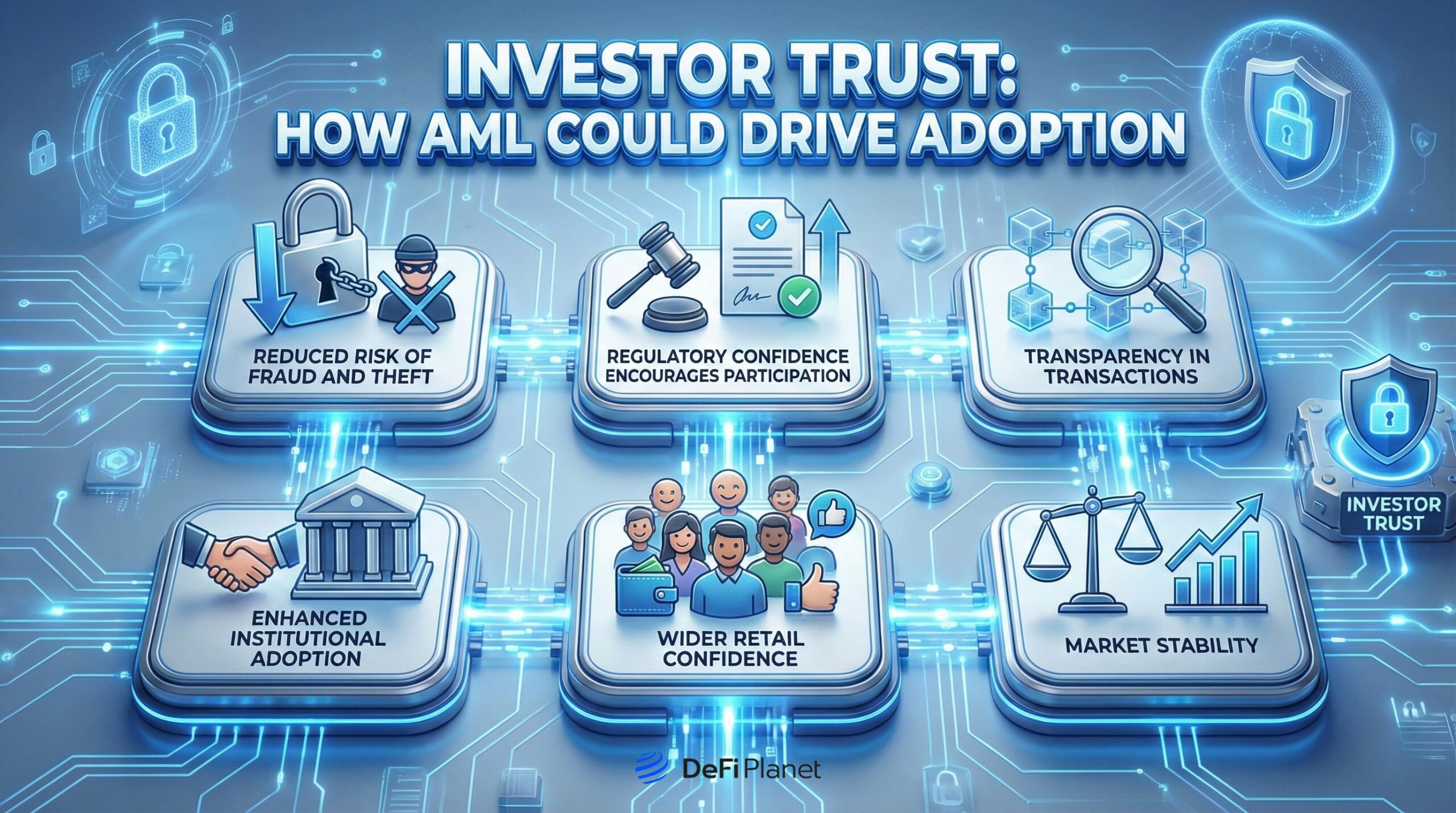
AML-compliant stablecoins can increase confidence among investors and institutions, making adoption more likely.
Reduced risk of fraud and theft
By enacting AML measures for stablecoins, investors will be more assured that money will not be spent on illegal activities. This minimizes fraud, scam and unauthorized transactions, and it offers a secure environment to both the retail and institutional users.
Regulatory confidence encourages participation
Investors are more likely to adopt products that regulators recognize as compliant. Stablecoins that are friendly to AML indicate the consent of the authorities to use them, which reduces the perceived risk of imposing legal limitations or fines in a short time.
Transparency in transactions
Stablecoins that are AML-compliant have transparent, auditable transaction histories. Investors are able to confirm the origin and track of money, which helps to establish trust and enables them to manage the risks better when utilizing these digital assets.
Enhanced institutional adoption
Banks, payment providers, and hedge funds tend to implement AML-compliant stablecoins into their practice. With such digital assets satisfying the standards of regulation, the institutions can safely possess and trade them or use them to settle.
Wider retail confidence
Everyday users are also assured by the AML measures. Individuals could use stablecoins to pay, remit, and save money when they are convinced that the system has been regulated, is safe, and is legally acceptable.
Market stability
AML-compliant stablecoins stabilize the market by decreasing illicit activity and increasing transparency. A more predictable ecosystem will further encourage investors to integrate the space, leading to the expansion of stablecoins and liquidity.
Where It Gets Messy
While AML-compliant stablecoins boost trust, they also raise new challenges. Increased monitoring and transaction traceability can conflict with users’ expectations of privacy. Retail users and crypto enthusiasts often value anonymity and discretion, and excessive tracking may discourage stablecoin adoption among those who prioritize financial privacy.
Privacy trade-offs
To meet AML standards, stablecoin issuers may need to collect and store user data, including identities, transaction histories, and account balances. This creates the risk of data breaches, identity theft, or misuse of sensitive information. Users must weigh the benefit of regulatory safety against the potential loss of privacy in daily transactions.
Centralization risks
AML requirements often push stablecoins toward more centralized control. Issuers or governing entities must enforce compliance rules, maintain KYC databases, and approve transactions. This concentration of authority can conflict with the decentralized ethos of crypto, creating a single point of failure and increasing vulnerability to hacks, regulatory seizure, or operational disruptions.
Balancing act
The challenge lies in finding a middle ground: ensuring compliance and building investor trust without making the network overly centralized or compromising user privacy. Some projects are experimenting with privacy-preserving compliance methods, such as zero-knowledge proofs, but these solutions are still evolving and may not yet scale to mainstream adoption.
Regulatory fragmentation
Different countries may impose varying AML requirements on stablecoins, creating inconsistencies across borders. This can complicate compliance for issuers operating internationally, slow adoption, and even discourage users who face differing rules depending on location.
Impact on innovation
Strict AML enforcement could slow innovation in stablecoin features and DeFi integrations. Developers may avoid building advanced privacy or payment functionalities for fear of regulatory non-compliance, potentially limiting the evolution of stablecoins as flexible financial tools.
User perception and adoption
Even if the technical solutions are in place, public perception matters. Users who feel their privacy is compromised may avoid AML-compliant stablecoins altogether, limiting growth. Transparent communication and strong security measures will be essential to balance regulatory benefits with user trust.
Conclusion: Could AML shift the stablecoin narrative for good?
AML compliance could mark a turning point for stablecoins, changing how regulators, investors, and the broader public perceive them. By improving transparency, traceability, and adherence to financial rules, AML frameworks make stablecoins more trustworthy and better aligned with policy goals. This increased trust can open the door to wider stablecoin adoption, moving stablecoins from niche crypto tools to mainstream financial instruments.
At the same time, challenges remain, particularly around privacy, centralization, and international regulatory differences. How the industry balances compliance with usability and innovation will determine whether AML truly reshapes the stablecoin narrative. If stablecoin issuers and developers successfully navigate these trade-offs, AML could become a catalyst for sustainable growth and broader acceptance across markets worldwide.
Disclaimer: This article is intended solely for informational purposes and should not be considered trading or investment advice. Nothing herein should be construed as financial, legal, or tax advice. Trading or investing in cryptocurrencies carries a considerable risk of financial loss. Always conduct due diligence.
Enjoyed this piece? Bookmark DeFi Planet, explore related topics, and follow us on Twitter, LinkedIn, Facebook, Instagram, Threads and CoinMarketCap Community for seamless access to high-quality industry insights.
Take control of your crypto portfolio with MARKETS PRO, DeFi Planet’s suite of analytics tools”