



















































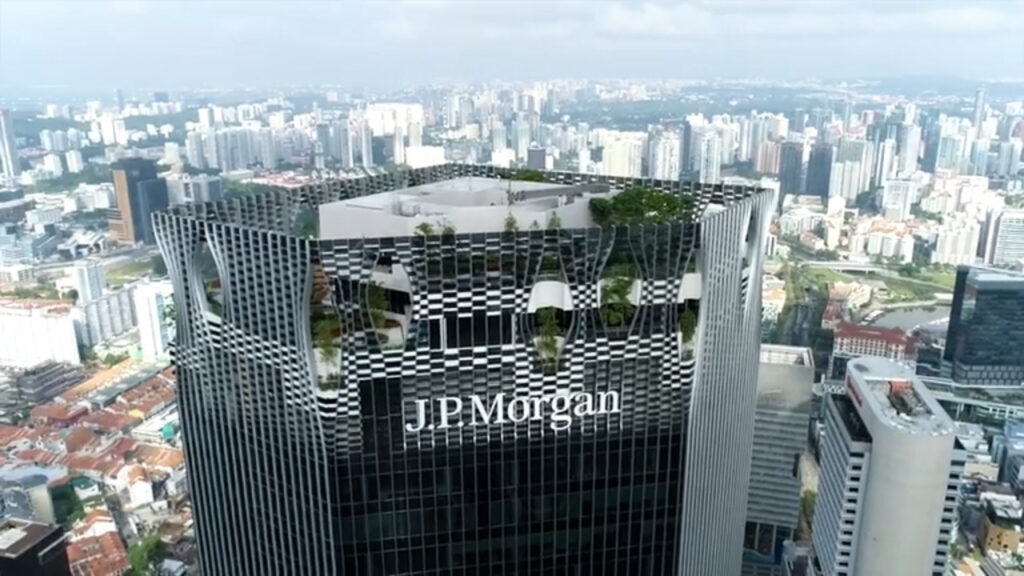
JPMorgan Chase has blocked access to Anthropic’s AI models for employees in Hong Kong, according to a Financial Times report cited by Reuters. The decision reflects growing caution among major banks over how advanced AI tools are deployed across different jurisdictions.

🐋 WHALE WATCH: JPMorgan Chase has officially cut off Hong Kong staff from accessing Anthropics Claude models.
Following a similar move by Goldman Sachs in April major Wall Street firms are rapidly tightening the geography of their AI stacks.
Compliance and contract terms are… pic.twitter.com/mqPcH4yiln
— Whale Factor (@WhaleFactor) June 18, 2026
Internal restrictions grow tight across global banking systems
The report said JPMorgan removed Anthropic’s Claude models from its internal list of approved AI tools available to staff in Hong Kong. The move was caused by concerns linked to licensing terms and compliance requirements tied to the use of external AI systems.
The restriction follows a similar action by Goldman Sachs, which earlier removed Anthropic’s Claude models from approved tools for its Hong Kong-based bankers. Together, these steps show that global banks are taking a more cautious approach to AI access in markets with stricter regulatory sensitivity.
Is AI control inside banks becoming a compliance issue?
Banks are increasingly treating AI tools as regulated infrastructure rather than simple productivity software. Issues such as data exposure, model training policies, and cross-border usage restrictions are now influencing whether tools are approved for internal use.
In financial institutions, even small differences in licensing terms can determine whether an AI model is allowed in one region but blocked in another. Hong Kong, in particular, sits in a complex position where global AI tools are available but closely monitored under both local and international compliance expectations.
Implications for banks, past cases, and links to crypto systems
Similar restrictions have appeared before in other parts of financial technology. JPMorgan Chase has limited the use of some external software tools and pushed staff to rely on internal systems. Goldman Sachs has also restricted third-party tools in parts of its trading and research teams, especially in sensitive regions. HSBC has taken a cautious approach to cloud services, moving key systems slowly instead of switching everything at once.
The pattern also shows how traditional banking is starting to mirror some behaviours seen in crypto exchanges, where access control, jurisdictional filtering, and tool whitelisting are common. However, unlike crypto systems that are built on open infrastructure, banks operate under stricter liability rules, which makes them more likely to restrict rather than experiment.
For the crypto industry, this signals a convergence in risk management thinking. As AI tools, trading systems, and data infrastructure become more embedded in finance, both banks and digital asset platforms are increasingly prioritising control over openness.
Meanwhile, JPMorgan has structured a new batch of Bitcoin-linked notes that could deliver amplified returns if BTC and IBIT rally into 2028, while exposing investors to capped upside, conditional protection, and the bank’s own credit profile.
Enjoyed this? Bookmark DeFi Planet, explore related topics, and follow us on Twitter, LinkedIn, Facebook, Instagram, Threads and CoinMarketCap Community for seamless access to high-quality industry insights.
Take control of your crypto portfolio with DEFI PLANET PRO, DeFi Planet’s suite of analytics tools.