


























































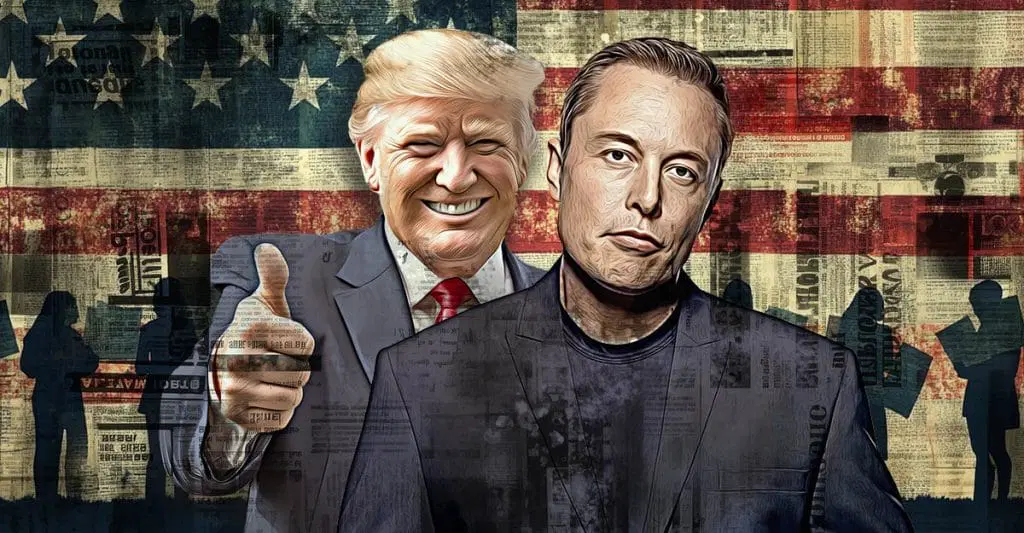
DOGE’s primary mission is to address the massive $6.5 trillion federal budget, targeting areas of wasteful spending and excessive regulations. According to public records, U.S. government expenditures reached $6.75 trillion in 2024, an increase of $617 billion over the previous year.

Trump emphasized that the agency will bring an “entrepreneurial approach” to government and help to “dismantle bureaucracy, slash excess regulations, and streamline federal agencies.”
🚨 BREAKING: Trump announces Elon Musk and Vivek Ramaswamy will head the Department of Government Efficiency.
It will “slash excess regulations” and “cut wasteful expenditures.” pic.twitter.com/sBxGW9okcr
— Eric Daugherty (@EricLDaugh) November 13, 2024
The department will collaborate closely with the White House and the Office of Management and Budget to implement large-scale structural reforms. DOGE’s advisors, who will operate primarily outside of traditional federal structures, are expected to leverage private-sector insights to drive cost savings and improve government efficiency.
The formation of DOGE builds on Trump’s hint in August that he might tap Musk for a Cabinet or advisory role if elected.
Trump added that, under his plan, Musk and Ramaswamy would conclude their work by July 4, 2026. He emphasized that a “smaller, more efficient government” would be “the perfect gift to America” on the 250th anniversary of the Declaration of Independence.
ALSO READ: Trump Urges U.S. to Prioritize Crypto Industry Development to Keep Pace with China
The acronym “DOGE” has drawn attention, cleverly nodding to the popular memecoin, Dogecoin, with which Musk is famously associated.
Notably, after Trump’s election victory, the memecoin’s value spiked to $0.4—a high not seen since 2021. It is currently trading at $0.4279, a 12.81% increase in the last 24 hours, according to data from CoinMarketCap.
The initiative also faced legal and political resistance
DOGE’s approach created resistance from federal employees, unions, lawmakers and agency officials. Musk’s team pushed for major workforce reductions and changes to federal operations, while some Trump-appointed officials and agencies resisted directives they believed exceeded DOGE’s authority. By February 2025, several agencies were pushing back against DOGE’s demands.
Many cuts require legislation, while others involve programs that millions of Americans rely on. The administration therefore had to balance its desire for rapid reductions with legal requirements, congressional authority and the practical consequences of dismantling government programs.
The federal budget contains large categories that are difficult to eliminate without congressional action, including Social Security, Medicare and interest payments on government debt. That created a fundamental limitation for DOGE.
Cutting individual contracts, grants, leases and federal jobs can produce savings, but those measures alone cannot easily transform the government’s overall fiscal position.
Enjoyed this? Bookmark DeFi Planet, explore related topics, and follow us on Twitter, LinkedIn, Facebook, Instagram, Threads, and CoinMarketCap Community for seamless access to high-quality industry insights
Take control of your crypto portfolio with DEFI PLANET PRO, DeFi Planet’s suite of analytics tools.