





















































China’s central bank has acknowledged that stablecoins could become a more important part of international payments, while urging regulators to closely monitor their growing influence on the global financial system.

Speaking at the Lujiazui Forum on June 17, Wang Xin, director-general of the Research Bureau of the People’s Bank of China (PBOC), said policymakers are paying increasing attention to the role stablecoins may play in cross-border transactions and the broader international monetary system.
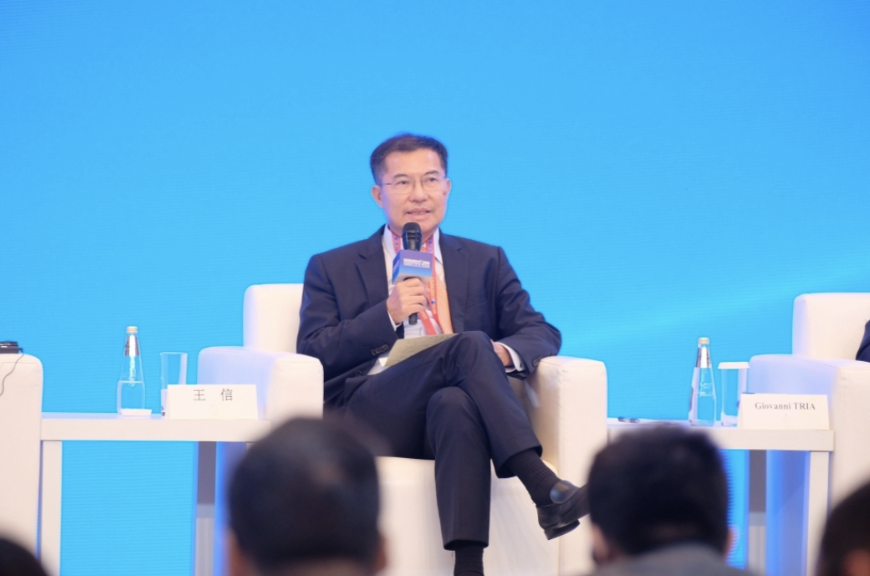
Wang said an efficient and diversified payment infrastructure is essential to support global investment and financing activities, particularly as international trade and capital flows continue to expand.
Stablecoins gain attention in cross-border finance
According to Wang, uncertainty within existing payment networks has highlighted the need for more resilient and connected financial infrastructure. He noted that geopolitical tensions and the potential use of payment systems as strategic tools could disrupt normal cross-border transactions.
Against this backdrop, Wang said central banks and payment providers should improve interoperability among payment systems while exploring emerging technologies to make international transfers more efficient.
He added that stablecoins may eventually take on a larger role in global payments, making international regulatory coordination increasingly important.
Wang also pointed to central bank digital currencies (CBDCs) as another area requiring close monitoring and cooperation among policymakers, particularly as countries continue testing cross-border digital payment solutions.
China maintains tight stablecoin controls
The remarks come despite China’s continued restrictions on cryptocurrency-related activities.
Earlier this year, the People’s Bank of China, alongside other financial regulators, expanded its regulatory framework to cover renminbi-pegged stablecoins and tokenized real-world assets.
Under the rules, entities and individuals are prohibited from issuing RMB-linked stablecoins outside mainland China without approval from relevant authorities. Regulators argued that stablecoins tied to sovereign currencies could affect monetary sovereignty because of their growing use in payments and circulation.
The framework also reinforced restrictions on cryptocurrency trading, mining, and unauthorized tokenization activities.
Hong Kong advances stablecoin licensing
While mainland China continues to tighten oversight, Hong Kong is moving forward with a regulated stablecoin market.
The Hong Kong Monetary Authority confirmed it is reviewing multiple applications under its Stablecoins Ordinance. The framework requires issuers operating in Hong Kong or offering Hong Kong dollar-linked stablecoins to obtain regulatory approval. Additionally, Hong Kong is rapidly shaping a multi-track digital finance system where stablecoins, tokenized bank deposits, and central bank digital money are evolving side by side, showing a broad transition in how money moves across Asia’s financial hubs.
Beyond digital assets, Wang also called for reforms to international financial institutions, urging stronger support for developing economies through increased funding capacity, governance improvements, and faster implementation of financial assistance programs.
Enjoyed this? Bookmark DeFi Planet, explore related topics, and follow us on Twitter, LinkedIn, Facebook, Instagram, Threads and CoinMarketCap Community for seamless access to high-quality industry insights
Take control of your crypto portfolio with DEFI PLANET PRO, DeFi Planet’s suite of analytics