
















































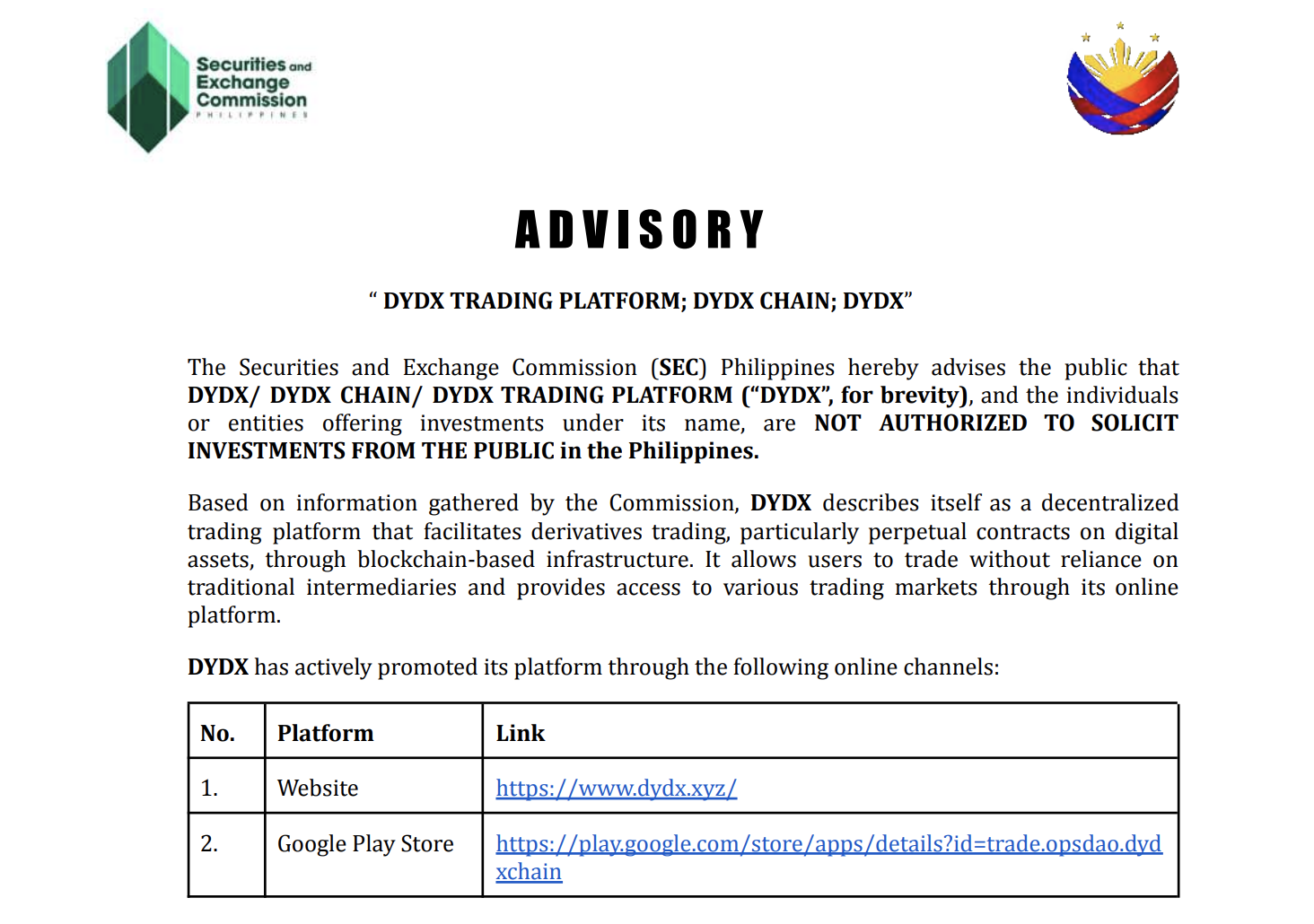
The Philippine Securities and Exchange Commission (SEC) has issued a fresh warning to investors, naming seven crypto trading platforms it says are operating illegally in the country. In a public advisory released Tuesday, the regulator cautioned Filipinos against engaging with dYdX, Aevo, gTrade, Pacifica, Orderly, Deriv, and Ostium, citing a lack of proper registration and authorization.

According to the SEC, these platforms appear to be offering investment opportunities that promise profits or returns, activities that fall under regulated financial services. However, none of the listed entities has secured licenses under the country’s crypto-asset service provider (CASP) framework, which mandates strict compliance with capital, operational, and consumer protection standards.
Unlicensed operations raise legal risks
The Commission emphasized that promoting or facilitating investments in these platforms could have serious legal consequences. Under the Philippines’ Securities Regulation Code, individuals involved in endorsing or recruiting users for unregistered platforms may face fines of up to 5 million Philippine pesos (around $89,000), imprisonment of up to 21 years, or both.
This warning signals the regulator’s growing urgency in protecting retail investors from potential fraud, scams, or platform failures. By highlighting both investor and promoter liability, the SEC is widening the scope of accountability within the crypto ecosystem.
From warnings to enforcement action
The latest advisory reflects a broader shift in the Philippines toward stricter enforcement against unlicensed crypto firms. Regulators have increasingly moved beyond warnings to implementing access restrictions. In late 2025, authorities blocked major platforms like Coinbase and Gemini, following similar actions taken against Binance in 2024 after it failed to meet compliance requirements.
The crackdown has steadily expanded. In August 2025, the SEC flagged several global exchanges, including OKX, Bybit, KuCoin, and Kraken, for operating without proper registration, warning that such platforms expose users to heightened financial risks.
Despite the tougher stance, the country’s regulated crypto sector continues to grow. Licensed firms are introducing new products, including stablecoin-based salary systems and in-app crypto services through partnerships with compliant providers.
Enjoyed this piece? Bookmark DeFi Planet, explore related topics, and follow us on Twitter, LinkedIn, Facebook, Instagram, Threads, and Coin MarketCap Community for seamless access to high-quality industry insights.
“Take control of your crypto portfolio with DeFi Planet PRO, DeFi Planet’s suite of analytics tools.”