


























































Quick Breakdown

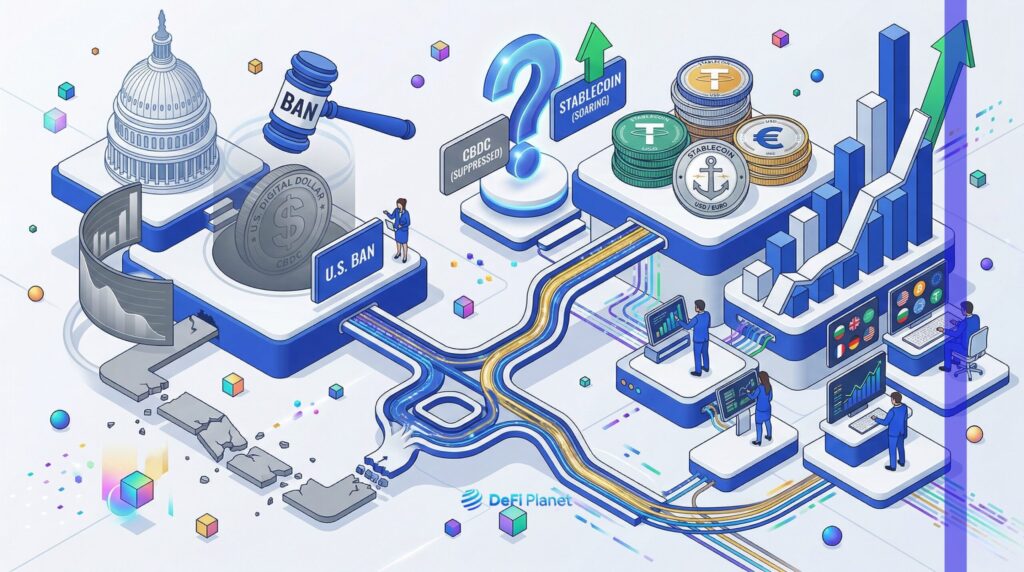
- Lawmakers and the Federal Reserve are at odds over creating a U.S. central bank digital currency, with proposals to block a CBDC until 2031 amid concerns about privacy and government overreach.
- A CBDC ban could shift digital payment development to fintechs, banks, and blockchain platforms, increasing competition and boosting private stablecoins like Tether and USD Coin.
- Dollar-backed stablecoins offer privacy, fast cross-border payments, and integration with digital finance, positioning them as a strong alternative if the U.S. rejects a government-issued digital dollar.
The idea of a digital dollar has become a major policy debate in the United States. The Federal Reserve has explored issuing a Central Bank Digital Currency (CBDC), a government-backed digital version of the dollar aimed at modernizing payments. At the same time, lawmakers have proposed measures to limit or restrict its development, including efforts to prevent the Federal Reserve from issuing a CBDC without explicit Congressional approval.
The proposal has triggered a strong debate. Supporters believe a digital dollar could make payments faster and help more people access financial services. Critics worry it could lead to more government surveillance, too much control, and possible risks for banks.
While some lawmakers want a permanent ban, stablecoins issued by private companies are getting more attention. This raises the question: Could banning a U.S. CBDC make stablecoins the main alternative to a digital dollar?
The Debate Surrounding a CBDC Permanent Ban
The debate over a U.S. central bank digital currency is no longer just theoretical; it is now a real policy fight in Washington. The proposal to change the Federal Reserve Act and block a CBDC until 2031 draws a line between government-issued digital money and private alternatives.
The proposal would stop the Fed from launching a CBDC, but it protects stablecoins backed by the dollar that are open, permissionless, and private. It also has a sunset clause ending on December 31, 2030, so Congress would need to pass another law to extend the ban.

Support for the restriction appears to be growing in Washington. The White House issued a statement supporting the Act and opposing a CBDC.

The statement has expressed concerns that a government-issued digital currency could threaten privacy and personal freedom, and the Senate moved the bill forward with an overwhelming procedural vote of 84–6.
At the same time, some lawmakers want to go even further. Michael Cloud and several members of Congress recently wrote a letter to congressional leaders urging them to permanently block a CBDC.

He argued that a government-controlled digital dollar alternative could give authorities too much insight into how people spend their money.
Congress man, Ralph Norman, also tweeted, saying he was proud to sign the letter.
I’m proud to sign onto a letter urging House and Senate leadership to permanently ban a Central Bank Digital Currency (CBDC).
Americans deserve financial freedom, not government-controlled money.
🧵THREAD: pic.twitter.com/RXRhrJtn40
— Rep. Ralph Norman (@RepRalphNorman) March 7, 2026
Potential Impacts of a Permanent CBDC Ban
A permanent CBDC ban could reshape the direction of digital payments in the United States and shift innovation toward private-sector solutions.
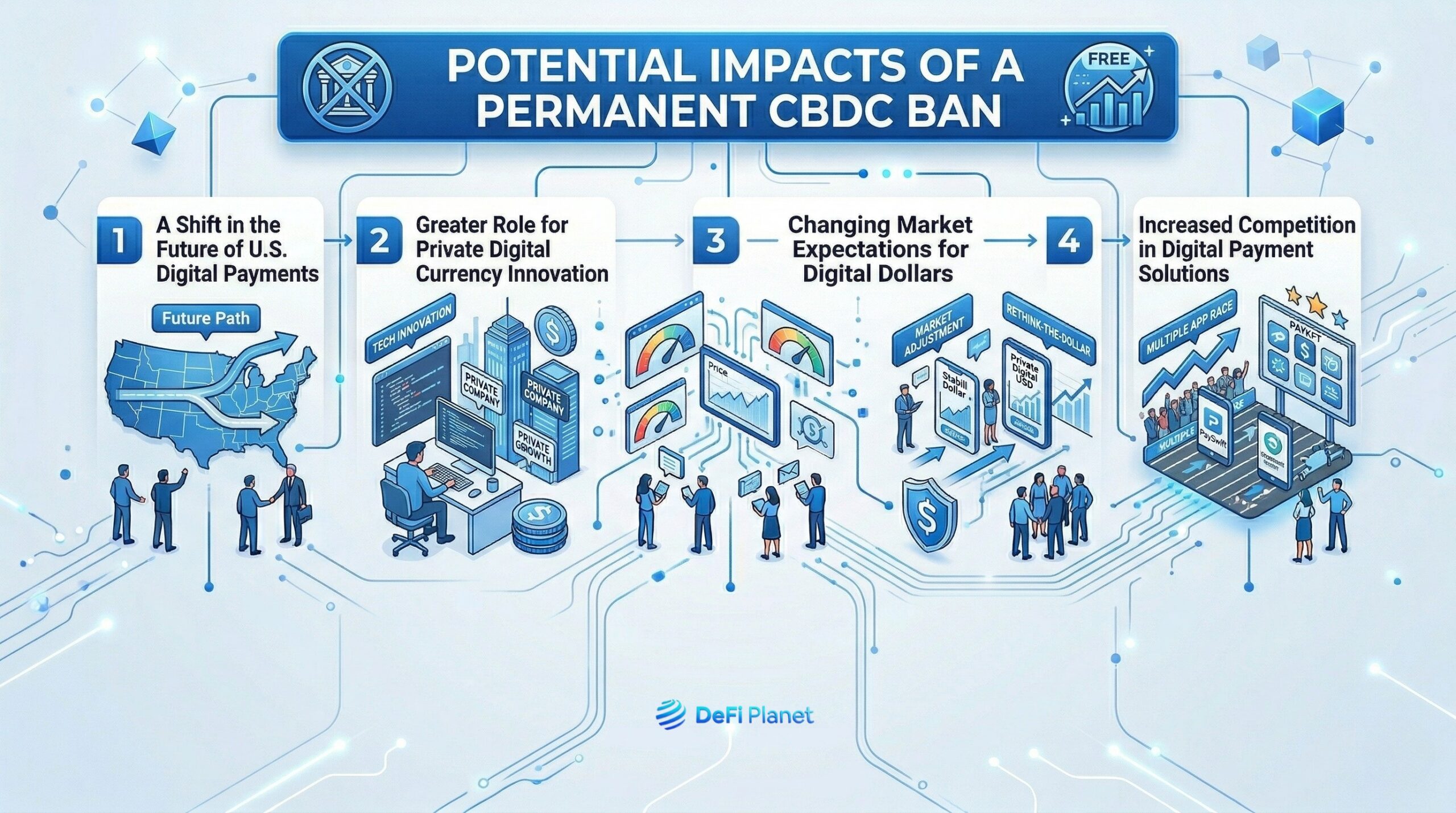
A shift in the future of the U.S. digital payments
If the United States permanently blocks a central bank digital currency, it could reshape the direction of digital payments. The Federal Reserve has spent years studying a digital dollar as a way to modernize the payment system.
Removing that option would likely shift attention away from government-backed digital money and toward private payment technologies.
Greater role for private digital currency innovation
A ban could also change where innovation happens. Instead of a government-issued digital currency competing in the market, fintech companies, banks, and blockchain developers may take the lead in building digital payment solutions.
Privately issued stablecoins and blockchain-based settlement networks could expand faster as financial institutions search for efficient digital payment alternatives.
Changing market expectations for digital dollars
If the U.S. formally rejects the CBDC model, markets may interpret it as a signal that the country prefers private-sector innovation over government-issued digital money.
In that environment, stablecoin adoption could gain stronger legitimacy as the practical digital version of the dollar used across crypto markets, global payments, and decentralized finance platforms.
Increased competition in digital payment solutions
Without a government-backed digital currency dominating the space, competition among private payment providers could grow. Banks, fintech firms, and blockchain platforms may race to develop faster and more efficient payment systems.
This competition could drive innovation in cross-border payments, real-time settlements, and blockchain-based financial services.
The Case for Stablecoins as an Alternative for Privacy and Accessibility
Stablecoins are emerging as a practical alternative to a U.S. CBDC, offering users privacy, accessibility, and seamless integration into the growing digital finance ecosystem.
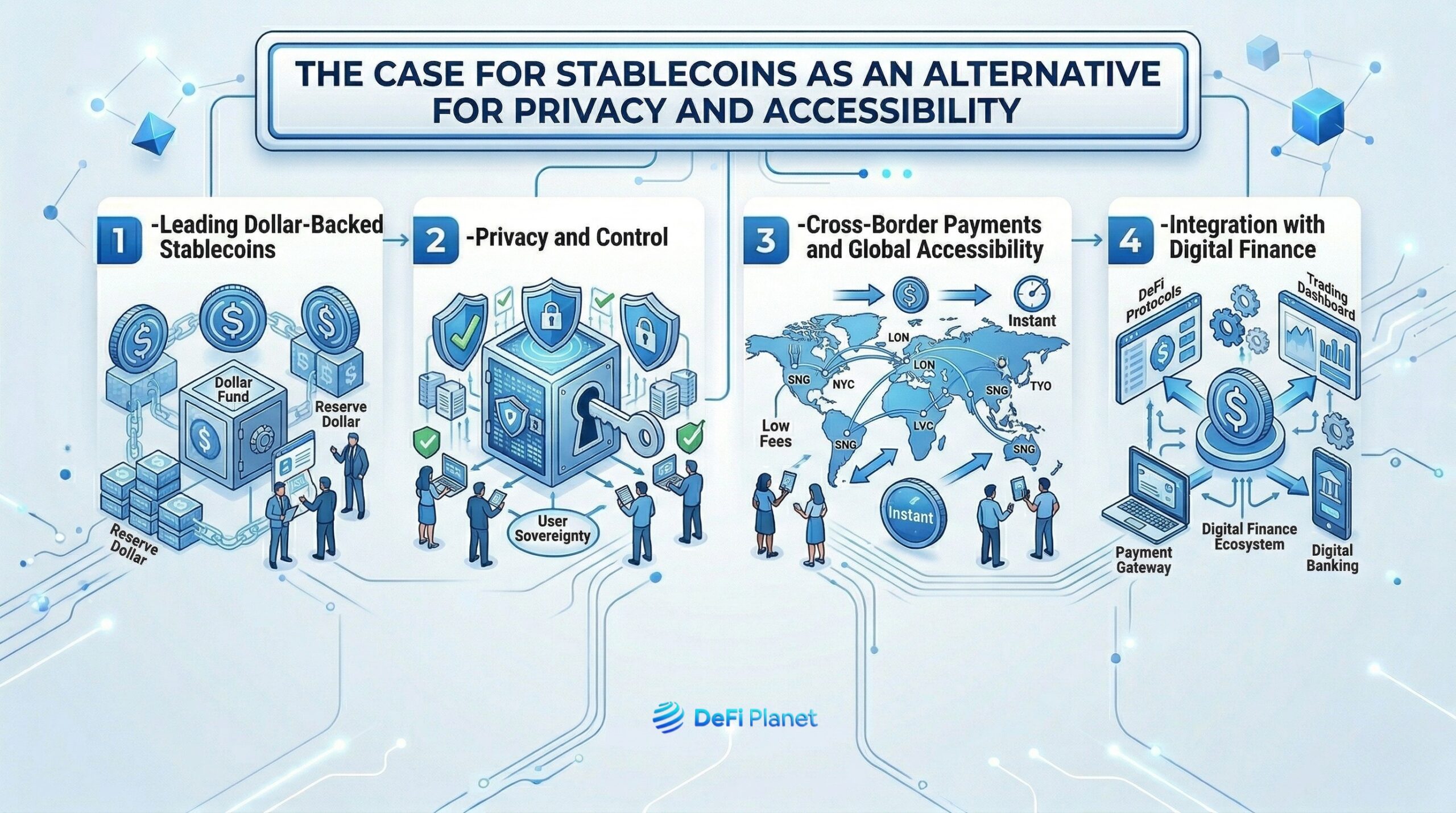
Leading dollar-backed stablecoins
Major stablecoins like Tether and USD Coin serve as widely used digital representations of the U.S. dollar. They are pegged 1:1 to the dollar, offering stability in the volatile crypto market while being accessible to anyone with an internet connection.
These coins have become central to crypto trading, payments, and DeFi applications, making them a practical government-issued digital dollar alternative.
Privacy and control
Unlike a CBDC, which could allow government monitoring of every transaction, stablecoins provide users with greater privacy and control over their funds.
For people concerned about financial surveillance or centralized authority, stablecoins offer a way to transact digitally without exposing personal spending data to federal oversight. This aspect makes them appealing to privacy-conscious individuals and businesses alike.
Cross-border payments and global accessibility
Stablecoin adoption also offers major advantages for international transactions. They enable near-instant cross-border payments without relying on traditional banking rails, avoiding high fees and delays.
For unbanked or underbanked populations, stablecoins can provide access to the global digital economy, supporting remittances, international trade, and financial inclusion in ways a U.S. CBDC might not.
Integration with digital finance
Beyond payments, stablecoins are essential for DeFi platforms, lending, and liquidity pools. They allow users to participate in digital financial services without relying on traditional banks, expanding access to financial tools that were previously limited to certain markets.
Their versatility and accessibility highlight why stablecoins could become the default digital dollar solution if a CBDC is blocked.
Long-Term Implications for Stablecoin Growth
If the U.S. permanently bans a CBDC, stablecoins could have a unique chance to lead the digital dollar market. Without a government option, stablecoins like Tether and USD Coin may attract more users who want privacy, flexibility, and faster payments.
This shift could create strategic openings for private issuers and fintech companies to expand their offerings and innovate in payments, lending, and cross-border finance. As lawmakers debate the future of a digital dollar, investors and market watchers should keep an eye on stablecoin adoption, regulatory guidance, and partnerships that could shape the next era of U.S. digital finance.
Disclaimer: This article is intended solely for informational purposes and should not be considered trading or investment advice. Nothing herein should be construed as financial, legal, or tax advice. Trading or investing in cryptocurrencies carries a considerable risk of financial loss. Always conduct due diligence.
Enjoyed this piece? Bookmark DeFi Planet, explore related topics, and follow us on Twitter, LinkedIn, Facebook, Instagram, Threads, and CoinMarketCap Community for seamless access to high-quality industry insights.
Take control of your crypto portfolio with MARKETS PRO, DeFi Planet’s suite of analytics tools.”